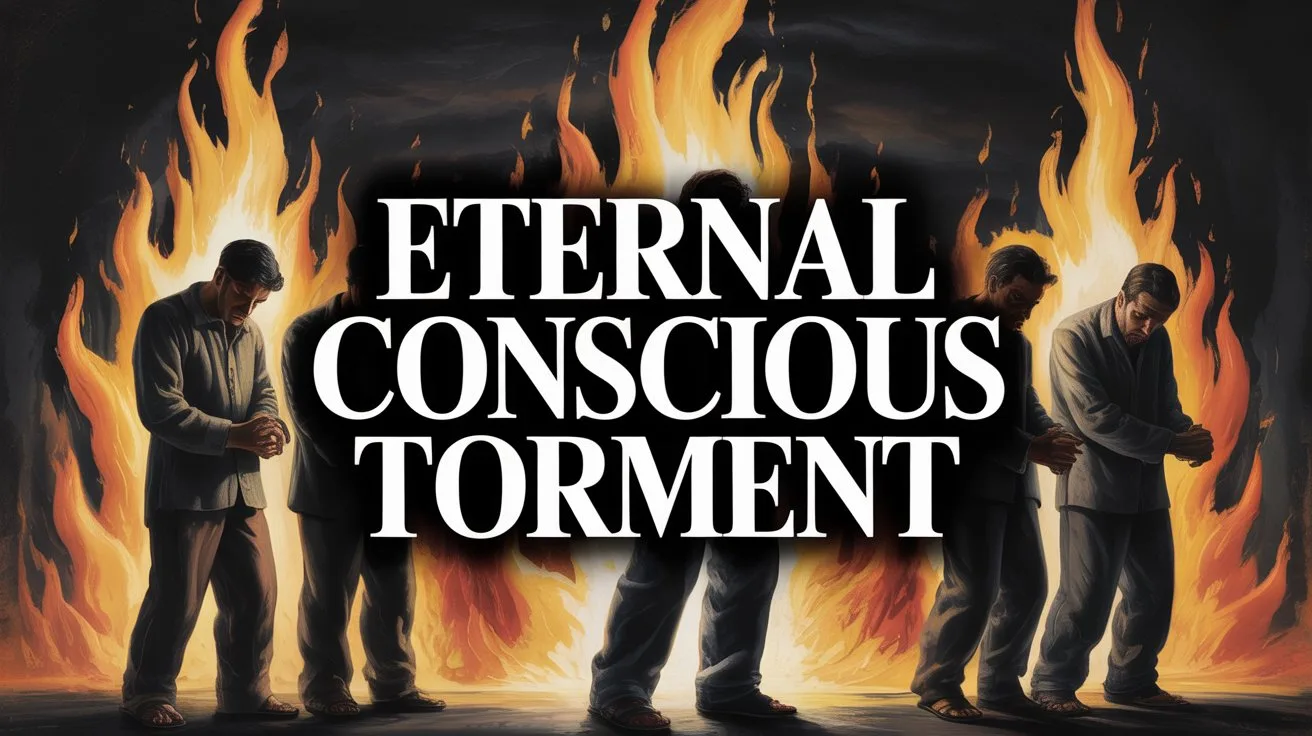
Before examining Eternal Conscious Torment, we must establish clear boundaries. This study does not teach universalism. Scripture plainly affirms the final judgment, exclusion from life, and irreversible consequences for the wicked (Matthew 25:46; John 3:18; Revelation 20:15). The Bible also does not teach “soul sleep” in the sense of unconscious non-existence after death. Scripture shows that the dead are conscious in the intermediate state, whether in comfort or torment (Luke 16:19–31; Luke 23:43; Philippians 1:23; 2 Corinthians 5:8; Revelation 6:9–11).
This study is specifically concerning the final judgment, not the intermediate state where the soul awaits judgement. Hades and Paradise are real. Consciousness after death is real. A bodily resurrection unto judgment is real (John 5:28–29). The question before us is not whether judgment exists, but what the final outcome of the final judgment is.
What It Means to Test a Doctrine Hermeneutically
A doctrine passes the hermeneutical test only if it arises naturally from Scripture when read in context, consistently, and without redefining words. Clear passages must govern unclear ones. Repeated biblical language must shape doctrine more than isolated or symbolic texts. And Scripture must be allowed to interpret Scripture.
Eternal Conscious Torment fails this test if it requires us to redefine common biblical words, such as death, destroy, perish, or consume. Changing these words into meanings they never have elsewhere in Scripture. If the Bible repeatedly says the wicked will die, perish, and be destroyed, then any doctrine that insists they must live forever requires a clear and logical justification from the text itself, that forces us to believe it.
For example: There is one God that exists in three Persons… The Father, Son and Holy Ghost. While the Bible never outright says there is a trinity, the language and text force us to accept it as what the Bible says.
And we must do the same, if the Bible indeed teaches Eternal Conscious Torment. But we can’t rely on tradition and must rely on only the text.
The Foundational Assumption Behind Eternal Conscious Torment
The doctrine of Eternal Conscious Torment rests on a single foundational assumption… the human soul is inherently immortal and cannot die. If that assumption is true, then the wicked must remain alive forever, whether in joy or in torment. But if that assumption is false, the doctrine begins to collapse.
The critical question, then, is not “How long is punishment?” but “Does Scripture teach that the soul is immortal by nature?”
Does Scripture Say the Soul Is Immortal?
Not once does Scripture say the human soul is inherently immortal. This is not an oversight. It is a theological absence with enormous consequences.
God Himself states plainly:
“Behold, all souls are Mine;
The soul who sins shall die.” (Ezekiel 18:4)
And again:
“The soul who sins shall die.” (Ezekiel 18:20)
There is no qualification here. No exception is stated. The soul that sins does not suffer endlessly; it dies. If the soul were immortal by nature, this declaration would be meaningless.
Paul confirms this limitation of immortality and says God…
“Who alone has immortality, dwelling in unapproachable light…” (1 Timothy 6:16)
Immortality is not attributed to humanity. It is attributed to God alone. If humans possess immortality inherently, this statement becomes false.
Immortality Is Something We Seek, Not Something We Have
Scripture consistently presents immortality as a gift, not a default condition.
“To those who by patient continuance in doing good seek for glory, honor, and immortality—eternal life.” (Romans 2:6–7)
If immortality is something we seek, then it is not something we already possess. Paul further explains:
“Our Savior Jesus Christ… has abolished death and brought life and immortality to light through the gospel.” (2 Timothy 1:10)
If immortality is something Christ brings through the gospel, then those outside the gospel do not possess it. Jesus Himself makes this distinction explicit:
“And I give them eternal life, and they shall never perish.” (John 10:28)
Eternal life is given. It is not assumed. And the alternative is perishing, which is the opposite of eternal life. It is a life that ends.
Adam, the Tree of Life, and the Loss of Immortality
The opening chapters of Genesis confirm this framework. Adam was not created immortal in the absolute sense. His continued life depended on access to the Tree of Life.
After sin entered the world, God acted decisively:
“Then the LORD God said, ‘Behold, the man has become like one of Us, to know good and evil. And now, lest he put out his hand and take also of the tree of life, and eat, and live forever’—therefore the LORD God sent him out of the garden…” (Genesis 3:22–23)
Adam was expelled specifically to prevent him from living forever. Immortality was not innate. It was conditional. Once sin entered, eternal life was withheld.
This single passage destroys the idea that humanity naturally possesses immortality. Eternal life has always been a gift guarded by God and later restored only through Christ.
Why This Matters for Final Judgment
If immortality is not inherent, then the wicked do not live forever by default. Eternal Conscious Torment requires the wicked to remain alive forever, but Scripture never says they have immortality. Instead, it repeatedly contrasts two destinies:
“For the wages of sin is death, but the gift of God is eternal life in Christ Jesus our Lord.” (Romans 6:23)
Not eternal life in torment versus eternal life in joy, but rather death versus life.
This is the controlling framework of Scripture. And once it is established, the language Scripture uses for final judgment becomes unmistakably clear.
The Bible’s Language of Final Judgment
If Eternal Conscious Torment is true, then Scripture must consistently teach that the wicked remain alive forever in punishment. But instead of assuming that conclusion, we must do something far more honest and far more dangerous to tradition: we must examine the actual words God chose to describe final judgment.
Doctrine does not come from what words might mean if redefined. Doctrine comes from how words are used repeatedly, across contexts, across authors, and across covenants. In this section, we will examine every major term Scripture uses to describe the end of the wicked and ask a simple question: Do these words describe endless life in suffering, or do they describe death and destruction?
“Death” and “Die”
We begin with the most fundamental word in the discussion: death.
In Hebrew, the primary verb is mûth (מוּת). In Greek, it is thanatos (θάνατος). These words mean exactly what they have always meant: the cessation of life. They are not metaphors for “separation while remaining alive,” unless the context explicitly forces that meaning, which Scripture never does.
Paul states this very plainly:
“For the wages of sin is death, but the gift of God is eternal life in Christ Jesus our Lord.” (Romans 6:23)
The contrast is decisive. Death is set against life, not against a different quality of life. If death meant “eternal life in misery,” then Paul’s contrast collapses. The verse would effectively read: the wages of sin is eternal life in torment, but the gift of God is eternal life in joy. That is not what Paul says, and it is not what thanatos means.
James uses the same word:
“Then, when desire has conceived, it gives birth to sin; and sin, when it is full-grown, brings forth death.” (James 1:15)
Sin gives birth to death, not to endless living. Later James adds:
“Let him know that he who turns a sinner from the error of his way will save a soul from death.” (James 5:20)
This verse alone is devastating to Eternal Conscious Torment. If the soul cannot die, then the soul cannot be saved from death. James did not say “saved from torment,” but “saved from death.” Ezekiel is even more explicit:
“The soul who sins shall die.” (Ezekiel 18:4)
God does not redefine death. He declares it.
“Perish”
Another key term is perish. In Greek, this is most often apollymi (ἀπόλλυμι), a word that means to destroy, lose, ruin, or cause to cease.
Jesus uses it in the most famous verse in Scripture:
“For God so loved the world that He gave His only begotten Son, that whoever believes in Him should not perish but have everlasting life.” (John 3:16)
Once again, the contrast is between perishing and everlasting life. If perishing meant “living forever in agony,” then the contrast would be incoherent. Jesus does not say believers will avoid torment; He says they will avoid perishing.
Peter uses the same word:
“The Lord is not slack concerning His promise… not willing that any should perish but that all should come to repentance.” (2 Peter 3:9)
Repentance leads to life. Refusal leads to perishing. Nothing in the text suggests perishing means endless existence.
“Destroy” and “Destruction”
Closely related to apollymi is the language of destroy and destruction. These words are everywhere in Scripture’s descriptions of judgment.
Jesus says:
“Enter by the narrow gate… because narrow is the gate and difficult is the way which leads to life… broad is the way that leads to destruction.” (Matthew 7:13–14)
The destination of the broad way is destruction. Not preservation. Not survival. Destruction.
Jesus is even more specific:
“But rather fear Him who is able to destroy both soul and body in hell.” (Matthew 10:28)
Here, Jesus explicitly includes the soul in what is destroyed. Eternal Conscious Torment requires that the soul be indestructible. Jesus says God can destroy it.
Paul echoes this language:
“These shall be punished with everlasting destruction from the presence of the Lord.” (2 Thessalonians 1:9)
The destruction is everlasting in its effect, not in its ongoing action. Scripture does not say “everlasting destroying,” but “everlasting destruction.” Once something is destroyed, the result does not need to be repeated forever.
“Consume,” “Devour,” and “Burn Up”
The Bible repeatedly uses imagery of consumption. Fire is not presented as a means of keeping something alive, but of consuming it.
The psalmist writes:
“But the wicked shall perish; and the enemies of the LORD, like the splendor of the meadows, shall vanish. Into smoke they shall vanish away.” (Psalm 37:20)
Smoke is the result of something being consumed. It does not scream forever. It dissipates.
Later in Psalms, we read:
“May sinners be consumed from the earth, and the wicked be no more.” (Psalm 104:35)
“Be no more” is not compatible with eternal conscious existence.
Malachi is unmistakable in his words:
“For behold, the day is coming, burning like an oven, and all the proud, yes, all who do wickedly will be stubble. And the day which is coming shall burn them up… they shall be ashes under the soles of your feet.” (Malachi 4:1–3)
Ashes are what remain after complete destruction, not after eternal torment.
John the Baptist uses the same imagery:
“He will burn up the chaff with unquenchable fire.” (Matthew 3:12)
Unquenchable fire does not mean unending fire; it means fire that cannot be stopped until it has consumed what it was meant to consume.
“Vanish,” “Cut Off,” and “Be No More”
Scripture goes even further, using language of absence and nonexistence.
“For yet a little while and the wicked shall be no more; indeed, you will look carefully for his place, but it shall be no more.” (Psalm 37:10)
This is not poetic exaggeration. It is a declaration of finality.
Obadiah says of God’s enemies:
“They shall be as though they had never been.” (Obadiah 1:16)
Proverbs adds:
“When the whirlwind passes by, the wicked is no more.” (Proverbs 10:25)
These phrases cannot be honestly reconciled with the idea of eternal conscious torment. A being that is eternally alive in suffering is very much “still there.”
“Second Death”
Finally, Scripture summarizes final judgment with a term that should settle the matter:
“This is the second death.” (Revelation 20:14)
Death is not redefined here. It is intensified. The second death is not a metaphor for eternal life in pain. It is death following resurrection and judgment.
John reinforces it:
“But the cowardly, unbelieving… shall have their part in the lake which burns with fire and brimstone, which is the second death.” (Revelation 21:8)
The lake of fire results in death, not perpetual survival.
At this point, the evidence is overwhelming. Scripture uses a vast and consistent vocabulary to describe the fate of the wicked: die, perish, destroy, destruction, consume, burn up, vanish, be no more, ashes, cut off, second death. These words all point in the same direction. Eternal Conscious Torment (ECT) can only survive if we literally redefine every single word used.
The Eternal Conscious Torment Prooftexts Examined in Context
At this point, the biblical vocabulary for final judgment has been established. Scripture consistently describes the end of the wicked using words that mean death, destruction, consumption, and disappearance. Eternal Conscious Torment can only survive if a handful of passages override this overwhelming testimony. In this section, we will examine those passages carefully and ask whether they truly teach endless torment, or whether they must be interpreted in harmony with the rest of Scripture.
“Where Their Worm Does Not Die and the Fire Is Not Quenched”
Jesus’ words in Mark 9:48 are often cited as definitive proof of Eternal Conscious Torment:
“Where ‘Their worm does not die and the fire is not quenched.’” (Mark 9:48)
But Jesus did not originate this language. He is quoting directly from the final verse of Isaiah:
“And they shall go forth and look upon the corpses of the men who have transgressed against Me. For their worm does not die, and their fire is not quenched. They shall be an abhorrence to all flesh.” (Isaiah 66:24)
The context is now more clear. Isaiah is describing corpses, not living souls. The worm feeds on dead flesh. The fire burns up whatever remains. The disgrace is public and final. Nothing in the passage describes conscious torment without end. It describes the aftermath of judgment.
The phrase “does not die” does not mean the worm lives forever; it means the process is uninterrupted until the task is complete. Likewise, “unquenchable fire” does not mean a fire that burns eternally, but a fire that cannot be put out prematurely.
How do we know this? Scripture uses this exact phrase elsewhere:
“But if you will not heed Me… then I will kindle a fire in its gates, and it shall devour the palaces of Jerusalem; it shall not be quenched.” (Jeremiah 17:27)
That fire is not burning today. It was unquenchable until it consumed what it was sent to destroy.
“Eternal Fire” and Jude 7
Jude writes:
“As Sodom and Gomorrah… are set forth as an example, suffering the vengeance of eternal fire.” (Jude 7)
If “eternal fire” means eternal conscious torment, then Sodom must still be burning. But Peter explains what actually happened:
“And turning the cities of Sodom and Gomorrah into ashes, condemned them to destruction, making them an example to those who afterward would live ungodly.” (2 Peter 2:6)
The fire was eternal in effect (It’s Permanence), not duration. The judgment was irreversible. The cities were destroyed, not burning forever.
“Everlasting Punishment” Matthew 25:46
Jesus says:
“And these will go away into everlasting punishment, but the righteous into eternal life.” (Matthew 25:46)
The question is not whether the punishment is everlasting, but what the punishment is. Scripture defines punishment repeatedly as death and destruction. Everlasting punishment does not require everlasting punishing. A death sentence is permanent even though the act itself is not ongoing.
This harmonizes perfectly with the rest of Scripture. Eternal life is the ongoing experience of the righteous. Everlasting punishment is the permanent outcome of judgment for the wicked.
Revelation and the Lake of Fire
Revelation is the most symbolic book in Scripture, and it must be interpreted with extreme care. The Bible itself warns us not to build doctrine on imagery divorced from context.
Revelation 20:10 states:
“The devil, who deceived them, was cast into the lake of fire and brimstone… and they will be tormented day and night forever and ever.”
This verse is explicit, but notice who it applies to: the devil, the beast, and the false prophet. However, Scripture never says this of unbelieving humans.
When humans are cast into the lake of fire, the result is defined:
“This is the second death.” (Revelation 20:14)
“Which is the second death.” (Revelation 21:8)
Death is the outcome. The same fire that produces torment for immortal rebel beings (The Devil, Beast and False Prophet) brings forth death for mortal humans. Scripture makes no attempt to equalize their fate.
Revelation 14:11 and Rising Smoke
Another common text reads:
“And the smoke of their torment ascends forever and ever.” (Revelation 14:11)
Again, this imagery comes directly from the Old Testament, speaking about the destruction of Edom:
“Its smoke shall ascend forever; from generation to generation it shall lie waste.” (Isaiah 34:10)
Edom is not burning today. The smoke signifies irreversible destruction and divine judgment, not ongoing conscious suffering.
The Rich Man and Lazarus (Luke 16)
Luke 16 describes conscious torment in Hades, not final judgment. Hades is temporary. It is later thrown into the lake of fire (Revelation 20:14). This passage cannot be used to define the final fate of the wicked in the Lake of Fire.
“Weeping and Gnashing of Teeth”
This phrase describes anguish, regret, and judgment. It never describes duration. It never defines immortality. It describes the unbeliever’s response to judgement, not the outcome of judgement.
The Hermeneutical Verdict
Every prooftext for Eternal Conscious Torment either:
Depends on imagery explained elsewhere as destruction,
Refers to the intermediate state, not final judgment,
Or applies specifically to non-human beings what is explicitly said to be the punishment of the Devil.
None of them overturn the clear, repeated language of death and destruction.
Hell, the Devil, Final Judgment, and the Justice of God
At this point, the biblical data is on the table. We have established that Scripture does not teach innate human immortality, that immortality is a gift given only through Christ, and that the Bible’s consistent language for the fate of the wicked is death, destruction, and disappearance… not endless conscious life in suffering. Now we must bring everything together by addressing the purpose of hell, the fate of the devil and demons, and how God’s justice is displayed in final judgment without contradiction.
Hell Was Prepared for the Devil and His Angels
Jesus makes an explicit statement that is often overlooked or flattened:
“Depart from Me, you cursed, into the everlasting fire prepared for the devil and his angels.” (Matthew 25:41)
This verse is crucial. Hell was not originally prepared for humanity. It was prepared for the devil and his angels. That distinction matters because Scripture treats angelic beings and human beings differently. Angels are not said to die. Humans are. Angels are not said to perish. Humans are. Angels are not said to return to dust. Humans are.
When Eternal Conscious Torment treats humans and fallen angels as sharing the exact same fate by default, it ignores this biblical distinction. Scripture never says that humans share the devil’s nature or destiny automatically. What it does say is that humans who align themselves with rebellion share in judgment, but judgment does not require identical outcomes for different kinds of beings.
The Devil, the Beast, and the False Prophet
Revelation is unambiguous about the fate of certain beings:
“The devil, who deceived them, was cast into the lake of fire and brimstone… and they will be tormented day and night forever and ever.” (Revelation 20:10)
This verse must be accepted as written. The devil is tormented forever. The beast and the false prophet are tormented forever. Scripture does not hedge, soften, or qualify this statement.
But, we need to be careful, because Scripture does not universalize this fate to all humans. In the very same chapter, when human beings are cast into the lake of fire, the outcome is defined differently:
“And Death and Hades were cast into the lake of fire. This is the second death.” (Revelation 20:14)
“Anyone not found written in the Book of Life was cast into the lake of fire.” (Revelation 20:15)
The lake of fire produces torment for immortal rebel beings and death for mortal humans. Scripture itself makes this distinction by naming the outcome for humans as “the second death.” If Eternal Conscious Torment were intended for all, this repeated emphasis on death would be misleading at best and deceptive at worst.
Demons and Their Fear of Torment
The Gospels record something important about demons:
“What have we to do with You, Jesus, Son of God? Have You come here to torment us before the time?” (Matthew 8:29)
The demons fear torment. They know judgment is coming. They recognize a future punishment. This aligns perfectly with what Revelation later reveals about the fate of Satan and his angels.
But once again, Scripture does not say that human unbelievers share the demons’ nature or fate. Demons are fallen angels. Humans are mortal creatures made from dust. Scripture consistently teaches that demons fear confinement, judgment, and punishment… but humans are warned about death, destruction, and perishing.
Resurrection Does Not Equal Immortality
Some argue that because the wicked are resurrected, they must be immortal. But Scripture never makes that connection. Resurrection is not the same as immortality. Resurrection restores life for judgment; immortality sustains life forever.
Jesus Himself explains:
“The hour is coming in which all who are in the graves will hear His voice and come forth—those who have done good, to the resurrection of life, and those who have done evil, to the resurrection of condemnation.” (John 5:28–29)
There are two resurrections with two different outcomes. Resurrection unto condemnation does not require eternal survival. It requires accountability. After judgment, Scripture repeatedly says the wicked die.
Justice, Proportion, and the Character of God
Eternal Conscious Torment presents a serious theological problem: it demands infinite punishment for finite sin without explicit biblical justification. Scripture presents God as just, measured, and purposeful in judgment.
“Shall not the Judge of all the earth do right?” (Genesis 18:25)
Death as final punishment is severe, fearful, and irreversible. It satisfies justice without redefining God as one who sustains creatures eternally for the sole purpose of suffering. Scripture never says God preserves the wicked forever in order to punish them endlessly. It repeatedly says He destroys them.
Why Eternal Conscious Torment Fails the Hermeneutical Test
Eternal Conscious Torment fails not because it takes judgment seriously, but because it cannot exist without redefining Scripture.
It requires:
- Redefining death as endless life
- Redefining destruction as preservation
- Redefining perish as survive forever
- Importing innate immortality from Greek philosophy
- Elevating symbolic passages over dozens of plain statements
By contrast, conditional immortality requires no redefinitions. It allows death to mean death. Destruction to mean destruction. Perishing to mean perishing. It lets Scripture speak naturally and consistently.
The Gospel Contrast Preserved
The gospel hinges on a clear contrast:
“For the wages of sin is death, but the gift of God is eternal life in Christ Jesus our Lord.” (Romans 6:23)
If everyone lives forever, this contrast collapses. If only those in Christ receive eternal life, the gospel shines with clarity and power.
Christ did not come to save us from eternal life in misery. He came to save us from death.
“I am the resurrection and the life. He who believes in Me, though he may die, he shall live.” (John 11:25)
My Final Thoughts
This study has not attempted to soften judgment, excuse sin, or diminish the seriousness of rebellion against God. On the contrary, it has allowed Scripture to speak with its full weight. The Bible consistently teaches that immortality belongs to God alone, that eternal life is a gift given only through Christ, and that the final fate of the wicked is death… real, final, irreversible death.
Eternal Conscious Torment fails because it requires the Bible to say what it never says and to mean what it never means. Conditional immortality does not arise from emotional discomfort or modern sentimentality; it arises from reading Scripture honestly, in context, and without philosophical additions. The wicked are judged. They are raised. They are condemned. And they die. That is the second death.
The gospel stands exactly where Scripture places it: life or death, Christ or perishing, immortality received or life forfeited. The warning is real. The judgment is final. And the mercy of God is found in Christ alone.


 Get the book that teaches you how to evangelize and disarm doctrines from every single major cult and religion.