
What does Scripture mean when it calls God holy? We also read about holy ground, holy vessels, and holy people, so the word cannot simply mean that someone is well behaved. I want to understand those uses in relation to the Lord Himself, then consider why belonging to Him calls for a change in how we live.
What Holy Means in Scripture
Being set apart is part of the meaning of holy, but separation by itself tells us very little. We need to know what has been set apart and to whom it belongs. A bowl reserved for the tabernacle was holy because God had claimed it for sacred service. It had no conscience or moral achievements. A day could likewise be set apart from ordinary work, and priestly garments were reserved for their appointed use.
The Hebrew adjective qadosh means holy or sacred. Its related noun qodesh can refer to holiness, something holy, or a holy place, depending on the passage. Scripture uses this vocabulary for God, His name and Spirit, and for people and things He sets apart. Those uses are related, but we should not assume that calling a garment holy says everything the word says about the Lord.
No one made God holy. He did not pass from ordinary use into sacred use, and He never needed cleansing from sin. He is the uncreated Lord, distinct from everything He made, and His character is entirely righteous and pure. There is nothing false or corrupt in Him and no higher authority whose standards He must meet. When God calls something else holy, its relationship to Him gives it that standing.
In the New Testament, hagios is the Greek adjective commonly translated holy. Used of people as “holy ones,” it is also translated saints. That explains why believers can be called saints before they have reached maturity. God has made them His own in Christ, and they are now called to live accordingly.
A person, unlike a tabernacle vessel, makes moral choices. Being set apart to God therefore includes being called away from sin. A solemn manner or strict religious habits cannot establish that someone belongs to Him. I need to consider whose word governs my life, rather than assume that looking devout is the same as being holy.
The Holy One in Worship
Isaiah saw the Lord seated on His throne in the year King Uzziah died. Judah had lost a king who had reigned for many years, but the Lord still reigned. The train of His robe filled the temple, smoke filled the house, and the doorposts shook. The six-winged seraphim covered their faces and feet as they called to one another.
And one cried to another and said: “Holy, holy, holy is the LORD of hosts; The whole earth is full of His glory!”
The repeated cry gives tremendous emphasis to His holiness. Even these heavenly servants approached Him with profound reverence. Christians worship the Father, Son, and Holy Spirit as the one holy God, and the threefold cry agrees with that fuller revelation. It does not, by itself, supply a complete explanation of the Trinity; we learn that from the wider Scriptures.
The seraphim’s praise did not supply something God lacked. They were acknowledging the One before them. When I worship, I am responding to Someone who already deserves my love and reverence, whether or not I feel especially stirred at the time. That does not require an emotionally cold response, but it keeps my feelings from becoming the measure of His worth.
Israel also praised His holiness after a very different encounter with His power. In Exodus 15, they had just passed through the Red Sea, and the Lord had overthrown Pharaoh’s pursuing army. Moses and the people sang about the God who had delivered them.
“Who is like You, O LORD, among the gods? Who is like You, glorious in holiness, Fearful in praises, doing wonders?
They were not granting idols the status of genuine rivals. Egypt’s gods had failed to save Egypt, while the Lord had kept His word and rescued His people. His works revealed that no one was like Him.
His mercy and judgment both belong to that holiness. God does not become less pure when He is patient with sinners, or cease to be good when He judges evil. Nothing in His character needs correction. The study on the holiness of God develops those truths more fully.
Holy Things, Places, and Boundaries
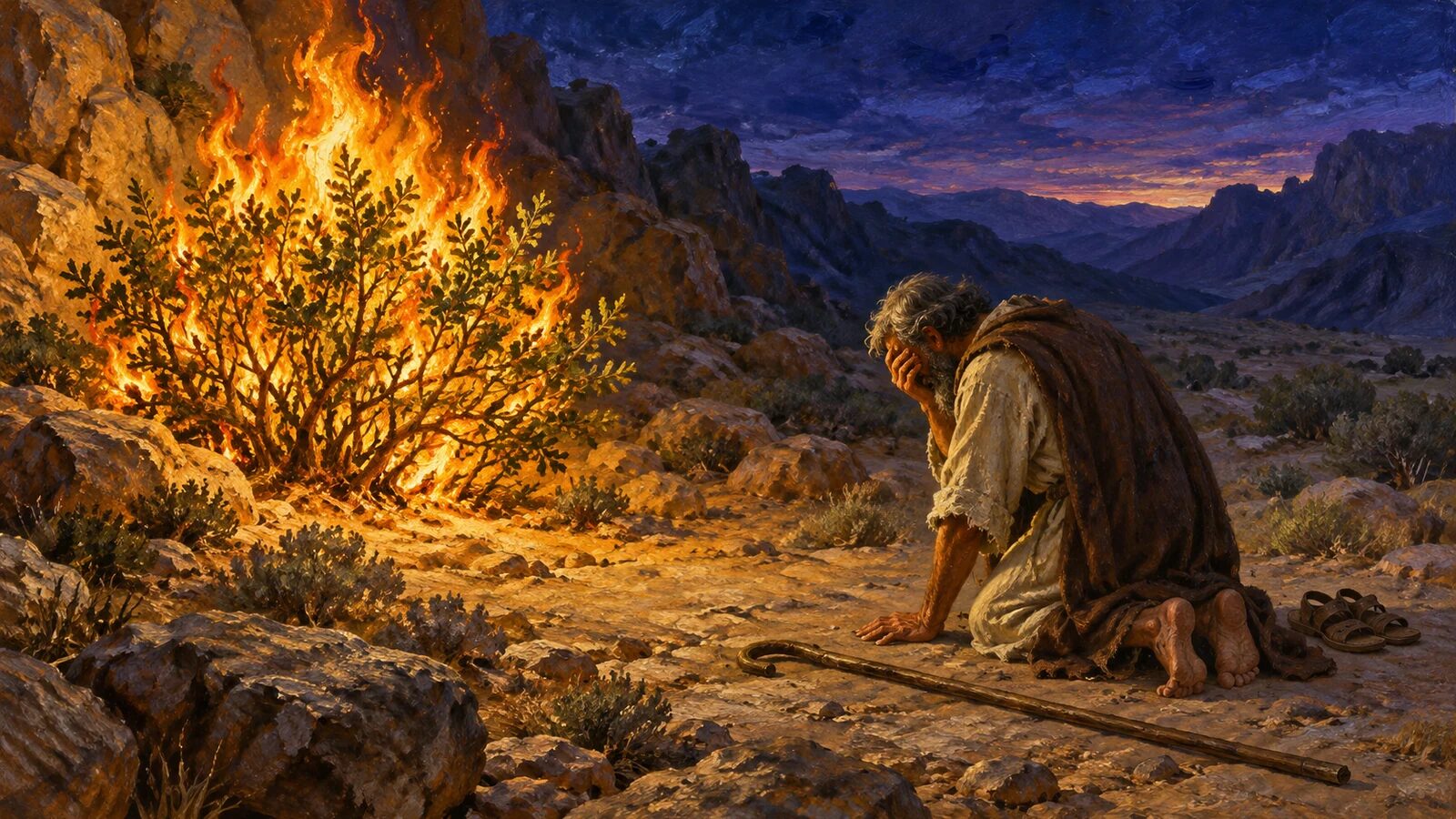
At the burning bush, Moses was commanded to change how he approached the place where God was making His presence known.
Then He said, “Do not draw near this place. Take your sandals off your feet, for the place where you stand is holy ground.”
The ground had no moral character of its own. It was holy because God made His presence known there and claimed it for His purpose, and Moses was to respond by removing his sandals.
The tabernacle later gave Israel a continuing, visible lesson in this distinction. Its Holy Place and Most Holy Place were not interchangeable rooms. Priestly garments, altar vessels, incense, and anointing oil had appointed uses. The sacrifices and Sabbath were governed by God’s commands too. What He claimed for Himself was not available for anyone to repurpose.
Priests served in the Holy Place, but the high priest entered the Most Holy Place behind the veil only on the Day of Atonement, bringing sacrificial blood as God had commanded. He was approaching the Lord who had chosen to dwell among Israel. These arrangements provided access through the priesthood and sacrifice while teaching people to regard Him as holy.
The warning to the sons of Kohath not to touch the holy things they carried, and the judgment on Nadab and Abihu for offering what God had not commanded, belonged to that covenant order. They were not examples of magic becoming unstable inside a religious object. God had defined the service, and religious office did not free anyone from His directions.
Christians do not take up those Levitical assignments or repeat the Day of Atonement. Christ fulfilled what the old worship foreshadowed. The covenant arrangements have changed, while the Lord who claims His people remains holy.
Holiness Exposes Sin and Leads Us to Christ
Habakkuk appealed to God’s purity when he struggled with the announcement that Babylon would discipline Judah. He knew Judah deserved correction, but how could the Holy One use a nation so violent and treacherous?
You are of purer eyes than to behold evil, And cannot look on wickedness. Why do You look on those who deal treacherously, And hold Your tongue when the wicked devours A person more righteous than he?
He was not saying that God could not see wickedness. The same verse asks why He looks upon those who act treacherously. Habakkuk knew the Lord saw it; he wanted to understand how His dealings with these nations agreed with His pure character. God’s use of Babylon did not mean He approved its cruelty.
Isaiah responded to the vision we considered earlier by confessing his uncleanness before the King. He recognized it in himself and in the people among whom he lived.
So I said: “Woe is me, for I am undone! Because I am a man of unclean lips, And I dwell in the midst of a people of unclean lips; For my eyes have seen the King, The LORD of hosts.”
Then one of the seraphim took a live coal from the altar and touched the lips Isaiah had confessed as unclean.
And he touched my mouth with it, and said: “Behold, this has touched your lips; Your iniquity is taken away, And your sin purged.”
Isaiah did not make himself clean enough to remain before God. Cleansing came from the Lord, with the altar directing our attention to sacrifice. The Holy One had exposed his sin and provided forgiveness.
I need to hear the confession as well as the comfort. Speech reveals more than a person’s public manners; it reveals the heart. I can look respectable and still need cleansing from what I say and desire. Sin is not merely an embarrassment God should help me forget. It opposes His character and rejects His right to govern my life.
The gospel answers that need without asking God to excuse rebellion or lower His standard. Jesus Christ is the eternal Son, who became fully man without ceasing to be fully God and lived without sin. Wicked men tortured Him and put Him to death, but He willingly bore the punishment for our sins in His innocent body and shed His blood. He completed that saving work through His death, was buried, and then rose bodily from the dead. The Father did not punish, curse, abandon, strike, bruise, or pour wrath on Jesus.
Peter connects our call to holy conduct with the price of our redemption. We were not redeemed by making ourselves presentable to God, but by Christ’s blood.
but with the precious blood of Christ, as of a lamb without blemish and without spot.
Salvation is by grace through faith, so no degree of personal holiness can purchase it. Christ died for the whole world, and God’s offer is genuine for everyone, though people can resist and reject His grace. Everyone who repents and believes is forgiven, justified, and born again. To be justified is to be declared righteous through Christ, rather than accepted on the strength of our own record.
The believer becomes a new creation, indwelt and sealed by the Holy Spirit, and is eternally secure in Christ. That assurance gives no permission for lawlessness, and a Christian profession without new life does not establish genuine conversion. God sets the person He saves apart for Himself and teaches him to live as His own. The study on the gospel explains Christ’s saving work further.
God Calls a People His Own
Israel’s deliverance from Egypt came before the calling given at Sinai. God did not wait for the people to become holy enough to earn rescue. He brought them out and then told them what life as His covenant nation required.
And you shall be to Me a kingdom of priests and a holy nation.’ These are the words which you shall speak to the children of Israel.”
This was a national calling, not a declaration that every Israelite had personally been born again. Still, the order is plain: the Lord rescued them and claimed them for Himself. Leviticus brought that relationship into daily conduct. Chapter 11 applied the command to “be holy” to clean and unclean animals, while chapter 20 addressed separation from pagan worship and sexual immorality.
And you shall be holy to Me, for I the LORD am holy, and have separated you from the peoples, that you should be Mine.
Some commands marked Israel ceremonially under the Mosaic covenant; others expressed moral truths about conduct God approves or condemns. We should not lift Israel’s dietary rules out of that setting and impose them on the church. Nor can we dismiss His moral instruction simply because it also appears in the Old Testament. We need to read those commands in light of the covenant and the teaching Christ and His apostles gave us.
Peter applied the call to be holy to believers scattered across Asia Minor. They were living as pilgrims and facing hostility. He urged them to prepare their minds, live soberly, and place their hope in Christ’s revelation.
but as He who called you is holy, you also be holy in all your conduct, because it is written, “Be holy, for I am holy.”
His standard is the character of the Father who called them. He does not tell them, “Be unusual so other people will notice you.” Their conduct should agree with their belonging to God, whether or not it gains anyone’s admiration.
Peter then uses language from Israel’s calling to describe the people God has made His own in Christ.
But you are a chosen generation, a royal priesthood, a holy nation, His own special people, that you may proclaim the praises of Him who called you out of darkness into His marvelous light;
Peter’s use of Exodus language does not mean the church has erased Israel or acquired every national and territorial promise given to her. God retains His future purpose for national Israel, while Jewish and Gentile believers now belong to one body in Christ.
These believers had been called out of darkness to proclaim God’s praises. Their identity did not come from social standing, ancestry, or confidence in their own morality. That calling also gives us work among people who do not yet believe. Jesus lived apart from sin while going among sinners with truth and mercy. If I use holiness to justify contempt for people or withdrawal from everyone who needs the gospel, I am failing to follow His example.
Growing in Holiness Through the Spirit and the Word
Being called holy does not mean a believer has no growing left to do. God has made him His own, and he is called to learn obedience within that relationship.
Paul also commands the pursuit of holiness in Hebrews 12, where he discusses endurance and the Father’s discipline of His children. God corrects them for their good, so they may share His holiness. He urges weary believers to persevere and watch over one another, warning against bitterness and the godlessness illustrated by Esau.
Pursue peace with all people, and holiness, without which no one will see the Lord:
The Greek noun hagiasmos is translated sanctification or holiness. It concerns being set apart to God and the holiness of life associated with that calling. In 1 Thessalonians 4:3, Paul makes the application specific: God’s will for their sanctification includes abstaining from sexual immorality. The study on sanctification examines this growth more fully.
We should not soften the warning in Hebrews 12:14 into a suggestion. But neither does it establish a level of moral performance that earns entrance into heaven. We cannot see the Lord apart from the holiness He gives in Christ, and that new life calls for an active pursuit of what pleases Him. Believers may stumble and need correction; a settled contempt for holiness gives no evidence that someone has received new life.
In 2 Corinthians, Paul appeals to God’s promises to dwell among His people and receive them as their Father. His words “having these promises” explain why they should respond to Him.
Therefore, having these promises, beloved, let us cleanse ourselves from all filthiness of the flesh and spirit, perfecting holiness in the fear of God.
They were not being told to clean themselves up until God reluctantly agreed to adopt them. He was calling them to act on the relationship and promises He had given. The reference to flesh and spirit also reaches beyond a respectable public appearance. God condemns drunkenness and sexual immorality, and He sees the pride, envy, or resentment we can conceal from other people.
Ephesians 2 gives the same order: we are saved by grace through faith, not works, and created in Christ for good works. Titus 2 says saving grace teaches us to deny ungodliness. Eternal security does not mean the Father overlooks His children’s sins. He disciplines them, and we receive conviction through the Spirit and correction through His Word. Christ has secured us, so we can face that correction without imagining each failure reverses the new birth.
We also need more than determination. The Holy Spirit is a divine Person who indwells believers, gives life, convicts, and teaches through Scripture. He is not a religious mood or an impersonal energy we generate. Paul calls us to depend on Him in our conduct.
I say then: Walk in the Spirit, and you shall not fulfill the lust of the flesh.
That dependence does not make us passive. We make real choices while receiving help we could not supply through willpower alone. The Spirit produces His fruit in those who belong to Christ, and His leading agrees with the Word He inspired.
On the night before His crucifixion, Jesus prayed for His disciples as men He was sending into a hostile world. He asked for their protection from evil and their sanctification through the Father’s truth.
Sanctify them by Your truth. Your word is truth.
The disciples needed God’s Word to shape their life and service in that world. We need it too. If I neglect Scripture, my appetites, fears, or the opinions around me can begin governing my conscience instead. A tradition may feel right simply because I am used to it, while an indulgence may seem harmless because other people excuse it. The Spirit does not lead us into holiness by teaching us to disregard what God has said.
If I speak courteously at church and then deliberately mislead a customer, I cannot excuse the lie by pointing to my religious conduct. Nor does avoiding a public scandal excuse the resentment I keep rehearsing in private. Belonging to God concerns both what I do and what I am willing to entertain in my heart. His authority extends to how I handle money, the entertainment I choose, and my family life and sexual conduct.
Legalism substitutes human rules for God’s authority and can bind people’s consciences where He allows freedom. Lawlessness treats His grace as permission to ignore Him. Neither honors the relationship He has given us. I cannot prove holiness by imposing my preferences on someone else, and I cannot claim an inward devotion that excuses disobedience in my body.
Pride can even disguise itself as zeal for holiness. Harshness, boasting, and a refusal to receive correction do not reflect the Lord’s mercy and patience. His compassion never compromises truth, and faithfulness to truth does not require me to become contemptuous toward people. The study on the fear of the Lord considers how reverence and assurance lead us to obey.
My Final Thoughts
I want to take God’s holiness seriously enough to receive His correction, rather than use the word to make myself look devout. The Holy One has provided cleansing through Christ and made believers His own. We do not earn that relationship by achieving enough holiness, but belonging to Him changes what we are willing to excuse. I can draw near with confidence in Jesus and ask the Spirit to teach me obedience through His Word.