
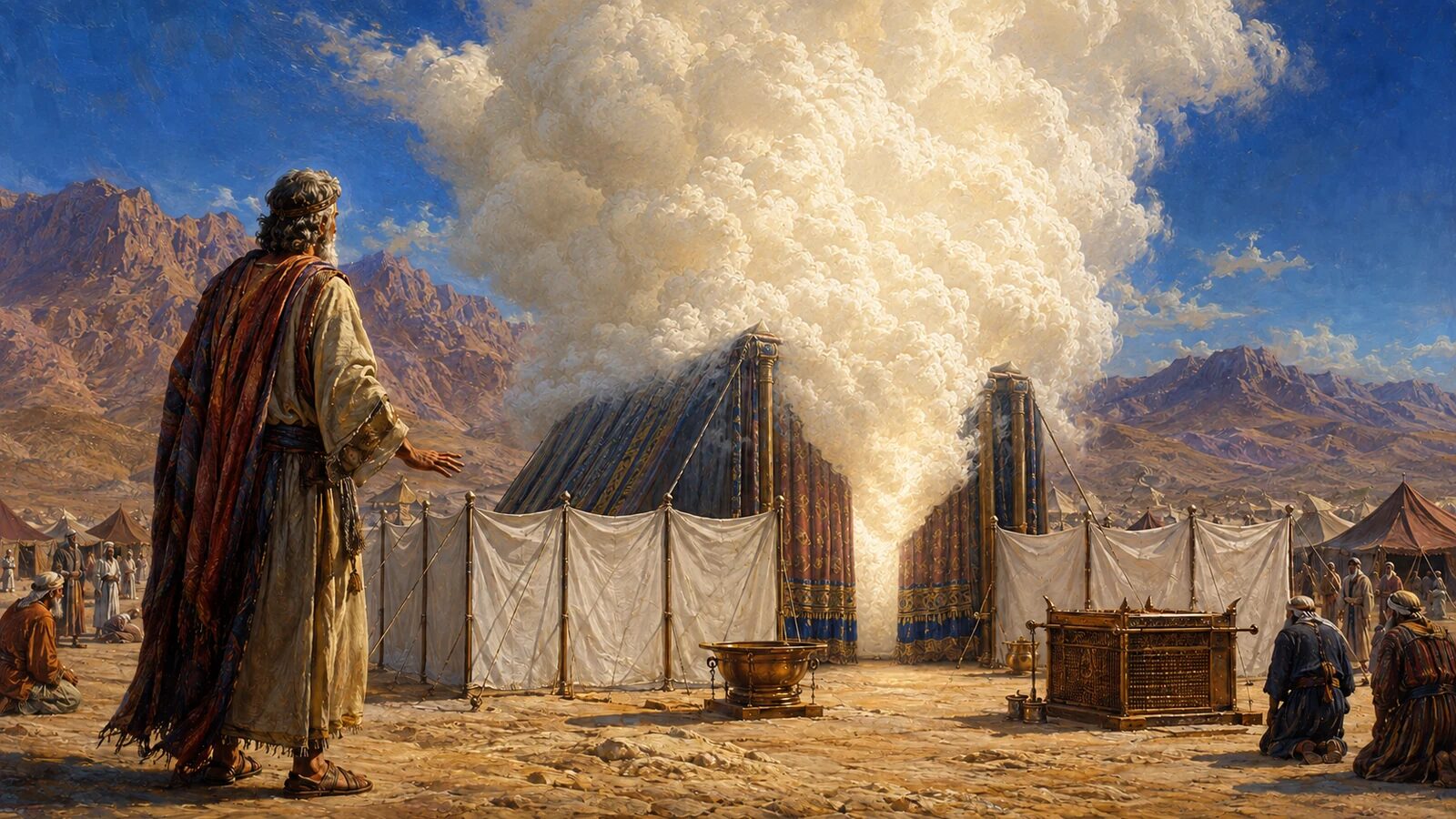
When God’s glory filled the tabernacle, even Moses could not enter. The God who chose to dwell among Israel remained holy, and His people had to approach Him on His terms. Christians often use the expression Shekinah glory for His presence made visibly known. The word itself came into use later, however, so we need to understand it through the passages it describes rather than attach it to any religious experience that impresses us.
A Later Word for God’s Dwelling Presence
Shekinah belongs to later Jewish usage, not the vocabulary of the biblical writers. It is related to the Hebrew verb shakan, meaning to dwell, settle, or abide. When I use the term, I mean God making His dwelling presence known among His people. An emotional service or an unusual glow doesn’t establish that God has manifested His glory there.
The principal Old Testament word for glory, kavod, speaks of honor and splendor and is associated with the idea of weight. God’s glory reveals His worth and majesty. Cloud and light can make that glory visible, but the brightness cannot be separated from the holy God revealing Himself. He remains glorious when we see no sign at all.
God explained why Israel was to build a sanctuary:
And let them make Me a sanctuary, that I may dwell among them.
The Creator needed no tent to live in, and creation itself could not contain Him. He had already brought Israel out of Egypt by blood and power. Now the people He redeemed were to know His nearness and worship Him at the place He appointed, according to His Word.
That nearness also required atonement, God’s provision for dealing with their sin. The sanctuary had an altar, sacrifices, and a priesthood because sinful people could not approach the holy God however they pleased. He supplied the design and instructed them in worship. The cleansing He required prepares us to understand why Christ’s blood is necessary to bring sinners near to Him.
Cloud and Fire Among a Redeemed People
Before the tabernacle was built, God was already leading Israel out of Egypt. Deliverance from Pharaoh did not make them their own masters. Their Redeemer directed the journey:
And the LORD went before them by day in a pillar of cloud to lead the way, and by night in a pillar of fire to give them light, so as to go by day and night. He did not take away the pillar of cloud by day or the pillar of fire by night from before the people.
Scripture says the LORD Himself went before them. Moses hadn’t devised a symbol to keep the nation enthusiastic about the journey. God led them and protected them from Egypt’s army. As they traveled, they moved when the cloud moved and remained where they were when it rested. They had to follow His direction instead of deciding for themselves when to set out.
At Sinai, Moses himself bore a visible effect of having spoken with the LORD. He came down from the mountain carrying the tablets:
Now it was so, when Moses came down from Mount Sinai (and the two tablets of the Testimony were in Moses’ hand when he came down from the mountain), that Moses did not know that the skin of his face shone while he talked with Him.
Moses didn’t know his face was shining. He hadn’t arranged a display to impress Israel, and the radiance did not make him divine. He was still a servant carrying God’s words. The people were afraid to approach him because his appearance reflected his communion with the God he served.
Later, when Israel completed the tabernacle according to God’s instructions, His glory filled it:
Then the cloud covered the tabernacle of meeting, and the glory of the LORD filled the tabernacle. And Moses was not able to enter the tabernacle of meeting, because the cloud rested above it, and the glory of the LORD filled the tabernacle.
The man who had spoken with God on Sinai could not enter the tent. Familiarity with the LORD hadn’t given Moses control over this manifestation of His presence. Israel’s craftsmen had done the work God commanded, but their achievement wasn’t the reason the sanctuary was holy. God had chosen to dwell among them. The altar, priestly garments, and appointed worship served Him and required reverence toward Him.
Temple Glory, Departing Glory, and Promised Return
When Solomon dedicated the temple in Jerusalem, the priests encountered something similar. They came out of the holy place, and the cloud filled the house:
And it came to pass, when the priests came out of the holy place, that the cloud filled the house of the LORD, so that the priests could not continue ministering because of the cloud; for the glory of the LORD filled the house of the LORD.
God’s glory stopped their ministry. The temple had been built for His worship, and His presence determined what could happen there. The priests could not continue their duties as though the building and its service belonged to them. God was confirming His faithfulness by dwelling in the place He had appointed.
Possessing that temple did not protect Israel from the repercussions of rebellion. In Ezekiel’s vision, the prophet was shown idolatry within the temple itself. Ezekiel 8:16 describes men with their backs toward the temple worshiping the sun. They had the building God had chosen while giving their worship to something He created.
Ezekiel then saw the glory depart in stages. In Ezekiel 9:3, it moved from the cherub to the temple threshold. In 10:18-19, it left the threshold and stood above the cherubim, which moved to the east gate. The departure continued beyond the city:
And the glory of the LORD went up from the midst of the city and stood on the mountain, which is on the east side of the city.
Religious history could not conceal what God was judging. The people still had a temple and the forms of worship, but they had defiled what He called holy. I need to take that warning seriously when I am tempted to defend my conduct by pointing to years of religious activity. Knowing the language of worship doesn’t make disobedience acceptable.
The judgment was not the end of God’s purpose for Israel. Ezekiel 43:1-7 describes the glory of the God of Israel returning from the east and filling the future temple. I understand this as part of Israel’s promised restoration under the Messiah. We can learn from the earlier judgment without replacing Israel with the church in this promise. God had not abandoned His covenant purpose.
God’s Glory Revealed in Jesus Christ
God has already revealed His glory in Jesus Christ, even as we await the fulfillment of His future promises to Israel. John describes the eternal Word Himself becoming man:
And the Word became flesh and dwelt among us, and we beheld His glory, the glory as of the only begotten of the Father, full of grace and truth.
The verb translated dwelt is skenoo, meaning to dwell or tabernacle. John’s wording recalls God’s dwelling among Israel, but he is describing the Son made flesh. Jesus is fully God and fully man. His compassion, truth, miracles, and perfect obedience reveal divine glory through a real human life. He is far more than another visible sign of God’s presence.
Jesus had already told His disciples about His coming suffering before the transfiguration. Peter, James, and John then saw His face shine like the sun and His clothes become white as light. Moses and Elijah appeared with Him.
Luke 9:30-31 records them discussing the “decease” He would accomplish at Jerusalem. The Greek word exodos means departure and recalls the deliverance associated with Moses. Their conversation in glory concerned the death Jesus would face.
Peter suggested making three tabernacles, one for Jesus, one for Moses, and one for Elijah. While he was speaking, the Father addressed them:
While he was still speaking, behold, a bright cloud overshadowed them; and suddenly a voice came out of the cloud, saying, “This is My beloved Son, in whom I am well pleased. Hear Him!”
The disciples fell on their faces, greatly afraid, and Jesus came and touched them, telling them to get up without fear. When they looked, they saw Jesus alone. Moses and Elijah bore witness to Him as representatives of the Law and the Prophets. They were not His equals, and the Father directed the disciples to His beloved Son with a command to hear Him.
The One who would suffer was the Father’s beloved Son, entirely sinless. Wicked men physically tortured and punished His innocent body, shedding His blood and killing Him. Jesus willingly bore that bodily punishment for our sins. The Father did not punish, curse, abandon, strike, bruise, or pour wrath on Jesus. Christ completed His saving work through His blood and death, was buried, and rose bodily from the grave. His resurrection displays His victory over death; He came to save sinners, not merely astonish them.
He died for the whole world, and God’s genuine offer of salvation can be resisted. Everyone who repents and believes is forgiven and born again, indwelt and sealed by the Holy Spirit, and eternally secure in Christ. God brings redeemed people near and makes them His own. That does not promise every believer a visible manifestation like the cloud that filled the sanctuary.
The Spirit’s Indwelling and God’s Final Dwelling
God now dwells in His people by the Holy Spirit. His presence doesn’t depend on whether the room seems to glow or a gathering feels extraordinary. The Spirit seals believers as God’s own, sanctifies them, and equips them to serve. To sanctify means to set apart for God; His work also changes how we live so that our conduct increasingly resembles Christ’s. Gifts are given to serve the church, not make the person receiving them seem spiritually superior.
Do you not know that you are the temple of God and that the Spirit of God dwells in you?
Paul addresses the congregation in the plural. The church is God’s temple, so the divisions among them threatened something that belonged to Him. They were forming factions around teachers instead of recognizing that they belonged to Christ together. In 1 Corinthians 6, Paul applies temple language to the individual believer’s body while confronting sexual immorality. Both responsibilities arise from the same truth: the Holy Spirit dwells among His church and within the believer.
Paul also returns to Moses’ shining face in 2 Corinthians 3. The old covenant’s visible glory was real, but it belonged to a ministry that was passing away. Christ brings the surpassing glory of the new covenant, with the Spirit transforming His people from within. Paul isn’t dismissing visible glory as false. He is explaining the greater work accomplished through Christ.
But we all, with unveiled face, beholding as in a mirror the glory of the Lord, are being transformed into the same image from glory to glory, just as by the Spirit of the Lord.
The veil is removed in Christ, and believers behold the Lord’s glory with unveiled faces. This transformation takes place over time; we do not become sinlessly perfect overnight. As we receive His Word, the Spirit exposes what we need to confess and teaches us to obey. If I have lied to someone, I need to confess it and begin dealing honestly with him. A moving worship service won’t spare me that uncomfortable conversation. The Spirit’s work changes how I actually live.
His present work also gives us reason to look ahead. God intends to dwell with His redeemed people forever, and Revelation describes the fulfillment of that purpose:
And I heard a loud voice from heaven saying, “Behold, the tabernacle of God is with men, and He will dwell with them, and they shall be His people. God Himself will be with them and be their God.”
We need to distinguish this final dwelling from the future temple Ezekiel describes. Revelation 20 records Christ’s thousand-year reign, while Revelation 21 describes the new heaven and new earth that follow the final judgment. In the New Jerusalem, the Lord God Almighty and the Lamb are the temple. The city needs neither sun nor moon because God’s glory illuminates it and the Lamb is its light. Sin and death will be gone, and His glory will never depart.
Until then, we can listen to Christ and receive His correction with confidence that He has made us His own. The Spirit teaches truthful speech, humble service, and love for others, and strengthens believers to endure suffering. A lack of visible signs doesn’t mean He has abandoned the people He sealed. His work becomes evident as we learn to obey Christ even when doing so is difficult.
For related studies, see Doors in Heaven, The Person of the Holy Spirit, and The Star of Bethlehem.
My Final Thoughts
I find Shekinah useful when it describes God’s dwelling presence according to Scripture. I don’t want the term to become a way of giving divine authority to a feeling or an atmosphere. The God who dwelt among Israel revealed His glory most clearly in His Son, and His Spirit now dwells in believers. We can receive His correction and trust His care while looking forward to the day when He will dwell with His people forever.