
How should we trust God’s providence when life is painful or confusing? It helps to distinguish His continuing rule and care over creation, which we call providence, from His provision for what His creatures need. I want to understand how we can trust that God is present and His purpose will stand without making Him the author of evil or pretending that following Him makes life easy.
God Rules Without Erasing Human Responsibility
We use the word providence to bring together what the Bible teaches about God’s care. He preserves His creation and governs history as He carries out His purposes. His creatures remain under His care throughout. The English label may be uncommon in the text without making the doctrine unbiblical, just as the word Trinity names a truth Scripture teaches.
We shouldn’t limit providence to miracles. A miracle is an extraordinary act in which God displays His power in a striking way, but He also works through the ordinary events of life. Rain and growing crops depend on His care. He can use a ruler’s decisions to carry out His purpose, and He can meet a need through a family helping one another or a believer working faithfully. A church’s practical help belongs within His provision too.
When I trust God’s providence, I’m trusting the living God, rather than fate, luck, karma or any other impersonal force. The Father, Son, and Holy Spirit possess perfect knowledge and share one perfect will. They always act in complete unity, so there is no conflict in Their care for us. My confidence rests in who God is even when I cannot explain an event.
Paul’s letter to the Colossians helps us understand the Son’s place in all of this. He was answering teaching that diminished Christ and offered spiritual fullness through additional rules and powers. Paul declared the Son’s supremacy by showing that Jesus is not part of creation at all. Everything created, whether visible or invisible, came through Him and exists for Him.
For by Him all things were created that are in heaven and that are on earth, visible and invisible, whether thrones or dominions or principalities or powers. All things were created through Him and for Him. And He is before all things, and in Him all things consist.
The Greek verb behind “consist” helps us understand what Paul is saying: all things hold together or continue in a coherent state through the Son. Creation doesn’t have a life independent of Him. The eternal Son sustains the order He made, so even the laws of nature and the powers His creatures possess depend on Him.
I don’t want to separate that immense power from the Person we meet in the Gospels. The Son who upholds the galaxies became flesh and walked among us. He died and rose again as our Redeemer, and He is the Head of the church. The One who saves us is also our Creator and Sustainer.
Psalm 104 praises God for the order and sustaining care we see in the world around us. Springs flow among the mountains and give animals water, while the changing seasons govern life on land and in the sea. People go out to work and receive food from the earth, yet every living thing still depends on the breath God gives. The psalm recognizes these natural processes as expressions of His continuing care.
These all wait for You, That You may give them their food in due season. What You give them they gather in; You open Your hand, they are filled with good. You hide Your face, they are troubled; You take away their breath, they die and return to their dust. You send forth Your Spirit, they are created; And You renew the face of the earth.
Notice that the creatures gather the food God gives them. Their activity doesn’t compete with His provision, as though He could only feed a bird by dropping seed directly into its nest. The same is true of our work. God gives productive soil and the strength to cultivate it, along with the knowledge and cooperation that make human labor possible. I can appreciate the work involved without forgetting who supplies those ordinary means.
Jesus said the Father sends rain and causes the sun to rise upon the evil and the good. This generosity toward everyone is sometimes called common grace. It doesn’t mean everyone who receives His gifts has been reconciled to Him. It means that all of us live by gifts from our Creator that we haven’t earned.
God’s care does not weaken His rule. Psalm 103:19 says the LORD established His throne in heaven and His kingdom rules over all. Daniel 4 declares the same sovereignty over nations and rulers. Nothing can finally overthrow God’s holy purpose or take Him by surprise.
God’s rule doesn’t erase our responsibility. Scripture addresses people who think and desire and then make real choices to obey or rebel. God calls us to repent and believe, and we will answer for what we do. His foreknowledge doesn’t make those choices imaginary, nor does His ability to accomplish His purpose make Him the source of our evil motives.
For that reason, I reject Calvinistic determinism. Scripture never requires us to believe that God causes every sinful desire and then condemns the sinner for having it. James explicitly says God does not tempt anyone with evil. Christ died for all, and the gospel genuinely invites the whole world to respond, even though people can resist God’s gracious call.
We can see the distinction in Pharaoh’s refusal to obey God. Before Moses arrived, God knew and announced how the conflict would unfold. During the plagues, Pharaoh repeatedly hardened his own heart. He refused God’s command and broke his word when relief came. Scripture also says God hardened Pharaoh within that chosen rebellion and used the conflict to display His judgment against Egypt’s gods. Pharaoh was not an innocent victim of God’s purpose. He repeatedly knew enough to obey and deliberately refused.
At the cross, Acts 2 shows us God’s purpose and human responsibility together. Jesus was delivered according to God’s determined purpose and foreknowledge, yet Peter held the lawless men who crucified Him responsible for the murder. God’s saving purpose was certain without making their betrayal, torture and killing any less their chosen evil. I cannot turn His foreknowledge or His purpose into a claim that He authored their sin.
Nor can I accept open theism, which treats the future as something God doesn’t fully know, or deism, which leaves Him watching His creation from a distance. His knowledge is perfect, and He acts within history. He truly answers prayer and can limit the reach of evil. Every promise He has made will reach its fulfillment.
Once we recognize that our choices are real, it becomes easier to understand how God uses ordinary actions. That may involve a farmer planting his field or a ruler signing an order. A mother acts to protect her child, and a friend offers wisdom someone needs. A congregation may send practical support. These remain human choices even as God works through them to carry out His purpose.
Planning can honor God’s providence. Proverbs points the diligent toward the ant and warns against laziness, while James corrects the arrogance with which we can make plans. He doesn’t forbid planning itself. I should make my plans with the humility expressed in these words: “If the Lord wills, we shall live and do this or that” (James 4:15).
That leaves room for ordinary help. Medicine or wise counsel may be part of God’s provision, just as employment and responsible budgeting can be. A lawful appeal or an escape from danger can also be a means He uses. Paul exercised his rights as a Roman citizen, accepted necessary provisions during a voyage and advised the sailors. He also received help from churches. Trusting God did not require him to refuse the help available.
A miracle may bypass ordinary patterns, but we should not despise the patterns God normally uses. Bread from a paycheck and bread multiplied in the wilderness both depend upon Him.
Providence in Scripture’s Stories
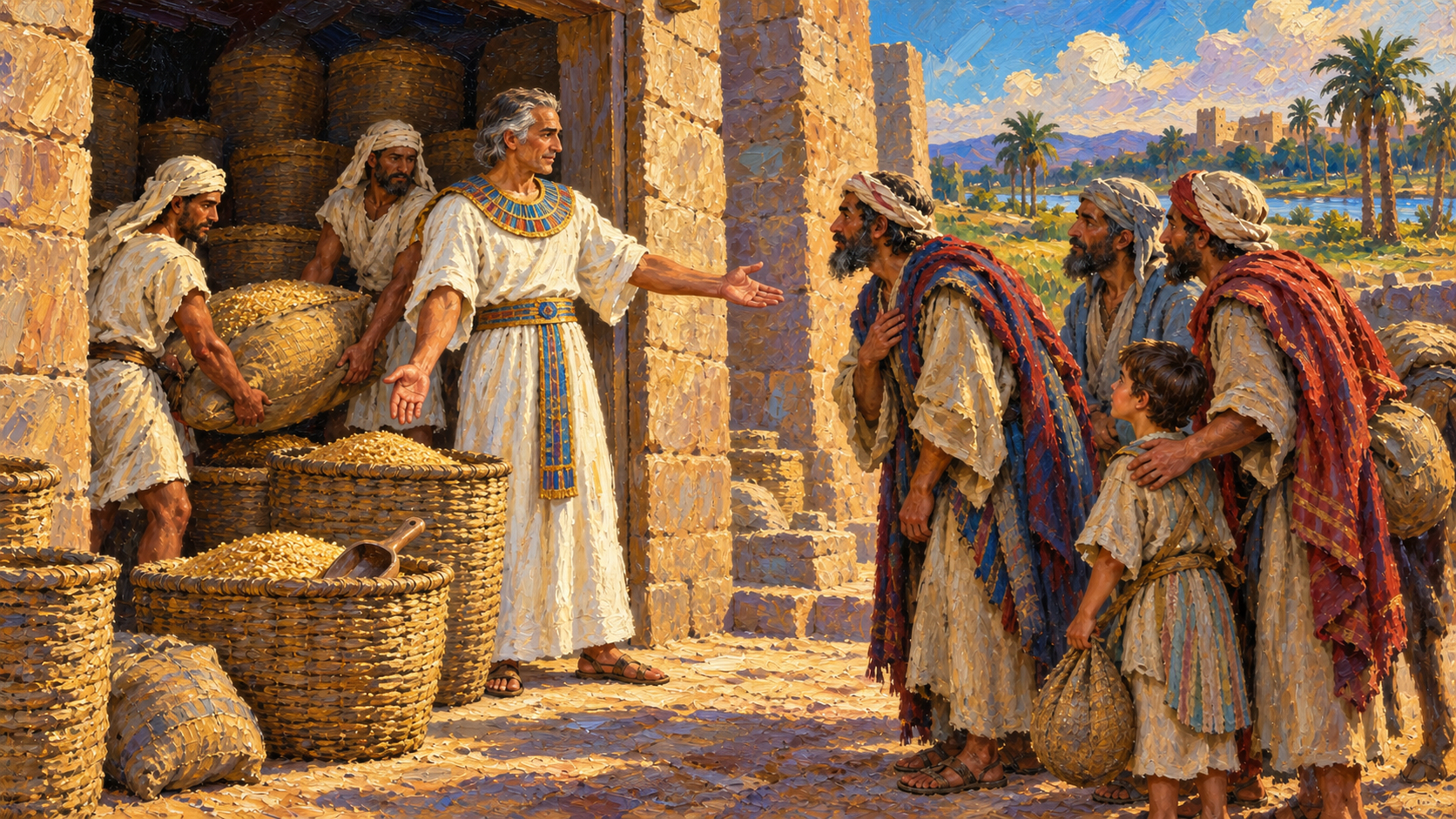
Joseph’s brothers hated him enough to sell him into slavery and then deceive their father to conceal what they had done. Their betrayal was evil. Joseph later endured false accusation and imprisonment before he was exalted in Egypt. When famine came years afterward, he could see how God had preserved many lives through the very events his brothers had intended for harm.
Joseph said to them, "Do not be afraid, for am I in the place of God? But as for you, you meant evil against me; but God meant it for good, in order to bring it about as it is this day, to save many people alive. Now therefore, do not be afraid; I will provide for you and your little ones." And he comforted them and spoke kindly to them.
Joseph did not blur the difference between what his brothers intended and what God intended. They meant to harm him, while God meant to preserve life. I can recognize God’s purpose here without explaining away the brothers’ guilt as something God caused. Their sin did not defeat His purpose, but neither did His good purpose make their cruelty righteous.
Joseph’s response also helps me understand what trust in providence should produce. He refused revenge because he knew he was not God. Instead of copying his brothers’ cruelty, he provided for the family and spoke kindly to them. His trust expressed itself in humility and mercy.
Ruth gives us another account of God working through ordinary faithfulness. Famine led to migration, and widowhood brought deep grief. Naomi returned to Bethlehem facing an uncertain future. God began to provide through Ruth’s loyalty and Naomi’s counsel, while Israel’s gleaning laws made room for Boaz to act with integrity. Community witnesses later recognized the marriage of Ruth and Boaz, which led to the birth of a child. Through the faithfulness of these people, we are brought to David’s family line.
The book of Esther never directly names God, but notice how events unfolded. One queen was removed and Esther took her place. Mordecai overheard a plot, and his service was recorded. At the decisive moment, the king couldn’t sleep and ordered those records read to him. Haman’s scheme collapsed, and the Jewish people he had threatened were delivered. Their courage and fasting remained essential to what happened.
These accounts help me notice God’s faithfulness without inventing secret revelation to explain events. Sometimes we recognize what He was doing after time has passed. At other times, we may never understand it during this life. We can still trust the character He has revealed when we cannot see how the events fit together.
Job keeps us from turning providence into an easy explanation for every person’s suffering. He lost his children and wealth, followed by his health and social standing. We are told about the spiritual conflict and the strict limits God placed on Satan, but Job was not given that information. His friends confidently attributed his suffering to secret wickedness, and their explanations were both cruel and false.
When God spoke, He showed Job His wisdom and rule over a creation far beyond Job’s understanding. He did not explain the cause of each event. Job was brought to humble trust, while his friends were rebuked for failing to speak rightly about God.
That should restrain me from telling a sick person which hidden lesson caused the illness, or declaring every loss a direct punishment. The secret things belong to the LORD. What He has revealed is what should guide our faith and obedience.
Trust also leaves room for lament. Scripture gives suffering people words to express their grief and protest as they appeal to God and wait for Him. We don’t honor Him by replacing honest sorrow with a slogan that misrepresents Him.
God’s Provision in Ordinary Life
In Genesis 22, Abraham faced a severe test concerning Isaac. He told his son that God would provide for Himself the lamb. At the appointed moment, the Angel of the LORD stopped Abraham, and a ram was found caught by its horns.
Abraham named the place “The-LORD-Will-Provide.” The Hebrew expression connects provision with seeing: the LORD sees and will see to what is needed. Abraham’s name for the place remembered the substitute God had appointed on His mountain.
I would not turn that name into a promise that God will fulfill every financial desire. Isaac’s life was at stake in a test involving God’s covenant promise and Abraham’s obedience. A substitute was needed in Isaac’s place, and God Himself supplied it. That prepares us to understand why salvation depends on what God provides.
We also need to keep Abraham’s test in its setting. Genesis 22 records a unique event within the Abrahamic covenant, directed by clear divine revelation. God stopped Isaac’s death and provided the ram. Later Scripture condemns human sacrifice, so this account gives no permission to harm a child.
God’s provision is wise and purposeful. A good Father gives what is truly good, which may differ from what a child demands in a frightened or short-sighted moment.
In Matthew 6, Jesus addressed anxiety about food, drink and clothing by teaching about the Father’s care. He did not mock the disciples for having bodily needs. He pointed them to the birds and lilies, then reminded them that their Father knew what they needed. Their concerns belonged under the priority of His kingdom.
We need to understand that promise in the life of discipleship. It concerns necessities, without guaranteeing luxury or a life free from hunger. The New Testament also describes poor saints and imprisoned apostles. Believers faced persecution and helped one another through famine. The Father’s care remains true as believers share one another’s burdens.
Seeking the kingdom first should change how I approach those needs. I can ask for daily bread without allowing possessions to become my master. Trusting the Father doesn’t mean pretending tomorrow has no responsibilities. It means obeying Him today without letting worry enslave me.
The Thessalonian church had a different problem. Amid confusion about the Day of the Lord, some people refused ordinary work and became busybodies while expecting others to support them. In 2 Thessalonians, Paul addressed those who were able but unwilling to work. He wasn’t condemning people prevented by illness or disability, by caregiving responsibilities or unemployment, or by a crisis. Ephesians also tells the former thief to work honestly so he has something to share. God’s provision includes what we receive and what our work allows us to give.
Even so, our work is not the ultimate source of provision. God gives us health and opportunity as well as the skill and strength to work. Customers and productive land remain under His providence too. Depending on Him should encourage responsible action rather than idleness. We may need to seek employment or learn a trade, and we should budget carefully and store resources responsibly. When a genuine need exceeds what we have, we may ask the church for help.
The church has a responsibility to notice hardship and respond wisely. Acts records believers sharing with needy saints, and Paul organized famine relief. James rebukes the person who offers words of blessing while withholding practical help. That makes me consider whether I am willing to be the person through whom God’s provision reaches someone else.
God also provides what material resources cannot give. Scripture describes His wisdom in trials and His grace in weakness. He gives courage when faithful witness is costly, and He may bring another believer’s companionship into a lonely season. Even correction after sin is a gift we need. The Holy Spirit equips His people to serve and gives peace that guards the believer’s heart. Someone with few possessions can still receive richly from God in these ways.
I do not want a spiritual discussion of provision to minimize real material needs, because romanticizing poverty is cruel. Hungry people should be fed, and safe shelter should be pursued. Still, money cannot reconcile a sinner to God or create a clean heart. It cannot raise the dead or secure eternal life. Our deepest needs require divine grace.
Sometimes God changes the circumstance. At other times, He supplies the strength or wisdom to face it, or brings people who can help. We should ask Him for relief while remaining willing to receive help in a form we didn’t anticipate.
I don’t see God’s knowledge of our needs as a reason to stop praying. Jesus said the Father knows what we need before we ask, and then taught us to ask for daily bread. Prayer is one of the means God has appointed for us to depend on Him and enjoy fellowship with Him. We bring our requests and confess our sins to the One who already knows us.
Asking according to God’s will isn’t resigning ourselves to fate. We can tell Him honestly what we desire while trusting His greater wisdom. His answer may come through another person or a changed decision. He may give us fresh endurance or help us recognize an opportunity as we pray.
Prayer is never a lever that forces an outcome. Adding confident language does not obligate God to give a harmful or mistimed gift. The Father hears perfectly, and His refusal is never indifference.
Paul’s thorn helps us understand provision that sustains a person without removing the difficulty. Paul described it after speaking of extraordinary revelations that could have fed his pride. He called the thorn a messenger of Satan but never identified its exact form, so I don’t want to turn a guess about it into doctrine. He pleaded three times for it to depart. Christ answered with sufficient grace instead of removing it, and that answer did not expose a defect in Paul’s faith. Christ displayed His strength in an apostle who could not claim to be self-sufficient.
Paul’s life also contradicts the claim that faithful service always brings comfort. He endured imprisonment and beatings, went hungry and survived shipwrecks. Persecution followed him through much of his ministry, often because he obeyed Christ. God’s grace sustained him in hardships that prosperity teaching says a faithful person should never experience.
We may seek healing and relief or ask for safety without denying any of this. But I also need to recognize God’s provision when He gives endurance or wisdom, and when other believers share the burden. Even while we wait for pain to end, His promise of future resurrection remains. The speed of relief cannot be our measure of His care.
Suffering, Contentment, and False Promises
Romans 8 promises that all things work together for good to those who love God. We need to understand that promise alongside Paul’s open discussion of suffering. The chapter begins with no condemnation for those in Christ and explains life in the Spirit and our adoption. Yet creation and believers still groan as we await the redemption of the body. Paul acknowledges weakness in prayer and speaks of persecution and nakedness, along with peril and the threat of the sword. He isn’t calling every one of those experiences good.
The good Paul describes is our being conformed to Christ’s image and brought to final glory. God can work through every circumstance toward that end. I can trust that purpose without claiming the verse promises an immediate explanation or an easy outcome here on earth.
Nor is Paul describing a secretly selected class while everyone else is denied a genuine opportunity to respond. The gospel calls every person to Christ. Those who believe can rest in the purpose God foreknew and prepared for His people: to be conformed to His Son and brought securely to glory.
We should read the promise of provision in Philippians 4 with the same care for its setting. Paul said God would supply the Philippians’ need after describing their sacrificial support of his ministry. Earlier, he had explained how he learned contentment in plenty and abundance as well as hunger and need. That is quite different from a promise to fulfill every private ambition.
Paul’s words “I can do all things through Christ” describe the strength to remain faithful through changing circumstances. Christ enables His servant to obey when there is abundance and when there is deprivation. We cannot turn those words into a guarantee that every project will succeed, that we will get a promotion or win an athletic contest, or that every financial goal will be met.
The Philippians gave generously, and Paul gratefully received their help while recognizing God as the One who provided it. Their participation in the gospel mission shows us how His providence can work through a church. Alongside that generosity, the passage teaches contentment and leads us to worship. I should trust His promise with my desires submitted to Christ as Lord.
The rest of the New Testament gives us no reason to treat suffering as proof of failed faith. Jesus said His followers would face tribulation in the world. The apostles taught that believers may suffer persecution or sickness, and Christians also experience poverty and bereavement. Injustice touches God’s people as part of the wider suffering of fallen creation. None of that automatically means God is angry with a person or that the person’s faith is weak.
Some suffering follows our foolish choices, some comes from another person’s sin, and some comes because we follow Christ. Wisdom asks honest questions without forcing one explanation upon every case.
Trusting God’s providence does not require us to remain passive when harm can be prevented. We can lament before Him and seek practical help, including medical treatment or a lawful appeal. Receiving help and acting responsibly belong with dependence on God, as Paul’s example showed earlier.
Prosperity teaching must therefore be rejected. It treats faith or confident speech as a way to obligate God to provide health and wealth, and it makes the same claim about financial giving. Suffering people are often blamed for not having enough faith, while material success is presented as the clearest sign of God’s favor.
But Jesus had nowhere to lay His head, and Paul knew hunger and need. Faithful churches endured affliction and deep poverty. Martyrs even gave their lives rather than deny Christ. I cannot dismiss those lives as examples of spiritual failure simply because they don’t fit a promise of prosperity.
God may entrust wealth to a believer, but it carries responsibilities and dangers. In 1 Timothy 6, Paul tells the rich not to become proud or put their trust in uncertain riches. They are to do good and share what they have. Giving should express worship and love, without pretending we can make God owe us something.
Biblical contentment is confidence that God is sufficient. It doesn’t require emotional numbness or a refusal to improve a harmful situation. Paul learned contentment through changing conditions, so it wasn’t automatic and didn’t depend on having little.
Abundance can tempt a person to forget God, while need can tempt him to fear or bitterness. Christ gives strength for both. The contented believer can enjoy a gift without worshiping it and endure scarcity without measuring God’s love by a bank balance.
Contentment should also make us more generous. When possessions no longer define our lives, we can use them to help people and serve the gospel. Gratitude gives us a reason to ask wisely instead of demanding what we want as though we were entitled to it.
God’s Greatest Provision Is Jesus Christ
James says God never tempts anyone with evil. Sin comes from the desires and rebellion of His creatures. We contradict His holiness if we make Him morally responsible for abuse or betrayal, for murder or unbelief.
God can permit evil for a time without being its author. He can restrain what wrongdoers do and expose what they tried to hide. He will judge evil, and He may overturn the outcome its perpetrators intended. Joseph recognized God’s preserving purpose while still calling his brothers’ intention evil. God’s work never turned their wrongdoing into righteousness.
Recognizing God’s purpose does not require us to shield wrongdoing from truth or justice. Joseph’s refusal to take revenge helps us distinguish forgiveness from excusing sin. We can reject personal vengeance without abandoning wise boundaries or lawful accountability.
Our deepest need, though, cannot be met through any ordinary means: we need to be reconciled to God. Food sustains mortal life, and medicine can help the body. A friend’s care can comfort us in grief. None of those gifts can erase our guilt or conquer death, so God gave His eternal Son.
Jesus is fully God and fully man, completely without sin. The Father did not punish or curse His beloved Son, abandon Him or pour wrath upon Him. Wicked men physically tortured and punished Jesus before killing Him, and He willingly bore that real punishment in His innocent body for our sins. He shed His blood and died for us. After His burial, He rose bodily from the dead.
Christ died for the whole world, so His invitation to repent and believe in Him is genuine. Whoever believes is born again. The Holy Spirit indwells and seals that person, who is eternally secure. The Son who sustains creation is fully able to keep His people.
Trusting Providence Faithfully
Bring your needs plainly to the Father. Ask Him for daily bread and for wisdom in the trial you face. There is room to pray for healing or needed employment, and for courage when obedience is costly. Seek reconciliation where peace can be restored, and don’t be ashamed to ask for practical help. As we thank God for what He has already supplied, we can leave the form and timing of His answer to His wisdom.
Trust should also shape what we do with the means God gives us. Work when you are able and make plans humbly. Accept wise counsel and appropriate care when you need them. As God enables you, help meet someone else’s need. That might mean giving practical help or opening your home so someone has a place of welcome. He may use a skill He has given you, or your faithful prayer and quiet companionship.
I need to resist treating every delay as God’s rejection or every success as His approval. Scripture is what should test our impressions and claims. It gives us a sound basis for understanding providence that guesses about secret causes cannot provide.
Above all, seek God’s kingdom with the resurrection in view. His present provision is real, but it is not yet complete. Our bodies still await redemption. God’s final answer includes bodily resurrection and life with Christ, when every enemy will be removed.
My Final Thoughts
God’s providence doesn’t promise me an easy life or guarantee that believers will become wealthy. It gives me reason to trust the Lord who sees and sustains us, whose rule continues even when the road ahead is unclear. He calls me to make plans and do the work He gives me while bringing my needs to Him in prayer. He also calls me to give generously and trust Him with outcomes I cannot control. Above all, He has given us Jesus Christ. His cross and resurrection give us the surest reason to trust that God has not abandoned His people.