
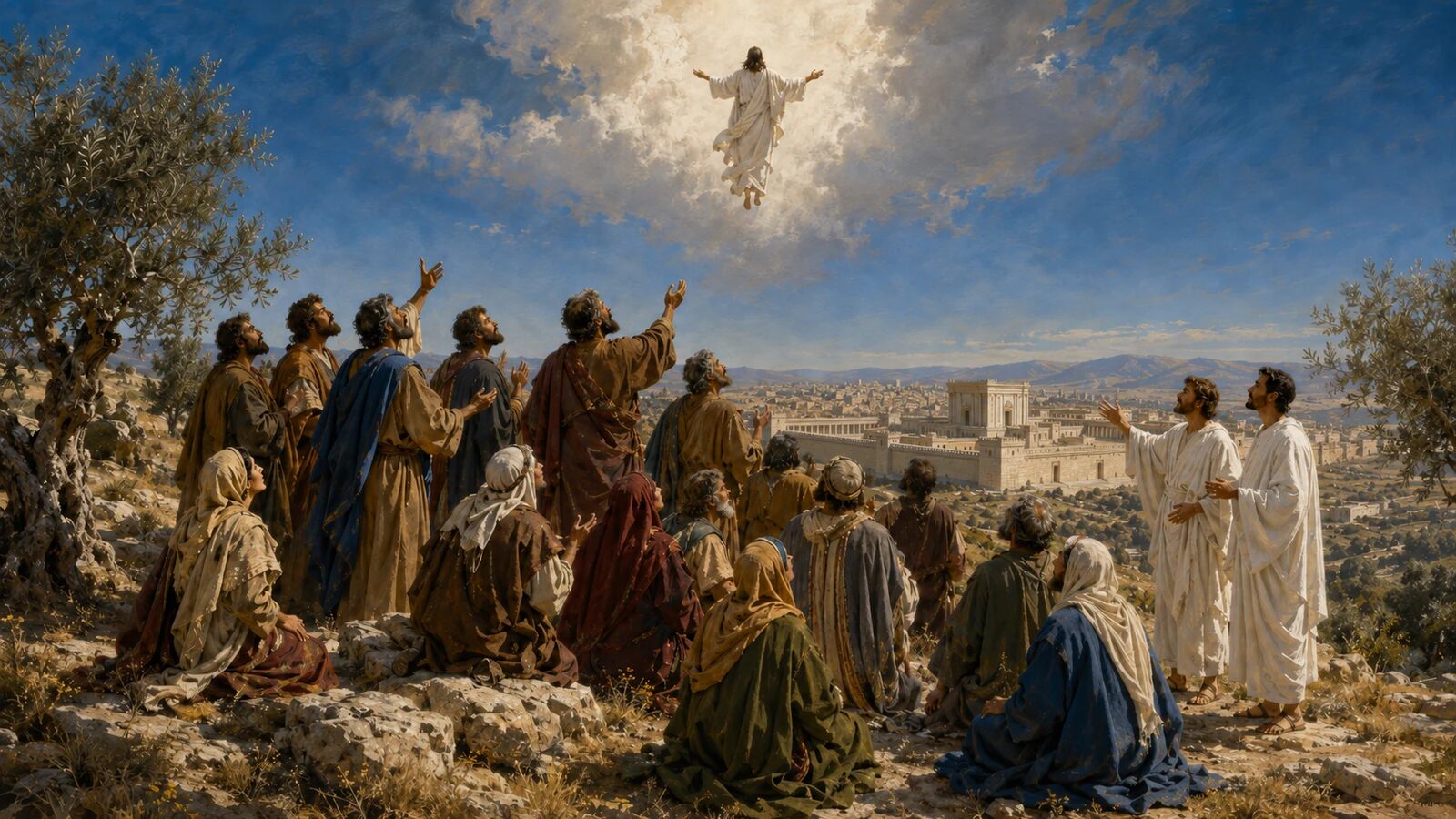
What does it mean for Jesus Christ to have first place in all things? The answer begins with who He is and how every part of God’s plan reaches its goal in Him. I don’t want us to miss the danger Jesus identified: we can know many Bible facts and still refuse the Son who gives life.
The Scriptures Testify of Him
In John 5, Jesus had healed a man on the Sabbath, and the religious leaders were angry about what He was claiming about Himself. Since they considered themselves serious students of Scripture, He pointed them back to the writings they said they honored.
You search the Scriptures, for in them you think you have eternal life; and these are they which testify of Me.
Jesus was exposing a failure in their study, not praising their study habits. They searched the written Word while refusing to come to the One it spoke about. They had information, but their resistant hearts would not receive life from Christ.
The next verse names their refusal plainly: they were not willing to come to Jesus that they might have life. Scripture had given them enough evidence. Yet they sought religious confidence in their study without surrendering to the Lord standing before them. The written testimony agreed with the living Son, but they wanted the authority of Scripture without accepting Christ’s authority.
I need to take that warning personally. Am I responding to the Lord, or am I becoming confident in what I know while still resisting Him? Even defending true doctrine cannot take the place of faith in Christ. What we learn in Scripture should lead us to trust and worship the Son, and the life we receive from Him should produce obedience.
Jesus’ words also help us understand how to read the Old Testament. The Scriptures testify of Him, though not every sentence is a direct prediction or a hidden code. We need to recognize whether a passage gives a command or records Israel’s history. A lament expresses something different from instruction about daily wisdom. Reading each passage honestly begins with understanding its own setting.
These different kinds of writing belong to one inspired and coherent revelation from God. His promises and covenants move His plan toward Christ. The sacrifices show how serious sin is and why we need God’s provision. Through the priesthood, we see our need for a mediator, someone who brings sinners to God. Israel’s kings and prophets point beyond what their limited ministries could accomplish, while its wisdom prepares us to recognize the wisdom of the Son. Scripture’s warnings show why we need rescue, and its hopes finally depend on the resurrection of Jesus.
I would miss much of the Old Testament if I read as though Christ were absent until Matthew. But I would also misread it if I ignored the original context and invented symbols wherever I wanted. Reading Scripture with Christ at the center means following the connections Jesus and His apostles give us throughout the Bible.
God Has Spoken in His Son
Paul opened Hebrews by addressing believers who knew Israel’s Scriptures and needed to remain faithful under pressure. God had truly spoken through the prophets, whose message remained inspired and authoritative. That revelation had come in stages and reached its clearest expression in the Son. Jesus did not simply take His place as one more prophet in the line.
God, who at various times and in various ways spoke in time past to the fathers by the prophets, has in these last days spoken to us by His Son, whom He has appointed heir of all things, through whom also He made the worlds.
God has brought His revelation to its fullest expression by making Himself known in His Son. He has given us more than information about Himself. That does not diminish Scripture, because Scripture brings us to Jesus Christ, the living Word.
Hebrews names the Son as the heir of all things and says that the worlds were made through Him. The One through whom the Father made everything is also its rightful ruler. I notice that revelation reaches its height in this same Person: the eternal Son who created the ages and holds their final outcome.
Hebrews 1:3 calls the Son the brightness of God’s glory and the express image of His person. Although the Father and Son are distinct Persons, the Son reveals God without distortion. When He became man, He was neither an inferior copy nor a creature trying to resemble God. He was God the Son living a truly human life.
The same verse tells us how this Son redeemed us. After He had purged our sins by Himself, He sat down at the right hand of the Majesty on high. Priests under the old covenant had to keep offering sacrifices because their ministry could never provide final cleansing. Christ completed the work His people needed by offering Himself once. His seated position assures us that His sacrifice does not have to be repeated.
Jesus brings sinners to the Father He reveals. That helps me understand why first place belongs to Him: He does more than explain how salvation works, because He is Himself the Savior.
Creator, Sustainer, and Firstborn Over Creation
Colossians 1 gives one of Scripture’s clearest descriptions of Christ’s supremacy. Paul wrote from prison after hearing about the Colossian believers through Epaphras. They faced teaching that promised spiritual fullness through human philosophy and ritual rules. Those demands included calendar observance and harsh treatment of the body. What presented itself as humility led toward the worship of angels. Paul answered by reminding them who Jesus already is, then told them later that they were complete in Him. Nothing needed to be added alongside Jesus to make them complete.
I can see why Paul spent so much time explaining who Christ is before answering each error in detail. A more impressive spiritual system could not give the Colossians what they needed. Ritual could not complete what the Son had already given them, and angels could not bring them nearer to God than their own Creator could. Nor could harsh bodily discipline produce the life that comes from being joined to Christ.
For by Him all things were created that are in heaven and that are on earth, visible and invisible, whether thrones or dominions or principalities or powers.
All things were created through Christ and for Him. Paul includes both the visible world and the unseen realm, leaving nothing outside that statement. Earthly authorities belong to the created order just as heavenly powers do. Even those that oppose God remain accountable to the Son who made them, so nothing in creation can stand above its Creator.
John makes the same point from another direction. Everything that was made came into being through the Word. Jesus is therefore the Creator, not one of the things He made.
In the beginning was the Word, and the Word was with God, and the Word was God.
Colossians calls the Son the image of the invisible God, using the Greek word eikon for an image or representation. Understanding that word helps us read Paul accurately, but the context tells us what kind of image he means. The Son is not an inferior copy. The invisible God is truly made known in Him as He has come in the flesh. Jesus can therefore say that whoever has seen Him has seen the Father while remaining personally distinct from the Father.
Paul also says that all things consist in Christ. Having begun creation, the Son did not step away and leave it to continue on its own. He upholds it now, so our next breath depends on His power as surely as the universe’s continued existence does. I cannot treat Jesus as a religious helper added to my life when the whole of my life already depends on Him.
That gives us a reason to put frightening powers in perspective. Human rulers have real influence, and Scripture recognizes spiritual opposition. But neither is self-existing or independent of Christ. He existed before them and remains above them, with original and complete authority where theirs is limited. I have no reason to seek secret spiritual help beyond the Son when He is the One who made and sustains that unseen realm.
We need to read Paul’s phrase “firstborn over all creation” in that setting. Some people take the phrase to mean that He was the first creature God made. Yet the next verse says that all created things were made by Him, which rules out placing the Creator among the things He created.
The Greek word prototokos means “firstborn,” and Scripture often uses the title to describe rank and inheritance rather than birth order. God called Israel His firstborn because of its special place among the nations, although it was not the first nation to exist. Psalm 89 calls David God’s firstborn and explains that he would be the highest of the kings of the earth. David was actually the youngest son in his family. Those uses help us understand why “firstborn” in Colossians 1 describes Christ’s supreme place over creation and His right as heir, not a created origin.
Jesus spoke plainly of His existence before Abraham when He said in John 8:58, “before Abraham was, I AM.” The leaders understood the weight of His claim. He was claiming divine identity, not presenting Himself as a prophet who had arrived late in history.
If Jesus were a creature, He could not save us or bear the full weight of redemption. No creature could perfectly reveal God or uphold the universe by his own power, and no creature could rightfully receive worship. Yet Thomas confessed Jesus as “My Lord and my God,” believers call upon His name, and heaven honors the Lamb. I do not find the New Testament correcting that worship as a mistake. Worship belongs to Jesus because He is the eternal Son.
The Law and the Prophets Reach Their Goal in Christ
In the Sermon on the Mount, Jesus answered the suspicion that His authoritative teaching set aside the Old Testament. He explained that He had come to bring what God had revealed to its appointed goal, not to destroy it.
Do not think that I came to destroy the Law or the Prophets. I did not come to destroy but to fulfill.
Fulfillment includes direct promises as well as broad patterns. Genesis 3:15 promises a coming Seed who will crush the serpent’s head while suffering in the conflict. At the first Passover, Israel sheltered beneath the blood of the lamb while judgment fell upon Egypt. God had appointed that blood as the mark of protection, and 1 Corinthians 5:7 later identifies Christ as our Passover who was sacrificed for us.
I don’t want to overlook what Passover meant to the Israelites who first experienced it. They were actually delivered from Egypt, just as the priesthood truly ordered their worship. Those events also belonged to God’s larger plan. Later Scripture shows how they prepared His people to understand deliverance through an appointed sacrifice and access to God through a faithful priest. Their significance did not end with those earlier events.
The priesthood teaches us that sinful people need a mediator to approach God. The sacrifices show that sin is serious and forgiveness requires His provision. Each offering also had its own distinct purpose, which we need to respect. The offices of the Old Testament come together in Jesus. As the perfect Prophet, He reveals the Father. He is also the Priest who offered Himself and now intercedes for His people, and the King who will reign forever.
Israel’s servants could not finish what God had promised. Moses did not complete His whole work, and Aaron’s priesthood could not provide final cleansing. The kingdom did not reach its promised completion under David or Solomon. Although the prophets faithfully delivered God’s words, their ministries pointed beyond themselves to the Son.
John the Baptist identified Jesus as the Lamb of God who takes away the sin of the world. His provision is sufficient for all, and His offer is genuinely made to all. That does not make salvation automatic for every person: whoever believes in Him has life.
These connections give me reasons to see Christ in the Old Testament without hunting for clever symbols. God unfolded His actual plan through promises and patterns that find their fulfillment in His Son. Recognizing them helps us understand the passages faithfully and see how salvation comes through Him.
Preeminent in Redemption
Colossians calls Jesus the firstborn from the dead so that He may have the preeminence in all things. Lazarus and others had been restored to mortal life before Christ rose, but they later died. Jesus rose bodily into immortal resurrection life and will never die again. His resurrection begins new-creation life and guarantees that His people will also rise.
At the cross, Jesus gave Himself for us as the eternal Son, fully God and fully man, who had lived without sin. Wicked men physically tortured and punished Him before killing Him. He willingly bore that real punishment for our sins in His innocent body through the shedding of His blood and death. The Father did not punish, curse, abandon, or pour wrath upon His Son. Jesus was buried and then rose bodily from the grave.
Colossians 1:20 says that peace was made through the blood of His cross. I cannot separate that peace from what actually happened to Jesus. Sinners are reconciled because He gave His body and shed His blood in history. His death and resurrection save us; inspiration drawn from His example cannot take their place.
And as Moses lifted up the serpent in the wilderness, even so must the Son of Man be lifted up, that whoever believes in Him should not perish but have eternal life.
Dying people looked toward the bronze serpent as the remedy God had appointed. Jesus said that event pointed to His own lifting up. He is the only remedy God has given, so we cannot place Him alongside other supposed ways of salvation.
The risen Christ rules and intercedes for His people now. When the church gathers, it gathers around a living Lord, not the memory of a dead founder. His preeminence continues in the present, and His victory over death protects the believer’s assurance.
His title “firstborn from the dead” also tells us something about our own future if we trust Him. He has first place in the new creation just as He has first place over the old. Because our Lord rose bodily, we await the bodily resurrection He has guaranteed. Our hope reaches beyond the survival of our spirits.
Faith joins the believer to the living Christ, rather than leaving us with an idea about Jesus held at a distance. He gives His sheep eternal life and keeps them as His own. As He intercedes for them, He also disciplines them when needed and will bring them safely home.
Christ died for the whole world, so the gospel offer is genuine for every person, though people may resist and reject Him. Whoever repents and believes is born again and made a new creation. The Holy Spirit indwells and seals that believer, who is eternally secure in Christ. I find assurance in the Savior’s keeping power, but I cannot use it as permission to disregard sin when that same Savior calls His people to holiness.
Head of the Church and Lord of All
Colossians also names Christ as the head of His body, the church. That means a congregation belongs to Him, not to its pastor or an influential personality. Neither tradition nor the preferences of the age have the right to take His place and govern His people. Every true ministry belongs to Jesus and must submit to His Word.
Ephesians 1 says that God seated Christ at His right hand far above every principality and power, then gave Him to the church as head over all things. He must govern what the church believes and how it worships. Its leaders answer to Him as they carry out its mission, including when they correct someone. That correction must reflect the love He commands. I would not measure a church’s faithfulness by how busy it looks, because it can remain active while giving Christ less and less place in its life.
Christ’s headship should keep ministry pride in check. A preacher is His servant, responsible for bringing people back to His Word rather than gathering a following around himself. Worship should draw our attention to Christ instead of the performance. When we disciple or correct believers, our purpose is to help them obey their Lord, not simply fit into a ministry’s culture. The church becomes healthy by remaining under its living Head.
Philippians 2 describes how the eternal Son humbled Himself by taking the form of a servant and becoming truly human. He obeyed to the death of the cross. God then highly exalted Him and gave Him the name above every name so that every knee will bow. The One who humbled Himself already shared God’s form, so His exaltation did not turn a creature into God. However long the world delays its confession, every part of creation will finally acknowledge the lordship of Jesus Christ.
His preeminence reaches into the ordinary life of each believer too. If Jesus is the Creator and Sustainer of life, how could I give Him only a small religious place in my plans? My work and family belong under His lordship as much as my worship does. He has authority over my habits and decisions, and even what I hope for must come under His rule.
Religious knowledge and moral effort cannot give us life, nor can an inherited Christian identity replace coming to the Son by faith. Once we belong to Him, His first place should become visible in what we believe and our willingness to repent. It should affect how we use our time and speak to people, reaching into our giving and service as well. I need to give Him more than formal respect in those ordinary choices. Any area I try to keep from His rule is still part of the creation that Colossians says was made through Him and for Him.
My Final Thoughts
Jesus cannot be one subject I study alongside others and then set aside. He is the eternal Son through whom God made all things, and the risen Redeemer who gave His blood for sinners. He now rules as head of the church and keeps everyone who belongs to Him. If my Bible study is leading me where it should, I will be learning to trust Christ and worship Him as Lord. His first place must extend beyond my study into every part of life under His Word.