
There are many theories about where the ark of the covenant might be today. I am more interested in what Scripture tells us about why God gave it to Israel and why He required such care in handling it. Understanding its purpose also helps us see the better access He has opened through Christ.
What the Ark Taught Israel About God
The ark stood at the center of Israel’s worship because God commanded its construction and determined its purpose. He placed it in the Most Holy Place and connected it with His covenant presence and appointed mercy. Israel had not invented a sacred trophy or simply added a religious prop to its worship.
Scripture tells us what the ark contained and how Israel was to handle it, then records what happened when those commands were disregarded. Those accounts deserve reverence and careful attention. They do not tell us where the ark is now. I cannot treat a rumor or an uncertain archaeological claim as something God has revealed, and a cinematic picture of the ark cannot supply what Scripture leaves unsaid.
After rescuing Israel from slavery in Egypt, God brought the nation to Mount Sinai and entered into covenant with the people. He instructed Moses to build a portable sanctuary, the tabernacle. Its outer courtyard led to the covered Holy Place. A veil separated that room from the innermost Most Holy Place, where the ark stood. God truly dwelt among the people He had redeemed, but that arrangement taught them that sinners could not approach Him on their own terms.
God drew near to His people and spoke from above the mercy seat, where blood was brought before Him on the Day of Atonement. Yet He did not allow them to touch the ark or decide for themselves how to handle it. They could not use it as a weapon or a charm. I need to keep that mercy and warning together: His nearness was real, but it never gave Israel permission to treat Him casually.
Exodus 25 describes the ark’s construction and God’s promise to meet Moses above the mercy seat. In Leviticus 16, the high priest carries blood behind the veil. We learn how Israel was to transport the ark from Numbers, Joshua, and 1 Chronicles. Hebrews 9-10 then explains how that earthly sanctuary pointed to Christ’s priesthood and His blood, through which He opened access in heaven.
God’s Pattern and the Mercy Seat
God introduced the ark as part of His command to build the tabernacle, a sanctuary where He would dwell among Israel. Everything had to follow the pattern He showed Moses. Worship began with what God revealed, not what the people imagined.
And let them make Me a sanctuary, that I may dwell among them. According to all that I show you, that is, the pattern of the tabernacle and the pattern of all its furnishings, just so you shall make it.
The ark’s holiness came from God’s appointment, not from Israel discovering a source of power. Within the tabernacle He revealed, it taught His redeemed people that He was both near to them and holy. That is why I cannot understand it as a superstitious object.
Its names, the ark of the testimony and the ark of the covenant, help me understand why it had such a central place. The testimony was God’s covenant witness, especially the words He gave Israel. His Word belonged with the place He appointed to meet His people. The ark’s place in their worship rested on that connection, not on how inspired they felt when they saw it.
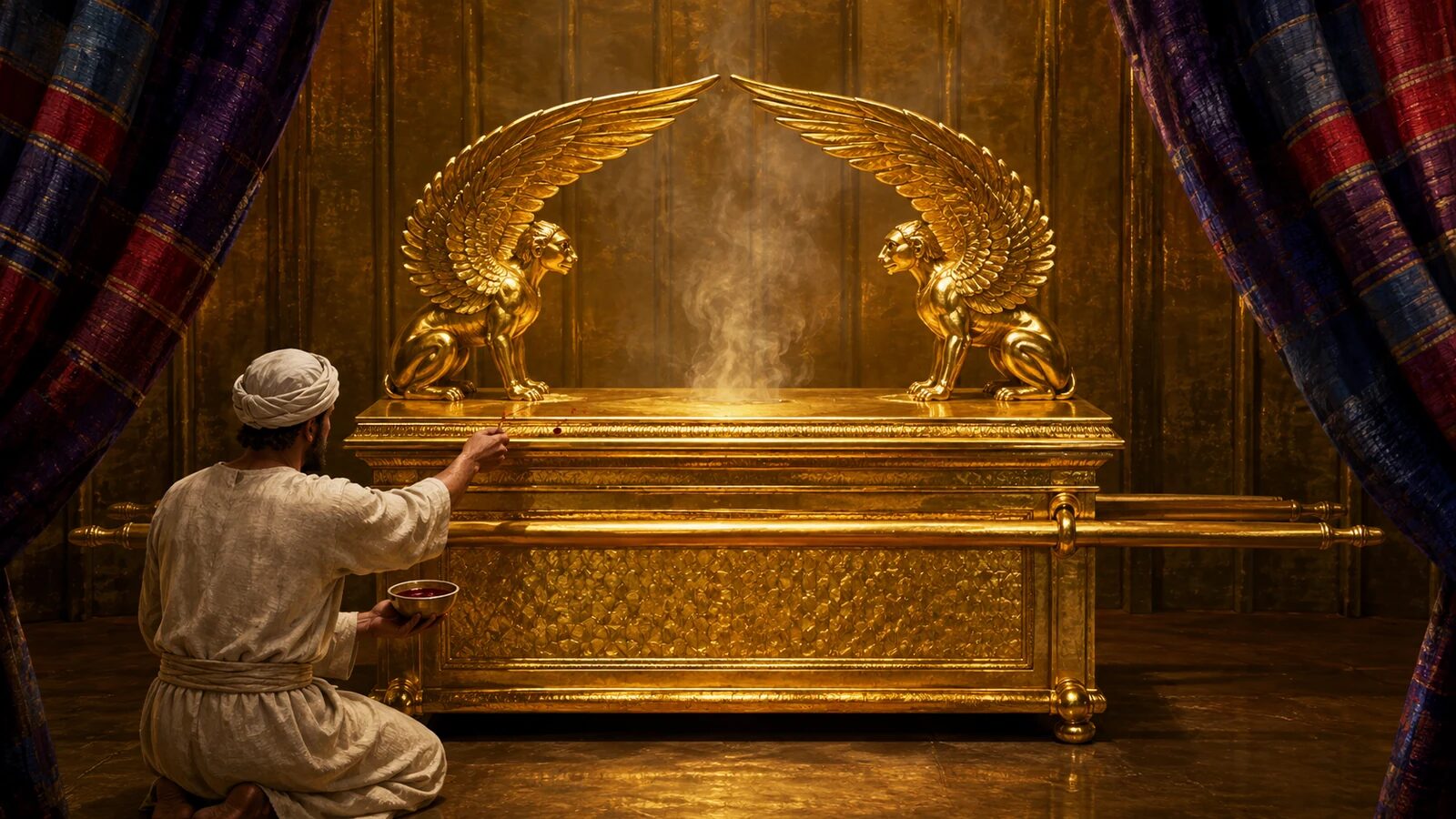
God specified both the materials and the dimensions. The ark was made of acacia wood covered inside and out with pure gold. It measured two and a half cubits long, with its width and height each one and a half cubits. Though beautiful and costly, it could still be carried.
And they shall make an ark of acacia wood; two and a half cubits shall be its length, a cubit and a half its width, and a cubit and a half its height. And you shall overlay it with pure gold, inside and out you shall overlay it.
I would not assign a hidden meaning to every material when Scripture does not do so. The craftsmanship was fitting for something that belonged to the Lord’s appointed dwelling among His people. God’s presence called for reverent obedience, without our needing to invent a symbolic code for each detail.
The ark’s lid was the mercy seat, made of pure gold with cherubim at both ends. These figures represented heavenly beings. God promised to meet Moses and speak from above the mercy seat between them. He chose to make this the meeting place associated with His covenant.
And there I will meet with you, and I will speak with you from above the mercy seat, from between the two cherubim which are on the ark of the Testimony.
The Hebrew term translated “mercy seat” belongs to the language of atonement. It describes God’s appointed covering and meeting place, where sin was addressed according to His command. Mercy here did not mean ignoring sin.
Leviticus 16 tells us how the high priest entered behind the veil each year on the Day of Atonement. Before bringing the goat’s blood for the people, he brought a bull’s blood for himself and his household because he too was a sinner. He sprinkled the goat’s blood upon and before the mercy seat because of Israel’s uncleanness and transgressions. Those sins could not be passed over. Through this appointed use of the mercy seat, God taught Israel why atonement required blood and why they needed a mediator to approach Him on their behalf.
Then he shall kill the goat of the sin offering, which is for the people, bring its blood inside the veil, do with that blood as he did with the blood of the bull, and sprinkle it on the mercy seat and before the mercy seat.
Forgiveness came from God, never from the ark itself. He appointed the place and the way of approach to teach Israel what forgiveness required. Atonement did not mean pretending their sin was small. God provided a way to deal with it without compromising His holiness.
The Day of Atonement also showed how restricted Israel’s access was. Only as God commanded could the high priest enter the Most Holy Place with blood. The people could not gather around the ark to experience God on their own terms, because sin made that approach dangerous. Mercy came through a mediator and a sacrifice. Remembering that restriction helps me appreciate the better access Hebrews describes through Jesus Christ.
The Ark’s Testimony and Holy Handling
Hebrews names the covenant tablets together with a golden pot of manna and Aaron’s rod that budded in connection with the ark. At the later point in Israel’s history when the ark was brought into Solomon’s temple, only the two stone tablets remained inside.
Nothing was in the ark except the two tablets of stone which Moses put there at Horeb, when the LORD made a covenant with the children of Israel, when they came out of the land of Egypt.
I do not see a contradiction between Hebrews describing the items connected with the ark’s covenant witness and 1 Kings naming its contents at that later moment. Scripture does not explain when or how the manna and rod were no longer inside. We need to leave that question open instead of supplying a history we have not been given.
The tablets bore witness to God’s covenant Word, while the manna recalled how He provided for Israel in the wilderness. Aaron’s rod showed that God had appointed the priesthood and answered the rebellion against it. Together, they testified that the God who speaks and provides also chooses how His people may approach Him.
Israel needed those reminders. God’s law on the tablets could not be negotiated away, and the manna recalled His provision when no natural supply could have kept them alive. Aaron’s rod reminded them that ambition did not entitle someone to lead their worship. The same holy place held testimony against their sin and testimony to God’s mercy.
God provided rings and poles so the ark could be moved without anyone touching it. Carrying it reverently was possible because He had given instructions for doing so. The poles belonged to His command from the beginning.
In Numbers, the Kohathites were responsible for carrying the most holy things after Aaron and his sons covered them. They could neither touch those things nor look at them uncovered. Their privileged responsibility did not remove the danger of disobeying.
Then the sons of Kohath shall come to carry them; but they shall not touch any holy thing, lest they die.
Numbers 7:9 explains why the Kohathites received no carts: they were to carry the holy things on their shoulders. They could not choose whichever means of transport was most convenient. What belonged to God’s holy presence was not ordinary cargo.
When Israel crossed the Jordan in Joshua 3, the ark went ahead and the people kept the distance God appointed. That distance did not mean He was cold toward them. He was leading His people, and they drew near by following the order He gave.
Yet there shall be a space between you and it, about two thousand cubits by measure. Do not come near it, that you may know the way by which you must go, for you have not passed this way before.
The Danger of Misusing Holy Things
Israel later treated the ark as though it could guarantee victory because it was associated with God’s covenant presence. At the opening of 1 Samuel, Eli’s sons, Hophni and Phinehas, were corrupt priests who treated sacrifices with contempt and abused their position. God had already announced judgment on Eli’s house. After a defeat by the Philistines in chapter 4, the elders called for the ark from Shiloh. I notice that the account says nothing about repentance or seeking the Lord, nor about returning to obedience under His Word. They wanted the symbol of His presence while their hearts remained far from Him.
So the people sent to Shiloh, that they might bring from there the ark of the covenant of the LORD of hosts, who dwells between the cherubim.
God allowed the Philistines to capture the ark, exposing Israel’s presumption. The Lord had not been defeated. He would not let His people use Him as a tribal mascot or a charm to win battles.
When the Philistines placed the ark beside Dagon, their idol fell before it. They stood Dagon up again, then found him fallen and broken the next morning. The ark bore witness to the God who would not share His glory with idols. Israel’s power had never come from the object itself, and no false god could stand before the Lord.
Both nations were corrected through what happened. Israel had expected victory from the ark while continuing in corruption, and the Philistines displayed it as conquered treasure beside Dagon. God humbled both errors. He needed no army from Israel to defend His name and no place in Dagon’s temple to establish His presence. He defended His own glory.
The men of Beth Shemesh also faced judgment after looking into the ark. Their curiosity did not give them permission to treat what was holy as something common. Interest in sacred things is no excuse for disregarding God’s holiness.
Uzzah’s death is difficult to read. The ark was being moved on a cart when the oxen stumbled, and he reached out to steady it. God struck him there. I can understand why a reader might sympathize with his action, but Scripture calls it his error.
And when they came to Nachon’s threshing floor, Uzzah put out his hand to the ark of God and took hold of it, for the oxen stumbled. Then the anger of the LORD was aroused against Uzzah, and God struck him there for his error; and he died there by the ark of God.
The ark should not have been on the cart in the first place. Israel had used the method of the Philistines instead of having the appointed Levites carry it according to God’s command. David later acknowledged that failure.
For because you did not do it the first time, the LORD our God broke out against us, because we did not consult Him about the proper order.
Christians today are not under the Mosaic commands for transporting the ark, but I cannot dismiss the lesson about obeying God in worship. Good intentions did not cancel disobedience then, and the church’s worship and service must still be governed by His Word. He determines how people may approach Him.
What happened to the ark after that history? The last clear Old Testament statement about its location comes from Josiah, who told the Levites to put it in the temple. Scripture grows quiet about it afterward, especially through the Babylonian destruction of Jerusalem. That silence is where so much modern speculation begins.
Put the holy ark in the house which Solomon the son of David, king of Israel, built. It shall no longer be a burden on your shoulders.
Some theories put the ark in hidden chambers, while others connect it with Ethiopia or make it part of elaborate end-times expectations. Scripture confirms none of those claims. I would not want to speak with God’s authority about a location He has not revealed.
Jeremiah describes a coming restoration when Jerusalem will be called the Throne of the LORD and nations will gather to His name. In that setting, people will no longer remember the ark, visit it, or make another one. God has not abandoned His covenant promises. His promised reign and presence simply will not depend on recovering an earthly chest.
They will say no more, “The ark of the covenant of the LORD.” It shall not come to mind, nor shall they remember it, nor shall they visit it, nor shall it be made anymore.
Finding the ark would add nothing to Christ’s finished work. If it remains hidden or has been destroyed, God’s saving purpose is no weaker. We do not need a modern discovery to make His plan complete.
Christ Opens Better Access to God
Paul explains in Hebrews how the ark and the tabernacle pointed beyond themselves. The earthly sanctuary was a genuine copy and shadow that God commanded and made holy. Even so, its repeated sacrifices could not provide final cleansing or unrestricted access to Him. Christ, the better High Priest, entered the greater and more perfect tabernacle not made with hands.
For Christ has not entered the holy places made with hands, which are copies of the true, but into heaven itself, now to appear in the presence of God for us.
The mercy seat and its sprinkled blood pointed toward Christ, as did the veil and priesthood of the Most Holy Place. Jesus offered Himself instead of entering with an animal’s blood. He physically bore the punishment for our sins in His innocent body on the cross, shedding His blood and dying before rising bodily from the dead. The Father did not punish, curse, abandon, strike, bruise, or pour wrath on Jesus. His sacrifice is sufficient once for all.
Therefore, brethren, having boldness to enter the Holiest by the blood of Jesus, by a new and living way which He consecrated for us, through the veil, that is, His flesh.
Israel’s high priest entered the Most Holy Place once a year with blood while the people stayed outside. As a believer in Christ, I can draw near with confidence because His blood has opened the way. The ark was holy and meaningful, but Jesus is the Savior who gives us that access.
The ark and mercy seat were God-given shadows within the sanctuary, pointing to Christ without being Christ Himself. He is the reality they anticipated, the true Priest and true sacrifice who gives us access to God. We cannot reduce Him to a relic or a piece of furniture. In Him, God dwells with His people.
Hebrews gives us a reason for confidence that does not diminish God’s holiness. We can draw near because Jesus’ blood is sufficient and the risen Christ appears before God for us. I don’t have to choose between reverence and confidence. Both belong to our access under the new covenant.
In Revelation 11:19, the ark of God’s covenant appears in the heavenly temple. However we understand the details of that vision, it bears witness to His covenant faithfulness and presence while announcing judgment under His rule. That heavenly reality belongs to God. Our hope is in the Lamb, not in recovering an earthly artifact.
The ark teaches me to revere the God who drew near to Israel on His own terms. His holiness never became negotiable, and Israel could not use the ark to force a victory. Neither can a modern artifact give spiritual life apart from Christ. The blood sprinkled on the mercy seat leads me to thank God for Jesus’ blood. Those appointed sacrifices pointed to the true sacrifice that redeems us, showing that forgiveness never depended on treating sin as harmless.
Whether we have come to God through Christ is more urgent than locating the ark. He is the Savior to whom the whole system pointed. Christ died for the whole world, and His offer is genuine even though people may resist or reject it. Everyone who truly repents and believes in Him is born again. The Holy Spirit indwells and seals that believer, whose salvation is eternally secure. That security gives no permission for lawlessness. It brings us into reverent access to God and a life of obedience.
My Final Thoughts
The ark’s present location seems far less important to me than what it taught Israel about approaching God. He is holy, and sin requires the atonement He appoints. We cannot decide our own terms or treat His presence carelessly. Those warnings against superstition still challenge us. Above all, the ark points beyond itself to Jesus Christ. His blood has opened the way for sinners to draw near with confidence and reverence.