
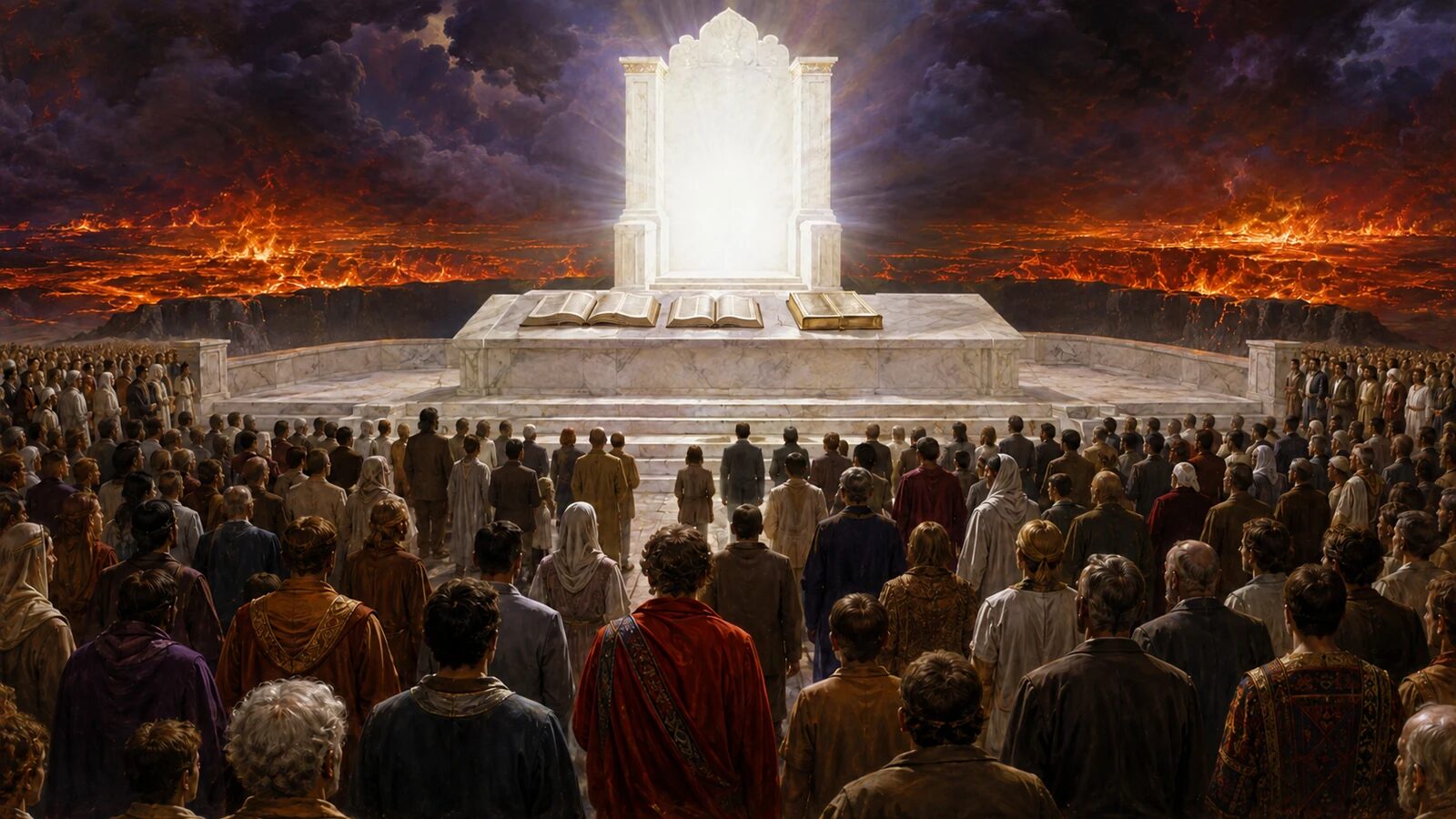
I want to speak about hell carefully, because the subject concerns people who face real judgment. It is no occasion for jokes, cruel threats, or enjoying the prospect of someone else’s suffering. Scripture warns us while also showing God’s patience and the rescue He provides through Christ. To understand those warnings, we need to distinguish the terms being used and the stages of judgment they describe.
God’s Patience and the Words Scripture Uses
Peter addressed believers hearing mockers ridicule the promise of Christ’s return. They treated the delay as evidence that judgment would never arrive. Peter explained it as patience rather than inability or indifference.
The Lord is not slack concerning His promise, as some count slackness, but is longsuffering toward us, not willing that any should perish but that all should come to repentance.
God gives people time to repent. Repentance goes beyond feeling distressed about consequences: the sinner agrees with God and turns toward Him instead of defending rebellion. That response does not make us worthy of mercy. We come because He offers mercy in Christ.
The danger gives us reason to speak plainly, but no reason to become callous. A warning meant to help someone escape should sound different from a threat meant to intimidate him. I want my manner to reflect the patience of the God whose judgment I am explaining.
The English word “hell” occurs in discussions of several distinct biblical terms. Sheol in the Old Testament broadly concerns the grave or realm of the dead. Not every occurrence supplies the same information about conscious experience, so we should not force every passage to describe final punishment.
The New Testament gives a clearer sequence. Hades concerns the realm of the dead; Luke 16 describes the lost as conscious and in torment there. Gehenna appears in Jesus’ warnings about final judgment. Second Peter 2:4 uses a verb associated with Tartarus for sinning angels held in darkness awaiting judgment, rather than defining the final human state. Revelation describes the lake of fire after resurrection and the Great White Throne.
Keeping these distinctions allows us to follow what happens after death without confusing it with what happens after final judgment. I understand the passages to teach conscious existence between death and resurrection, followed by the second death for the lost. That excludes soul sleep, the belief that people are unconscious during that interval. The irreversible final sentence also excludes universalism, the claim that everyone will eventually be saved.
I do not, however, understand final human punishment as eternal conscious torment. Scripture describes the lost as perishing and being destroyed, ending in the second death. We need to examine those statements as seriously as the passages describing conscious torment before that judgment.
Hades Before the Final Judgment
In Luke 16, the rich man died and found himself in Hades. He could see and speak, remembered his brothers, and pleaded for relief. A fixed gulf separated him from the comfort Lazarus received.
And being in torments in Hades, he lifted up his eyes and saw Abraham afar off, and Lazarus in his bosom.
This is conscious suffering, not unconsciousness. It is also distinct from the final lake of fire, because Revelation 20 later places Hades itself in that fire. Calling Hades temporary in relation to the final state does not make its suffering imaginary.
The rich man could not cross the gulf, and concern for his brothers did not reopen his own opportunity to repent. When he asked for Lazarus to warn them, Abraham answered, “They have Moses and the prophets; let them hear them.” The answer directs the living to God’s written Word. A spectacular sign will not cure a refusal to receive what He has already said.
Believers have a different conscious hope. Paul desired to depart and be with Christ, which he called far better, and spoke of being absent from the body and present with the Lord. Death does not end all awareness while people wait for resurrection.
Luke 16 therefore rules out postponing our response until after death, but it does not define the final lake of fire. I need to follow the passages that address that later judgment before deciding what its outcome is. Torment in Hades cannot simply be extended into a claim about endless human life in the second death.
Gehenna and the Destruction of the Whole Person
Jesus contrasts the power of human enemies with God’s authority in Matthew 10. Men can kill the body, but their reach has a limit. God’s judgment reaches the whole person.
And do not fear those who kill the body but cannot kill the soul. But rather fear Him who is able to destroy both soul and body in hell.
The word translated “hell” here is Gehenna, connected with the Valley of Hinnom. Israel’s history associated the valley with idolatry and child sacrifice, then with death and shame under judgment. That biblical background gives us firmer ground than the later claim that it was always a constantly burning rubbish dump. Jesus uses it in a warning about final judgment.
He explicitly names the destruction of both soul and body. I read that as the whole person’s final loss, rather than preservation forever in pain. It is a fearful judgment precisely because the destruction cannot be reversed.
In Mark 9, Jesus quotes Isaiah 66:24: “Their worm does not die and the fire is not quenched.” Isaiah describes corpses after judgment, not immortal souls kept alive in torment. The worm and fire are not stopped before completing their work. The image conveys destruction and shame from which there is no rescue.
Jeremiah 17:27 also speaks of an unquenchable fire devouring Jerusalem’s gates and palaces. Jerusalem is not still burning. A fire that cannot be quenched is one no one can put out before it accomplishes its purpose; the expression does not require what it consumes to remain alive forever.
This interpretation does not make the warning mild. To perish body and soul, with no restoration afterward, is an appalling loss. The question is whether Scripture defines the penalty as death or as another kind of endless conscious life. Jesus’ words direct me toward destruction.
The Lake of Fire and the Second Death
Revelation places the Great White Throne after the thousand years and the final rebellion. The dead stand before God, the books are opened, and Hades gives up those within it. John then describes the final sentence.
Then Death and Hades were cast into the lake of fire. This is the second death. And anyone not found written in the Book of Life was cast into the lake of fire.
The first death is physical. The second follows resurrection and judgment and has no reversal. Revelation 21:8 identifies the unbelieving and wicked with the lake burning with fire and brimstone, “which is the second death.” Hades cannot be the final state when it gives up its dead and is itself cast away.
The language of eternal fire also needs its biblical context. Jude 7 describes Sodom and Gomorrah as suffering the vengeance of eternal fire. Second Peter 2:6 says those cities were reduced to ashes as an example. The judgment was decisive and irreversible, although the cities are not burning today. An eternal result does not require an endless process.
We should also question the assumption that every person possesses indestructible life independently of God. First Timothy 6:16 speaks of God alone having immortality in Himself. Second Timothy 1:10 says Jesus brought life and immortality to light through the gospel. Eternal life is God’s gift in Christ, while sin earns death. These passages do not require God to preserve every unbeliever alive forever so that death can never reach him.
I therefore understand the second death as everlasting punishment in its result: the human unbeliever is destroyed body and soul. This does not mean he ceases to exist at physical death. He remains conscious in Hades, is raised to face God, and then receives the final sentence. Neither that sequence nor its irreversible outcome offers hope of eventual restoration.
Difficult Texts and the Great White Throne
Many Christians hold eternal conscious torment because they take the warnings seriously. I want to consider their reasons fairly. The issue is whether the passages they cite require that conclusion for human beings.
Matthew 25:46 contrasts everlasting punishment with eternal life. I accept both as everlasting. The question is what the punishment consists of. Jesus speaks elsewhere of destroying soul and body, Paul calls sin’s wages death, and Revelation identifies the lake as the second death. The righteous receive life without end, while the wicked receive a sentence that will never be reversed. The duration of the result remains complete without turning death into endless life in pain.
Mark’s undying worm and unquenchable fire must likewise be read with Isaiah’s description of corpses, which we have considered. Revelation 14:10-11 presents a further difficulty. Those who worship the beast and receive his mark suffer torment with fire and brimstone before the holy angels and the Lamb. Their torment is conscious, they have no rest day or night, and its smoke rises forever. None of that should be softened into an unreal judgment.
The unending expression directly describes the smoke, while the lack of rest describes uninterrupted suffering during judgment. Isaiah 34:10 uses the image of smoke rising forever concerning Edom, although Edom is not still burning. The prophetic imagery can announce irreversible judgment and public defeat without requiring those destroyed to remain alive forever.
Revelation 20:10 describes the duration of the torment itself, rather than the rising smoke, and I accept its statement of endless torment. It names the devil, the beast, and the false prophet as tormented day and night forever and ever. When the chapter describes the final outcome for human unbelievers, it calls it the second death. I want to preserve that distinction rather than extend the first statement beyond those it names.
The Great White Throne is the final judgment of the lost, distinct from the judgment seat of Christ where believers receive rewards. Human rank offers no protection before God.
And I saw the dead, small and great, standing before God, and books were opened. And another book was opened, which is the Book of Life.
The books show a judgment in which deeds are known and people are not mistaken for someone else. Wealth, education, political power, and a religious appearance cannot hide the truth. God also knows the motives concealed from other people. No one will be misrepresented or condemned through oversight; the Judge of all the earth will do right.
I understand the Book of Life this way: every person’s name is initially written in it, and those who finally reject the Messiah are blotted out. Believers remain because their sins have been blotted out through Christ’s blood. Anyone not found in the book at this judgment is cast into the lake of fire.
John 5 says all who are in the graves will hear Christ’s voice and come forth, some to life and others to condemnation. Resurrection to condemnation does not itself grant immortality. The lost are raised to hear and receive God’s sentence. Hebrews 9:27 places judgment after death, leaving no provision for reincarnation or bargaining afterward. God’s patience now is an opportunity to repent, not a reason to delay it.
The Gospel Is the Only Escape
These warnings explain the urgency of the gospel. Scripture identifies both what sin earns and where eternal life can be found.
For the wages of sin is death, but the gift of God is eternal life in Christ Jesus our Lord.
Our rescue is Jesus Christ, the eternal Son who became fully human while remaining fully God. He was completely sinless. Wicked men tortured and physically punished His innocent body, crucifying Him within God’s foreknown saving purpose. He willingly endured that real punishment for the whole world’s sins, shedding His blood and dying. His saving work was completed through His blood and death before His bodily resurrection. The Father did not punish, curse, abandon, strike, bruise, or pour wrath on Jesus.
For He made Him who knew no sin to be sin for us, that we might become the righteousness of God in Him.
He stood in the sinner’s place without becoming sinful in His nature. The Father and Son remained united in redemption. Jesus was buried and rose bodily, vindicating the finished work through which we receive forgiveness. His blood provides the cleansing we cannot earn.
Baptism, communion, and church attendance cannot remove guilt. Neither can a respected family or a record of religious effort. Finding someone whose conduct seems worse will not prepare me to face a perfect Judge. Salvation is by grace through faith, and we must repent and believe in Christ.
He died for the whole world, so the offer is genuine even though people can resist and reject Him. Everyone who repents and believes is born again, indwelt by the Holy Spirit and sealed for redemption. Every genuine believer is eternally secure, but that assurance never permits lawlessness. An outward profession alone does not establish that someone has received new birth.
John 3:16-18 places the promise alongside the warning. Whoever believes receives everlasting life without condemnation, while the unbeliever is condemned already. The Savior is not hidden from people willing to come, but refusing Him leaves a person in need of the rescue He offers.
A believer need not fear that one failure will erase Christ’s gift. His name remains in the Book of Life because his sins have been blotted out through Jesus’ blood. That should lead him to confess and walk with the Lord, rather than become careless. Assurance rests on Christ’s completed work and God’s saving action in the genuine believer.
If you remain outside Christ, God’s patience has not made your condition safe. He gives you time to turn to the Son, and comparing yourself with others supplies no alternative escape. The question is whether you belong to Jesus or remain in your sins before the Judge.
Remembering that we were rescued by grace should govern how we speak to others. We have no superiority to display and no reason to make judgment entertaining. We can pray earnestly, explain Christ clearly, and warn with compassion. He saved us from standing in our sins at the Great White Throne and facing the second death. That gives me reason for gratitude and urgency, without cruelty.
My Final Thoughts
I understand Scripture to describe conscious existence after death, followed by resurrection and final judgment. Human unbelievers face irreversible destruction of body and soul in the second death. Revelation 20:10 specifically describes endless torment for the devil, the beast, and the false prophet; I do not erase that statement or use it to replace what the text says about the lost.
These conclusions leave no room for treating judgment casually or postponing repentance. Jesus shed His blood and died to rescue sinners, then rose bodily. If you have not received Him, turn to Him while mercy is offered. If you belong to Him, let your warning carry the compassion of someone who knows he was saved by grace.