
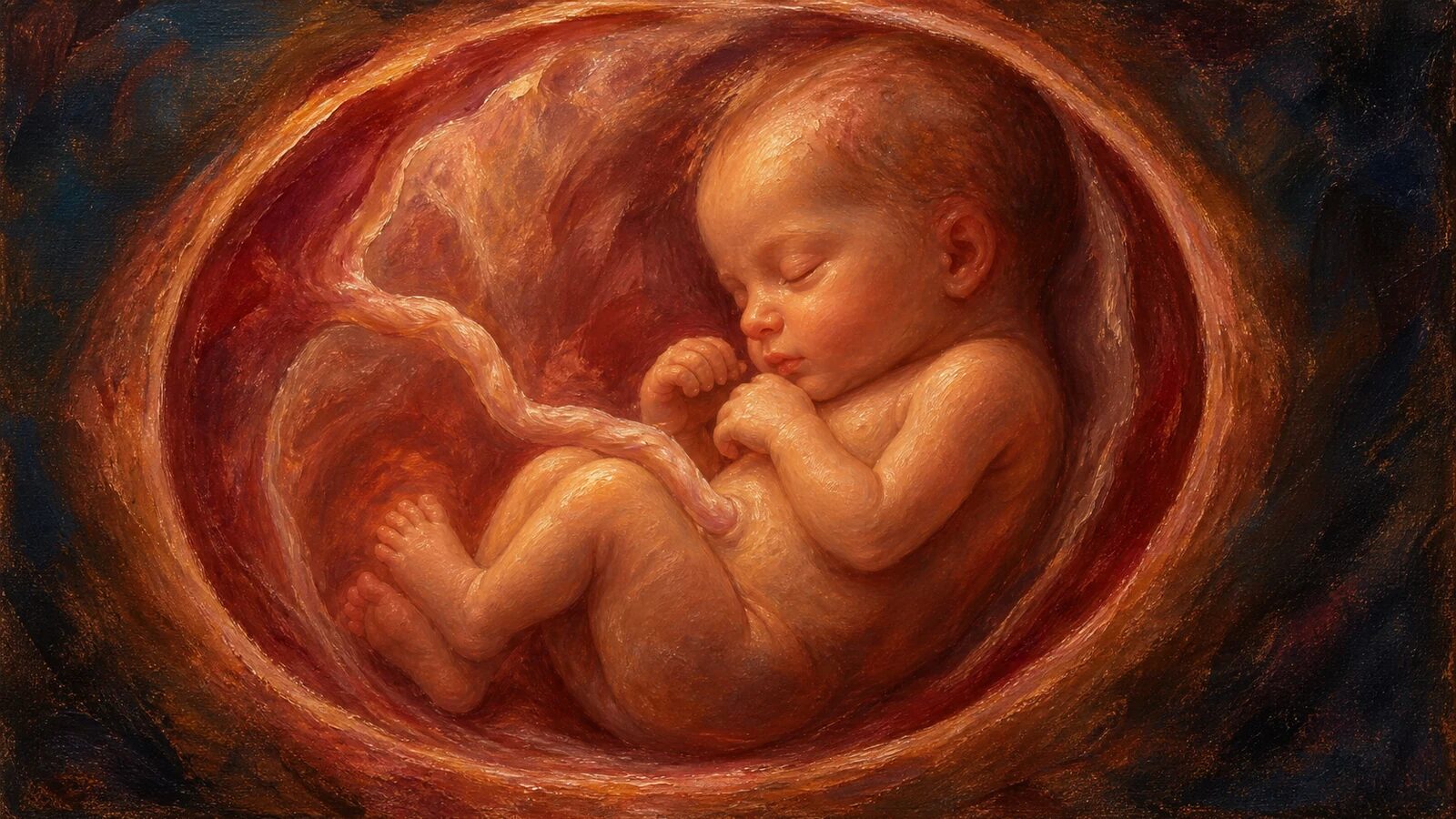
A couple considering IVF may have spent years hoping for a child and wondering how much more disappointment they can endure. I do not want to add a careless accusation to that grief. But I also cannot tell them that wanting a child makes every way of pursuing parenthood right. Scripture does not mention in vitro fertilization, so we need to examine the proposed treatment in light of what it teaches about human life and marriage.
Psalm 127 speaks about our dependence on the Lord when we build a house or guard a city. We have work to do, but careful planning cannot give us complete control over the outcome. In that setting, the psalm describes children this way:
Behold, children are a heritage from the LORD, The fruit of the womb is a reward.
A heritage is an inheritance or portion received. God entrusts children to parents; they are not a possession we have earned or a trophy proving that we have pleased Him. The verse does not say that parents are better believers than couples who cannot conceive. I think it is cruel to add that accusation to someone’s infertility.
Receiving a child as God’s gift also means accepting responsibility for how we pursue that gift. We may seek medical help and grieve honestly when treatment fails. Neither response requires us to agree to a procedure that mistreats another human life.
Life in the Womb
The Bible does not describe modern embryology, but it does speak personally about life before birth. David praised God for knowing and forming him while he was still hidden in his mother’s womb.
For You formed my inward parts; You covered me in my mother’s womb. I will praise You, for I am fearfully and wonderfully made.
David was looking back to his own beginning, not describing something unrelated to the person he had become. The life God formed was his life, even when he was undeveloped and entirely dependent on his mother. His weakness did not make him insignificant to God.
Jeremiah’s appointment as a prophet likewise began before his birth:
“Before I formed you in the womb I knew you; Before you were born I sanctified you; I ordained you a prophet to the nations.”
This was Jeremiah’s particular commission, so I would not claim that every unborn child has been appointed a prophet to the nations. Still, God speaks to Jeremiah as the person He knew and formed. The passage gives us no reason to dismiss unborn life as anonymous or beneath His concern.
In Luke 1, Elizabeth called Mary the mother of her Lord while Jesus was still in Mary’s womb, and John responded within Elizabeth. Luke uses brephos for the unborn John and for the newborn Jesus in Luke 2. The word can describe a child on either side of birth. It does not answer every question about an embryo in a laboratory, but it certainly does not make birth the point at which a child first deserves our care.
IVF brings us to an earlier stage of development. An embryo is a human being at the beginning of life; the term describes development rather than a disposable product of treatment. Scripture does not directly discuss embryos outside the womb. My conclusion follows from its teaching about human life: small size, dependence, and location do not remove our obligation to protect that person.
Once an embryo exists, the question is no longer only whether a couple will have the child they hope for. There is already a human life for whom decisions must be made. We need to keep that responsibility in view even when the language on a consent form sounds more like the management of laboratory material.
Medicine and Moral Limits
Seeking treatment for infertility is not itself a failure to trust God. Luke was a physician, and care for the body can include obtaining a diagnosis and appropriate medical help. A couple should not have to defend their faith merely because they asked a doctor why they have been unable to conceive.
That does not settle whether every proposed treatment is right. Treating an underlying condition and creating embryos outside the body involve different actions and responsibilities. We need to understand the actual proposal rather than give all fertility treatments the same approval or condemnation.
I would want the whole course of treatment explained before consenting, including decisions that may arise after the hoped-for pregnancy. A fertility specialist can explain the medical facts, while mature Christian counsel can help the couple examine their choices under Scripture. Neither kind of counsel can do the other’s work.
Where IVF Raises Moral Pressure
IVF means fertilization outside the body. Treatment commonly includes medication to stimulate the ovaries, egg collection, and attempted fertilization in a laboratory. Embryos that develop may be transferred into the uterus or frozen for later treatment. The details vary, so a couple needs an explanation of the procedure proposed for them.
Transferring one embryo can reduce the risks associated with a multiple pregnancy. The Human Fertilisation and Embryology Authority explains that a single transfer may be accompanied by freezing other embryos for later use. Agreeing to one transfer does not necessarily mean that only one embryo has been created.
Before fertilization, the couple needs to know how many embryos may be created and what responsibility they are prepared to accept for every one. If pregnancy occurs after the first transfer, what will happen to the others? A plan to care for them must extend beyond the adults’ immediate wish for a baby. That commitment does not mean transferring every embryo at once; the number and timing of transfers require individual medical advice.
We also need to distinguish deliberate disposal from a loss that occurs despite care. Some embryos stop developing, and a transfer cannot guarantee pregnancy or birth. A couple whose treatment fails or who suffers a miscarriage must not be accused of choosing to destroy a life simply because the child did not survive.
Embryo grading and genetic testing raise further questions about what will be done with the information. A clinical assessment of development or a test for a genetic condition is not a judgment of someone’s worth. A poorer prognosis does not make a human life disposable.
I understand why parents want to spare a child suffering, especially when a serious inherited condition is involved. That concern deserves a patient answer. But I do not believe we protect a child by deciding that the child should be destroyed. Disability or an unwanted trait cannot cancel the obligation to care for that life.
Test results also need competent interpretation. For example, the HFEA explains that PGT-A, a test examining chromosome numbers, has limitations and can lead to potentially viable embryos being discarded. Couples need to ask what the test can establish and what the clinic proposes to do after each possible result.
A couple may freeze embryos because they sincerely intend to preserve them for future transfers. That intention should be taken seriously. Yet illness, the death of a spouse, or financial hardship may prevent them from carrying out their plan. Embryo storage therefore involves responsibilities that may continue through circumstances the couple did not anticipate.
The consent agreement needs careful attention before those circumstances arise. What happens if the couple cannot continue treatment or keep paying for storage? What instructions have they authorized if one spouse dies? If the written agreement permits disposal or destructive research, a reassuring conversation has not settled the problem. The actual provisions need to agree with the commitment to protect the embryos.
Research that destroys embryos presents the same objection. Seeking treatments for disease is a worthwhile purpose, but I cannot justify destroying one human life for another person’s possible benefit. Making an embryo available for destructive research does not relieve the adults of responsibility for what they have authorized.
A multiple pregnancy may bring a recommendation for selective reduction, a procedure that intentionally ends one or more fetal lives while the pregnancy continues. ASRM’s patient information explains the risks of multiple pregnancies and why reduction may be proposed. Those risks to the mother and babies are serious; they should not be brushed aside in a discussion of Christian ethics.
A dangerous pregnancy requires prompt, qualified medical care. A pastor should not pretend to diagnose an emergency or assess its treatment from a distance. Families need an honest explanation of the proposed action and the available alternatives. My moral objection is to treating the intentional killing of one child for the hoped-for benefit of another as a routine solution. A frightening situation calls for careful counsel, rather than language that obscures what is being proposed.
Marriage and Third Parties
Protecting embryos is not the only issue. Donor sperm or eggs introduce another person’s reproductive contribution into the conception of a child. I examine that arrangement in light of the marriage covenant Jesus affirmed when He directed His hearers back to creation.
And He answered and said to them, “Have you not read that He who made them at the beginning made them male and female?”
Jesus was answering a question about divorce, and in the following verses He explains that husband and wife become one flesh. I am applying that teaching when I conclude that procreation belongs within the covenant union of husband and wife. Deliberately bringing another person’s sperm or egg into that union departs from the design He affirmed.
There are also responsibilities toward the child concerning biological parentage and kinship. The desire to achieve a pregnancy does not answer what the child will need to know or how those relationships will be handled over a lifetime. We ought to consider the child’s interests before entering an arrangement, not leave those questions for him to untangle later.
A gestational carrier separates pregnancy from the wife, with another woman carrying the child, sometimes under contract. I do not believe we should treat that woman’s body as a service to which the intended parents are entitled or the child as something a contract obliges her to deliver. My objection concerns the arrangement and its departure from marriage’s one-flesh union. The woman and child must both be treated as people whose lives belong to God.
None of these objections makes a child conceived through IVF or donation less worthy of love. The moral questions concern the adults’ decisions. The child bears God’s image and must never be made to carry contempt for the circumstances of his conception.
The commitments to protect embryos and honor marriage need to be discussed with the clinic before embryos are created. Ask whether fertilization will occur outside the body, how many embryos may be created, and what the written agreement allows if treatment ends. Establish whether the clinic will honor the commitment never to destroy embryos or use them in destructive research.
A couple should also explain their convictions about selective reduction and make clear that donor sperm or eggs and the use of a gestational carrier are not acceptable parts of their treatment plan. Bring the actual proposal to mature believers who can help examine it under Scripture, while asking the physician to explain the medical consequences of any proposed limits. Hoping that everyone understands the couple’s intentions is no substitute for making those intentions explicit.
Success rates and expense can exert tremendous pressure after years of disappointment. But a higher chance of pregnancy does not justify giving up protection for another life. If the treatment cannot be pursued consistently with these commitments, I believe Christians should refuse it, however costly that refusal feels.
Romans 14:23 warns that whatever is not from faith is sin. Paul was addressing doubts about food, and I apply his warning here as well. A difficult decision may still hurt after we understand what is right. That is different from proceeding while our conscience warns us that the action itself is wrong. If the moral questions remain unresolved, pause and seek clarity before embryos are created.
When Embryos Already Exist
Some readers already have embryos in storage. They may now recognize problems they did not understand when treatment began, and they need help with the responsibility before them. Treating them as unwelcome or hopeless will not protect those lives.
The first commitment must be to care for the embryos already created. They must not be destroyed, donated for destructive research, or treated as abandoned property. Work with qualified medical professionals and mature Christian counsel to understand the available options. Indefinite postponement leaves the responsibility unresolved, but pressure to settle everything quickly is no substitute for a careful decision.
Some Christians consider embryo adoption, in which a couple receives embryos created by others for transfer intended to result in pregnancy and birth. I recognize the desire to rescue existing lives, which is a different circumstance from deliberately creating a child through a donor arrangement. That does not settle every question about marriage, parentage, or medical risk. Scripture gives no direct instruction for this circumstance, and couples considering it need medical and pastoral counsel as they seek agreement before the Lord.
Another arrangement sometimes called compassionate transfer has a different purpose. The American Society for Reproductive Medicine describes it as transferring embryos when pregnancy is not intended and the timing or location makes pregnancy unlikely. I object to a plan intended to dispose of embryos, even if the method feels less distressing than laboratory disposal. A transfer intended to establish pregnancy despite a poor prognosis raises a different question; the purpose and medical facts need to be understood accurately.
The church should help couples face these decisions without making them feel that every conversation will become an interrogation. We can listen, pray with them, and offer practical help when appointments or continuing responsibilities are difficult to manage. Childlessness is not evidence that God loves them less. Those of us speaking to them should be especially careful with breezy advice that treats years of disappointment as something easily put aside.
We also need to speak honestly when embryos have been deliberately discarded or destroyed. Compassion does not require pretending those decisions were harmless. It means helping people face what was wrong and seek Christ’s forgiveness, instead of leaving them to defend the past or despair over something they cannot undo.
Jesus is the eternal Son, fully God and fully man, who lived without sin. Wicked men inflicted physical punishment on His innocent body, and He willingly bore it for our sins. His shed blood and death completed His saving work before He rose bodily from the dead. Those who repent and trust Him can seek forgiveness because His work is sufficient, even when the consequences of their decisions remain.
If we confess our sins, He is faithful and just to forgive us our sins and to cleanse us from all unrighteousness.
Repentance means we stop defending what was wrong and seek to obey God with the choices still before us. Where embryos remain in our care, that includes protecting them and seeking wise help. Christ does not require us to repair the past through self-punishment. His forgiveness allows us to face it honestly and trust Him as we take responsibility for what can still be done.
My Final Thoughts
I cannot endorse IVF without examining the process a couple is being asked to accept. Protection for every embryo and respect for the marriage covenant must govern that decision. I believe Christians should refuse embryo destruction and destructive research, as well as arrangements involving donor sperm or eggs or a gestational carrier. Couples who make that costly decision deserve the church’s support, as do those seeking a faithful way to care for embryos already created.