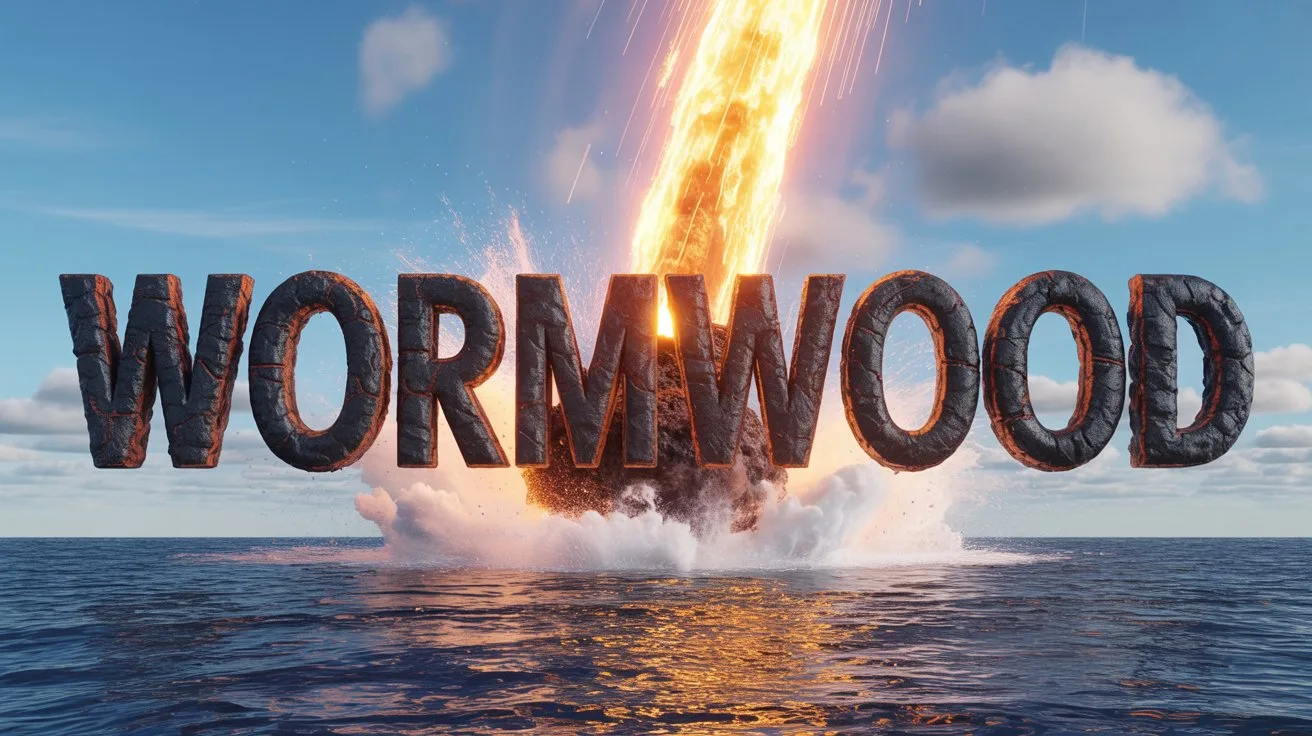

Revelation is filled with prophetic imagery that is meant to be read carefully, reverently, and in connection with the rest of Scripture. One of the most striking images in the trumpet judgments is the figure called Wormwood. It appears briefly, but its impact is massive, touching the waters people depend on for life and turning them into an instrument of judgment.
In this study we will walk through Revelation 8:10-11 in its immediate context, then trace the Old Testament background for “wormwood” as a symbol of bitterness and judgment. Along the way, we will keep our focus on what the text actually says, why this judgment falls where it does, and how Scripture uses the image of water to point us either to life in God or to the consequences of rebellion.
Wormwood in Revelation
Wormwood enters the account during the third trumpet judgment. John is not describing a vague feeling of spiritual oppression. He is describing an event that affects the physical world in a measurable way, producing widespread death because water sources become bitter and deadly.
“Then the third angel sounded: And a great star fell from heaven, burning like a torch, and it fell on a third of the rivers and on the springs of water. The name of the star is Wormwood. A third of the waters became wormwood, and many men died from the water, because it was made bitter.” (Revelation 8:10-11)
Several observations are important. First, John calls it “a great star” that “fell from heaven.” In prophetic writing, heavenly imagery can sometimes refer to angelic beings, but here the details emphasize environmental impact: it falls on rivers and springs, changes the waters, and people die from drinking. That leans strongly toward a literal catastrophe involving something that strikes the earth and contaminates freshwater supplies.
Second, it is “burning like a torch.” That language readily fits the idea of an object entering the atmosphere with intense heat and visible fire. Scripture does not specify whether it is a meteor, asteroid, comet, or another kind of heavenly body, and we should not pretend to know more than we do. Still, the text presents a real event with real consequences, and the physical description is consistent with a devastating impact that could spread toxins into watersheds.
Third, John records that “the name of the star is Wormwood.” In Revelation names often interpret meaning. The judgment is not only about destruction, but about what that destruction signifies. The bitterness associated with wormwood becomes the interpretive key: this is judgment that makes something normally life-giving become a source of death.
The Third Trumpet Setting
Wormwood is not an isolated sign dropped into Revelation at random. It occurs within a structured series of trumpet judgments. The trumpets follow the seventh seal (Revelation 8:1-2), and they intensify the pressure on a world that has resisted God. Each trumpet affects major spheres of human life and the created order.
“And I saw the seven angels who stand before God, and to them were given seven trumpets.” (Revelation 8:2)
It also matters that the first four trumpets focus heavily on the natural world: land and vegetation, sea, freshwater, and heavenly lights. Wormwood, as the third trumpet, fits this pattern. It targets freshwater, which is a basic necessity. That means this judgment is not merely inconvenient. It is destabilizing, and it strikes at daily survival.
Notice the repeated fraction in these judgments: “a third.” That limitation is significant. The destruction is severe, but it is not total. God’s judgments here are measured. They are real, they are terrifying, and they are large-scale, yet they also leave room for the world to recognize what is happening and respond. Trumpet judgments function like alarm blasts. A trumpet is meant to awaken, warn, and signal urgency.
This also helps us read Wormwood in the flow of Revelation. The third trumpet does not end history. It is part of escalating judgments that move toward the return of Christ and the final setting right of all things. That gives the passage a sober purpose: it is not meant to satisfy curiosity, but to warn the rebellious and steady the faithful with the knowledge that God sees, God acts, and God will bring His plan to completion.
What Does Wormwood Mean
“Wormwood” refers to a bitter plant, associated with an unpleasant taste and, in biblical usage, with grief, moral corruption, and the painful consequences of sin. The Old Testament uses wormwood as a vivid symbol: it is what rebellion tastes like when it finally bears fruit.
“So that there may not be among you man or woman or family or tribe, whose heart turns away today from the LORD our God, to go and serve the gods of these nations, and that there may not be among you a root bearing bitterness or wormwood.” (Deuteronomy 29:18)
In Deuteronomy, wormwood is tied to idolatry and a heart that “turns away.” The phrase “a root bearing bitterness or wormwood” pictures hidden spiritual compromise that eventually grows into open ruin. The New Testament echoes a similar concept when it warns about “root of bitterness” defiling many (Hebrews 12:15). The point is that departure from the Lord does not remain neutral. It produces bitterness, not only emotionally, but morally and relationally.
The Hebrew word often translated “wormwood” is laʿanah. It appears in contexts of judgment and sorrow. The Bible is not merely saying that sin makes life unpleasant. It is saying that sin, when it ripens, becomes poison. That prepares us for Revelation 8: wormwood is not just a poetic name, but a theological signal. God is showing the world the true nature of its rebellion, and part of that revelation is that what people depend upon becomes bitter under judgment.
Wormwood in the Prophets
The prophets use wormwood to communicate divine discipline and the heartbreak that follows covenant unfaithfulness. In these passages, wormwood is both a metaphor and a message: the Lord is not indifferent to sin, and when He acts in judgment, the experience is bitter.
“Therefore thus says the LORD of hosts, the God of Israel: ‘Behold, I will feed them, this people, with wormwood, And give them water of gall to drink.’” (Jeremiah 9:15)
Jeremiah speaks to a people who had God’s word, God’s warnings, and God’s patience, yet persisted in disobedience. “Wormwood” and “water of gall” portray a reversal of blessing. What should have been nourishment becomes affliction. The expression is forceful: the judgment fits the sin. When people reject truth, they end up swallowing lies. When they despise holiness, they inherit corruption. When they turn from God’s fountain, they taste the bitterness of broken cisterns.
Lamentations uses wormwood in a personal lament over national devastation. The prophet does not trivialize suffering, nor does he pretend it is meaningless. He recognizes that the bitterness is connected to the calamity that fell on Jerusalem.
“He has filled me with bitterness, He has made me drink wormwood.” (Lamentations 3:15)
These prophetic uses help interpret Revelation. Wormwood is not merely an environmental disaster. It is a moral signal. It says that the God who judged covenant-breaking Israel also judges persistent rebellion in the world. He is consistent in righteousness. He does not change His character between Testaments. What changes is the stage of redemptive history and the scope of the judgment described.
Water Turned to Death
The third trumpet targets “rivers” and “springs of water.” These are sources people must have to live. That focus is not accidental. In Scripture, water often represents life, cleansing, refreshment, and blessing. So when water becomes bitter, it is a dramatic reversal. It is life turned into death.
“And many men died from the water, because it was made bitter.” (Revelation 8:11)
This judgment also recalls earlier judgments where God struck water supplies to confront hardened rebellion. The plagues in Egypt are a clear biblical parallel. In Exodus, the Lord turned water into blood as a blow against Egypt’s gods and Pharaoh’s defiance, showing that life and creation are in God’s hand.
“And Moses and Aaron did so, just as the LORD commanded. So he lifted up the rod and struck the waters that were in the river, in the sight of Pharaoh and in the sight of his servants. And all the waters that were in the river were turned to blood.” (Exodus 7:20)
The pattern is similar: God confronts a world power that refuses His word; He strikes at what sustains life; the judgment exposes helplessness and calls for submission. In Revelation, the scale is broader and the context is the Great Tribulation, but the principle remains. God is not merely demonstrating raw power. He is demonstrating righteous authority and calling the earth to acknowledge Him.
Water imagery is also deeply spiritual in Scripture. The tragedy of Wormwood is that it corrupts what should sustain. That mirrors what sin does at the spiritual level. Sin promises life, pleasure, and freedom, but it cannot deliver. When it is “drunk,” it becomes bitter, and when it is fully taken in, it brings death. Wormwood becomes a visible picture of an invisible reality.
Why Freshwater Matters
Revelation does not say this star falls into the ocean. That kind of judgment appears in the second trumpet. Wormwood falls on freshwater, and that should make us pause. Rivers and springs are often associated with provision. Springs especially are places where life continues even when circumstances are harsh. In a dry land, springs mean survival.
“Then God opened her eyes, and she saw a well of water. And she went and filled the skin with water, and gave the lad a drink.” (Genesis 21:19)
This kind of passage reminds us what freshwater represents biblically: mercy, help, daily care. When Revelation says a third of these waters become bitter, the judgment touches a symbol of provision and turns it into a symbol of curse.
There is also an important connection to the human heart. Scripture often describes spiritual realities using the language of thirst and drinking. People are thirsty creatures, not only physically but inwardly. We seek satisfaction, meaning, security, and peace. When we seek those things apart from God, Scripture describes it as drinking what cannot satisfy. Wormwood, by poisoning the waters, becomes a public declaration that apart from God, the sources people trust will fail them.
At the same time, we should be careful not to spiritualize away the literal meaning. The text plainly says people die from the water. This is a real judgment, involving real contamination and real death. The spiritual lesson does not cancel the physical event. Instead, the physical event becomes a sign that communicates spiritual truth.
Judgment With a Purpose
It is easy to read the trumpet judgments and only feel fear or confusion. But Revelation repeatedly shows that judgments are meaningful and purposeful. They reveal God’s righteousness, expose human rebellion, and warn that time is running out. The tragedy is that many will still refuse to repent.
“But the rest of mankind, who were not killed by these plagues, did not repent of the works of their hands, that they should not worship demons, and idols of gold, silver, brass, stone, and wood, which can neither see nor hear nor walk. And they did not repent of their murders or their sorceries or their sexual immorality or their thefts.” (Revelation 9:20-21)
These verses are crucial for understanding Wormwood. The trumpet judgments, including poisoned waters, are not merely punishments in the sense of retribution. They function as warnings intended to awaken repentance. Yet Revelation 9 shows the human heart’s capacity for stubbornness. Even after devastation, many will cling to idolatry and immorality rather than turn to the true God.
This is where the Old Testament background becomes even more relevant. Wormwood in Deuteronomy was tied to a heart turning away. Wormwood in Jeremiah was tied to persistent rejection of truth. Revelation shows the same spiritual condition on a global scale. When people will not drink the water God offers, they end up drinking bitterness. When people refuse light, darkness follows. When people reject the Creator, creation itself becomes a platform for judgment.
It is also worth noting that Revelation does not present these judgments as chaotic accidents. They occur at the sounding of trumpets, under the authority of God. That is part of what makes them “judgments.” God is not absent from history’s darkest hours. He is bringing the world to account, and He is doing it in a way that highlights both His justice and His patience, since the fraction “a third” shows restraint even in wrath.
Christ the Living Water
Wormwood is not the final message of Scripture. Revelation contains severe warnings, but it also contains a clear invitation. The Bible’s answer to bitter water is not human ingenuity, but Christ Himself. He offers a kind of water Wormwood cannot touch: life that comes from the Spirit of God and lasts forever.
“Jesus answered and said to her, ‘Whoever drinks of this water will thirst again, but whoever drinks of the water that I shall give him will never thirst. But the water that I shall give him will become in him a fountain of water springing up into everlasting life.’” (John 4:13-14)
Jesus’ words help us understand what is ultimately at stake in Revelation. Physical thirst points to spiritual thirst. If Wormwood pictures judgment that turns life-sustaining water into death, then Christ pictures grace that turns spiritual death into life. He does not simply improve our circumstances. He gives a new kind of life from within.
This is not sentimental optimism. It is grounded in the cross and resurrection. The bitterness of judgment is real because sin is real. Yet Jesus took judgment upon Himself so that mercy could be offered truthfully, not cheaply. When we read Revelation, we should remember that the Lamb is central to the book. The same Jesus who warns through judgments also invites through the gospel.
Revelation itself ends with an open invitation using the same water imagery. The Bible concludes by calling thirsty people to come and receive freely.
“And the Spirit and the bride say, ‘Come!’ And let him who hears say, ‘Come!’ And let him who thirsts come. Whoever desires, let him take the water of life freely.” (Revelation 22:17)
That invitation does not erase Wormwood. It explains God’s heart in the midst of warning. Judgment is coming, but mercy is offered now. The proper response to Wormwood is not speculation, but repentance and faith in Christ. If you have received the living water, Wormwood reminds you what you have been saved from. If you have not, Wormwood warns you that the world’s fountains cannot give you life.
My Final Thoughts
Wormwood is a vivid reminder that sin does not end in sweetness. What seems small, private, or manageable can become bitter and deadly when it matures. Revelation 8:10-11 also reminds us that God’s judgments are real in history and that He can strike at the very things people trust most, including the resources that sustain daily life.
Do not miss the mercy in the warning. God is still calling people to turn from idols and receive what only Christ can give. The living water Jesus offers is not contaminated by the world’s rebellion, and it does not run dry. Come to Him with honesty, repentance, and faith, and let His life in you become a fountain that bitterness cannot overcome.

 Get the book that teaches you how to evangelize and disarm doctrines from every single major cult and religion.