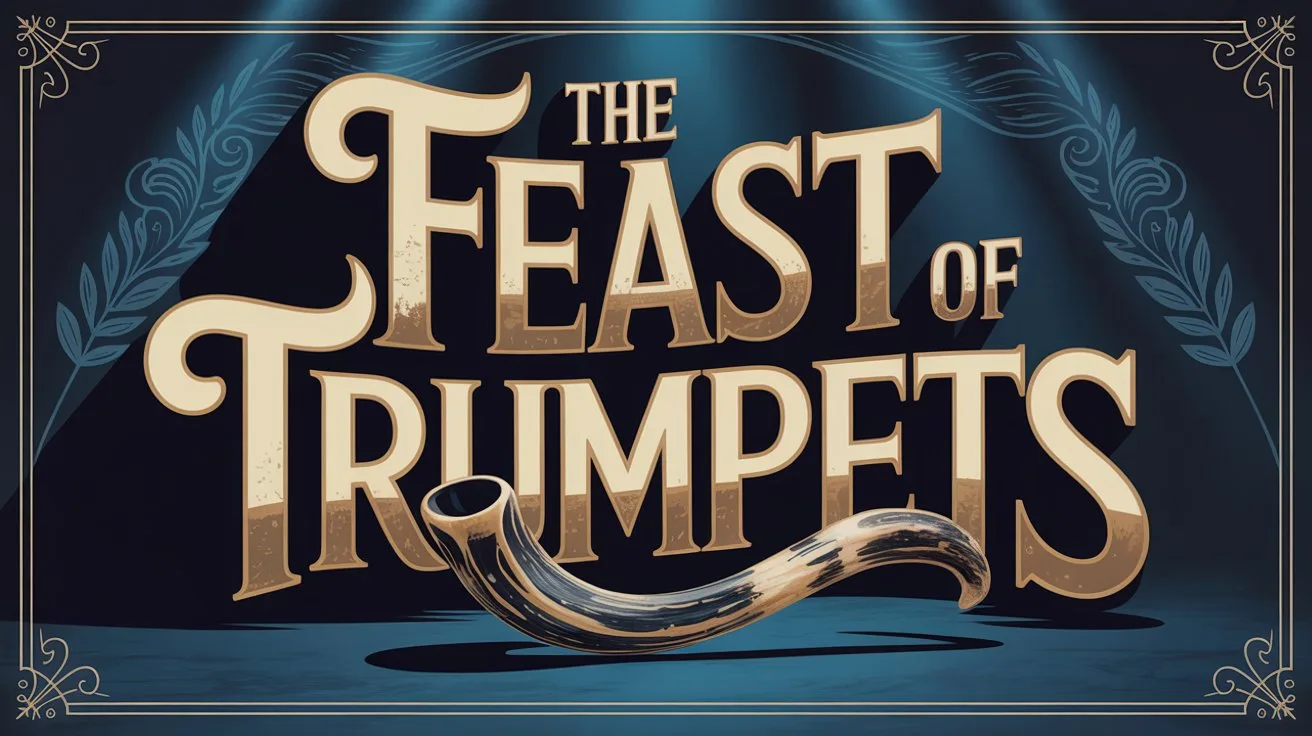
Among the seven appointed feasts of the LORD in Leviticus 23, one stands apart in its mystery and anticipation… the Feast of Trumpets. Known in Hebrew as Yom Teruah (“Day of Blowing” or “Day of Shouting”), it was the only feast commanded without a specific reason given, only a command to blow the trumpets and to keep it as a holy convocation. Later Jewish tradition began to call it Rosh Hashanah (“Head of the Year”), but Scripture itself identifies it simply as a day marked by trumpets, rest, and remembrance before the LORD.
The Command in the Law
“Then the LORD spoke to Moses, saying, ‘Speak to the children of Israel, saying: In the seventh month, on the first day of the month, you shall have a sabbath-rest, a memorial of blowing of trumpets, a holy convocation. You shall do no customary work on it; and you shall offer an offering made by fire to the LORD.’” (Leviticus 23:23–25)
Notice the distinctives: it is held on the first day of the seventh month (Tishri), unlike other feasts which fall mid-month or later. It is introduced simply as “a memorial of blowing of trumpets” literally, “a remembrance by teruah,” the Hebrew word meaning a loud blast or shout. God does not explain its purpose directly, but by studying the rest of Scripture, we begin to see why this feast is so significant.
The Trumpet in Israel’s Life
To understand the Feast of Trumpets, we must first understand the role of trumpets in Israel. God commanded silver trumpets to be made for calling assemblies, signaling journeys, and sounding alarms.
“Make two silver trumpets for yourself; you shall make them of hammered work; you shall use them for calling the congregation and for directing the movement of the camps.” (Numbers 10:2)
“When you go to war in your land against the enemy who oppresses you, then you shall sound an alarm with the trumpets, and you will be remembered before the LORD your God, and you will be saved from your enemies.” (Numbers 10:9)
Trumpets were used to gather God’s people, to announce His presence, to warn of battle, and to declare victory. They were associated with both remembrance and anticipation. On the Feast of Trumpets, these meanings converge… it is a day to gather, remember, and look forward to God’s intervention.
Trumpets and Theophany (God’s Presence)
The trumpet also signaled God’s appearance. When He descended at Sinai, the sound of the trumpet grew louder and louder.
“And when the blast of the trumpet sounded long and became louder and louder, Moses spoke, and God answered him by voice.” (Exodus 19:19)
The trumpet is a herald of divine presence: As a summoning, warning, and announcement of God’s arrival. This ties directly into the prophetic and future significance of the Feast of Trumpets.
Prophetic Significance: The Day of the LORD
The prophets connect trumpet blasts with the coming of the Day of the LORD. It will be a time of judgment, deliverance, and the revelation of God’s kingdom.
“Blow the trumpet in Zion, and sound an alarm in My holy mountain! Let all the inhabitants of the land tremble; for the day of the LORD is coming, for it is at hand.” (Joel 2:1)
“The great day of the LORD is near… That day is a day of trumpet and alarm against the fortified cities and against the high towers.” (Zephaniah 1:14–16)
Thus, the Feast of Trumpets serves as a prophetic picture of the end of the age, when God’s trumpet will summon the earth for judgment and redemption.
The Trumpet and the Resurrection
Paul also directly connects the final trumpet with the resurrection of the dead and the transformation of believers.
“Behold, I tell you a mystery: We shall not all sleep, but we shall all be changed— in a moment, in the twinkling of an eye, at the last trumpet. For the trumpet will sound, and the dead will be raised incorruptible, and we shall be changed.” (1 Corinthians 15:51–52)
The Feast of Trumpets looks ahead to the ultimate trumpet blast, when Christ returns, the dead in Christ rise, and the living are caught up with them.
“For the Lord Himself will descend from heaven with a shout, with the voice of an archangel, and with the trumpet of God. And the dead in Christ will rise first.” (1 Thessalonians 4:16)
Notice the parallels: shout… trumpet… gathering. The very themes of Yom Teruah find their fulfillment in the return of Christ.
The Mystery of the Day and Hour
The Feast of Trumpets is the only feast that falls on the first day of the month, the new moon. In ancient Israel, months were marked when witnesses confirmed the sighting of the sliver of the moon. Thus, the exact day and hour of the feast could not be determined in advance with precision. This actually sheds some light on Jesus’ words:
“But of that day and hour no one knows, not even the angels of heaven, but My Father only.” (Matthew 24:36)
Just as the Feast of Trumpets required watchfulness and readiness, so too the church awaits Christ’s return, not knowing the exact moment but commanded to be alert.
Trumpets and Judgment in Revelation
The book of Revelation also features a series of trumpet judgments (Revelation 8–11). Each trumpet announces an act of divine judgment on the earth, culminating in the declaration of the kingdom of Christ.
“Then the seventh angel sounded: And there were loud voices in heaven, saying, ‘The kingdoms of this world have become the kingdoms of our Lord and of His Christ, and He shall reign forever and ever!’” (Revelation 11:15)
The trumpet is not only a call to gather the righteous; it is also a signal of judgment on the wicked and the transition of all earthly rule to Christ.
Jewish Tradition and Rosh Hashanah
Later Jewish tradition associated this feast with the civil new year, calling it Rosh Hashanah. However, in the Torah it is not a “new year” festival, but a day of blowing trumpets before the LORD. While later traditions emphasize introspection and judgment, Scripture anchors it in trumpet blasts, a theme picked up directly by the prophets and the apostles when speaking of Christ’s return.
Jesus and the Fulfillment of Trumpets
The Feast of Trumpets ultimately points to the return of Jesus Christ. The shofar blast at Sinai, the silver trumpets of Numbers, the prophetic alarms of Joel and Zephaniah, and Paul’s teaching on the last trumpet all converge on this truth: the trumpet will sound, and the King will appear.
Jesus Himself said:
“And He will send His angels with a great sound of a trumpet, and they will gather together His elect from the four winds, from one end of heaven to the other.” (Matthew 24:31)
What Israel rehearsed each year in blowing trumpets, the church anticipates as the climactic event of history: the visible return of the Lord, the resurrection of the saints, and the gathering of His people into His kingdom.
My Final Thoughts
The Feast of Trumpets is unique because it is both a memorial and a mystery. It calls us to remember God’s faithfulness with the sound of trumpets, and it points us forward to the day when the trumpet of God will resound and the Lord Himself will appear. The first four feasts (Passover, Unleavened Bread, Firstfruits, Pentecost) were fulfilled in Christ’s first coming. Trumpets begins the fall feasts, foreshadowing His second coming. Just as He died on Passover and rose on Firstfruits, He will return at the appointed time with the sound of the trumpet. Until then, we live watchfully, faithfully, and joyfully, waiting for that great Day when the trumpet sounds and the kingdoms of this world become the kingdom of our Lord, Jesus Christ.


 Get the book that teaches you how to evangelize and disarm doctrines from every single major cult and religion.