
What does Paul mean when he speaks about the Day of Christ? Is he naming the Rapture, the Judgment Seat, or something broader connected with the Day of the Lord? I think the safest way to answer is to follow his wording in each passage and notice what Christ’s coming means for the people who belong to Him.
The Day of Christ Centers the Church’s Hope on Jesus
Paul repeatedly directs believers toward a coming day identified with Jesus Christ. On that Day, God will complete the work He began in His people so that they stand blameless. The fruit of faithful ministry will become visible as believers rejoice in what Christ did through one another, and the Lord will examine each Christian’s service.
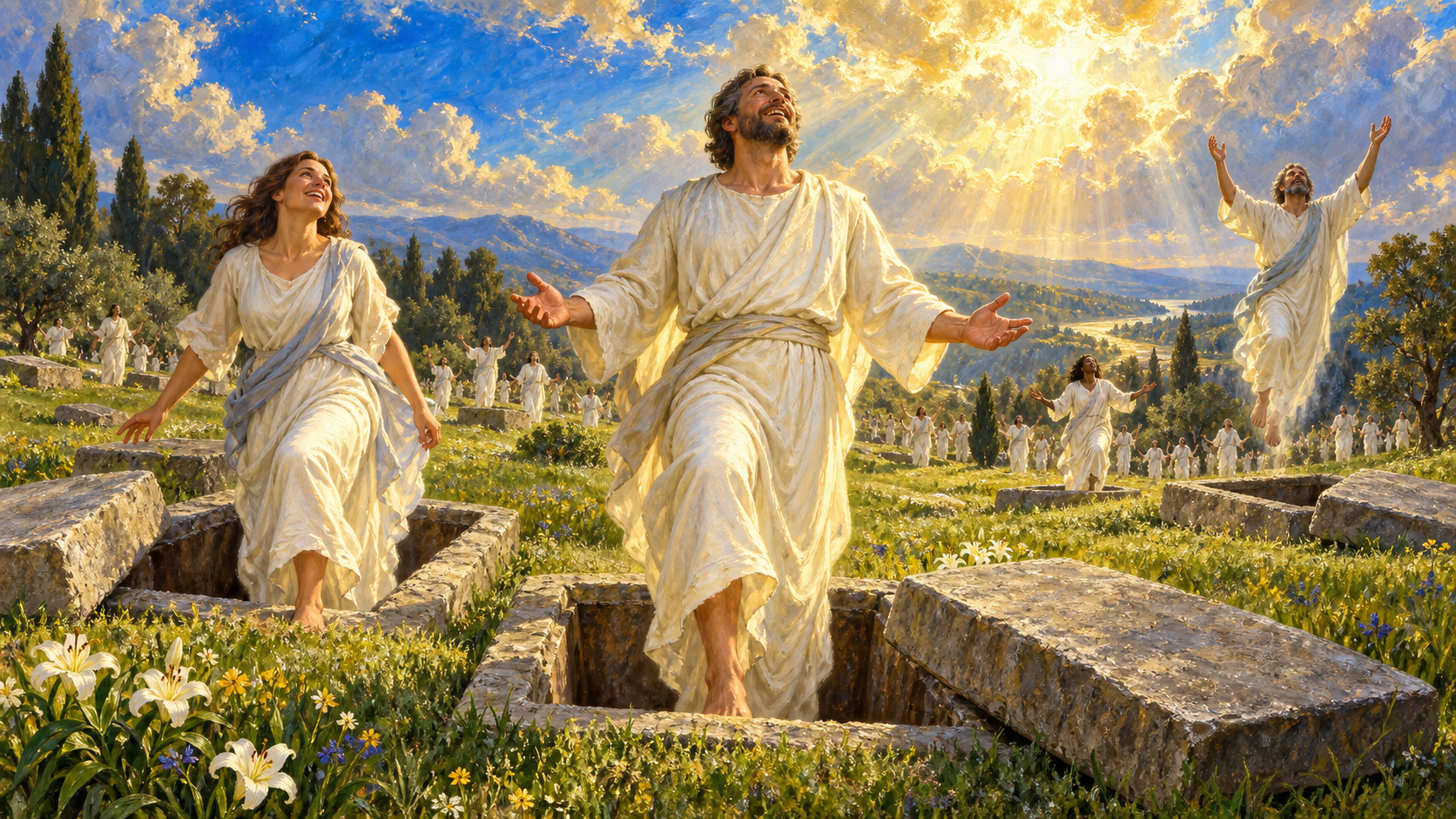
The Day of Christ therefore directs the church toward a Person, not merely a date. We are not waiting for history to improve on its own; we are waiting for the risen Jesus. He will gather His people, transform their bodies, and complete the saving work He began in them. He will then evaluate and reward their faithful service.
We still have to read the phrase inside its sentence and passage. It is tempting to turn every prophetic expression into a technical label for one instant on a chart, but Scripture does not give us that shortcut. The same Christ gathers the church and examines believers. Later He defeats open rebellion and reigns over the earth. One passage may stress what His coming means for the church while another explains judgment or the kingdom. These are different parts of one unfolding plan.
Paul uses several related expressions. He writes about “the day of Jesus Christ,” “the day of Christ,” “the day of our Lord Jesus Christ,” and “the day of the Lord Jesus.” The wording varies, but every form places the Person and authority of Jesus at the center. The church’s future is bound to Him.
These expressions commonly have a different emphasis from prophetic passages about the Day of the Lord. The prophets often bring God’s intervention against proud nations to the foreground. They describe worldwide judgment, Israel’s deliverance, the kingdom, and finally the renewal of creation. Paul’s Day-of-Christ passages usually focus on believers. God completes His work in them, gathers them to Christ, examines their service, and brings His people into shared rejoicing.
When I compare these passages, I do not see unrelated plans. Jesus is the Lord whose public Day the prophets anticipated. The wording helps us notice who is in view and what He is doing, but the same King remains at the center.
I thank my God upon every remembrance of you, always in every prayer of mine making request for you all with joy, for your fellowship in the gospel from the first day until now, being confident of this very thing, that He who has begun a good work in you will complete it until the day of Jesus Christ; just as it is right for me to think this of you all, because I have you in my heart, inasmuch as both in my chains and in the defense and confirmation of the gospel, you all are partakers with me of grace. For God is my witness, how greatly I long for you all with the affection of Jesus Christ. And this I pray, that your love may abound still more and more in knowledge and all discernment, that you may approve the things that are excellent, that you may be sincere and without offense till the day of Christ, being filled with the fruits of righteousness which are by Jesus Christ, to the glory and praise of God.
Paul’s confidence begins with God. The One who started a good work in the Philippians will complete it until the day of Jesus Christ. Their security does not depend on preserving themselves through flawless effort. God is faithful to the saving work He began.
That confidence does not make present growth optional. Paul prays that their love will increase with knowledge and discernment so they can approve what is excellent. He wants them to live sincerely without giving offense and to be filled with the fruit of righteousness that comes through Jesus Christ. The future Day gives direction to growth in holiness now.
Assurance and responsibility remain together. God completes His work while believers grow in wise love. The fruit comes through Christ and ends in God’s glory, so mature obedience never becomes a reason to boast in human independence.
Faithful Labor Will Be Seen on That Day
Therefore, my beloved, as you have always obeyed, not as in my presence only, but now much more in my absence, work out your own salvation with fear and trembling; for it is God who works in you both to will and to do for His good pleasure. Do all things without complaining and disputing, that you may become blameless and harmless, children of God without fault in the midst of a crooked and perverse generation, among whom you shine as lights in the world, holding fast the word of life, so that I may rejoice in the day of Christ that I have not run in vain or labored in vain. Yes, and if I am being poured out as a drink offering on the sacrifice and service of your faith, I am glad and rejoice with you all. For the same reason you also be glad and rejoice with me.
Paul tells believers to work out their salvation with fear and trembling because God is working in them. He is not telling them to earn the new birth. They are to express through obedience the salvation God is already producing within them.
Ordinary conduct belongs to that calling. Christians bear faithful witness when they turn away from complaining and disputing. They live as lights within a crooked generation while holding fast the word of life. Paul looks toward the Day of Christ and hopes to rejoice that his race and his labor were not in vain.
He is not uncertain that Christ saved him. His concern is whether his ministry produces fruit that endures. The Day will reveal the true value of work that may look costly or unimpressive now.
I thank my God always concerning you for the grace of God which was given to you by Christ Jesus, that you were enriched in everything by Him in all utterance and all knowledge, even as the testimony of Christ was confirmed in you, so that you come short in no gift, eagerly waiting for the revelation of our Lord Jesus Christ, who will also confirm you to the end, that you may be blameless in the day of our Lord Jesus Christ. God is faithful, by whom you were called into the fellowship of His Son, Jesus Christ our Lord.
The Corinthian church had serious disorder, yet Paul begins with God’s grace and faithfulness. Christ had enriched these believers as the gospel testimony was confirmed among them. They were waiting for Jesus to be revealed, and He would confirm them to the end so they could be blameless in His Day.
Their future standing rests on the faithful God who called them into fellowship with His Son. The severe correction that follows must be read beside this promise. Blameless does not mean the Corinthians had no present sin. Paul confronts their division and sexual immorality, then addresses lawsuits between believers. He also corrects disorder in worship and the abuse of spiritual gifts. Christ preserves His people while His Word exposes and corrects their lives.
It is actually reported that there is sexual immorality among you, and such sexual immorality as is not even named among the Gentiles–that a man has his father’s wife! And you are puffed up, and have not rather mourned, that he who has done this deed might be taken away from among you. For I indeed, as absent in body but present in spirit, have already judged (as though I were present) him who has so done this deed. In the name of our Lord Jesus Christ, when you are gathered together, along with my spirit, with the power of our Lord Jesus Christ, deliver such a one to Satan for the destruction of the flesh, that his spirit may be saved in the day of the Lord Jesus.
In 1 Corinthians 5, the sexual immorality was so public and shameful that even the surrounding culture would recognize it. The congregation had become proud instead of mourning. Paul commands them to remove the offender from fellowship.
Delivering him to Satan for the destruction of the flesh is severe disciplinary language. It may include bodily ruin or even death under God’s discipline, but Paul states a saving aim: that the spirit may be saved in the day of the Lord Jesus. Church discipline seeks repentance and protects the congregation. It is not revenge.
Church leaders cannot manufacture salvation through punishment. At the same time, eternal security does not make discipline unnecessary. Sin can destroy a person’s health and family. It can also ruin Christian witness and end a believer’s usefulness. In an extreme case, divine discipline may even end earthly life. Christ takes holiness seriously while preserving the final saving outcome of everyone who truly belongs to Him.
For our boasting is this: the testimony of our conscience that we conducted ourselves in the world in simplicity and godly sincerity, not with fleshly wisdom but by the grace of God, and more abundantly toward you. For we are not writing any other things to you than what you read or understand. Now I trust you will understand, even to the end (as also you have understood us in part), that we are your boast as you also are ours, in the day of the Lord Jesus.
Paul also expects mutual rejoicing on the day of the Lord Jesus. He appeals to a conscience marked by simplicity and godly sincerity. His work among the Corinthians depended on God’s grace even when misunderstanding strained their relationship.
He believes they will understand him more fully. The apostle and the church will rejoice in one another because faithful ministry is relational. That Day will reveal how Christ used teachers and congregations to build His people. Patient correction will be remembered alongside the generosity, shared prayer, and faithful support that helped believers carry suffering together.
This is not self-promotion. Paul does not picture himself standing alone with impressive statistics. He sees redeemed people recognizing the grace Christ worked through one another. We can therefore serve with hope even when the fruit is only partly visible today.
2 Thessalonians 2 Requires Careful Context
Now, brethren, concerning the coming of our Lord Jesus Christ and our gathering together to Him, we ask you, not to be soon shaken in mind or troubled, either by spirit or by word or by letter, as if from us, as though the day of Christ had come. Let no one deceive you by any means; for that Day will not come unless the falling away comes first, and the man of sin is revealed, the son of perdition, who opposes and exalts himself above all that is called God or that is worshiped, so that he sits as God in the temple of God, showing himself that he is God. Do you not remember that when I was still with you I told you these things? And now you know what is restraining, that he may be revealed in his own time. For the mystery of lawlessness is already at work; only He who now restrains will do so until He is taken out of the way. And then the lawless one will be revealed, whom the Lord will consume with the breath of His mouth and destroy with the brightness of His coming. The coming of the lawless one is according to the working of Satan, with all power, signs, and lying wonders, and with all unrighteous deception among those who perish, because they did not receive the love of the truth, that they might be saved. And for this reason God will send them strong delusion, that they should believe the lie, that they all may be condemned who did not believe the truth but had pleasure in unrighteousness.
Paul writes to believers shaken by a supposed spiritual revelation. The claim may also have come through a spoken message or a forged letter presented as apostolic. They had been told that the day of Christ had already come. The verb translated “had come” points to something present or already arrived. The false message said they had entered that Day, not merely that it might occur soon.
Verse 1 names the questions troubling them: the coming of Jesus and the church’s gathering to Him. Paul then reminds them of public events tied to the later crisis. A great falling away takes place as the man of sin is revealed and claims divine honor in the temple. A present restraint gives way, Satanic deception surrounds his rise, and Christ finally destroys him at His appearing.
This paragraph does not require the church to remain on earth until the man of sin appears. Paul is answering the false claim that the Day had already arrived; he is not giving the whole timing of the gathering here. The passage does show that “day of Christ” cannot always be reduced to the single instant when the church is caught up. Its scope here reaches into the larger crisis that Christ brings to an end. 1 Thessalonians 4-5 and the other gathering passages supply the pre-Tribulation timing.
The Textus Receptus and received Byzantine tradition read “day of Christ” in 2 Thessalonians 2:2, and the NKJV follows that wording. Many modern editions of the Greek New Testament print “day of the Lord” because their editors follow a different manuscript judgment.
I receive the traditional wording as the New Testament text here rather than allowing the judgment of editors who favor Alexandrian manuscripts to replace it. “Christ” should be read and explained, not quietly changed. The wording also teaches us not to make vocabulary carry an entire prophetic system. In this passage, Day-of-Christ language reaches into the broader crisis around Christ’s coming. In Philippians, the same expression stresses completion and rejoicing. Context gives each use precision.
The Greek noun apostasia in verse 3 ordinarily describes rebellion or falling away in this context. It can carry the broad sense of departure, but it should not become the main word-study argument that the Rapture itself is meant. Paul joins the term with the revelation of the man of sin and an intense outbreak of deception.
The man of sin is a real future ruler who exalts himself and sits in the temple as though he were God. Christ will destroy him with the brightness of His coming. This is not a symbol for every bad government, and it does not give us permission to label a current political opponent the Antichrist.
Paul also describes someone or something presently holding back the revelation of the lawless one. Many pre-Tribulation interpreters connect this restraint with the Holy Spirit working through the church. That conclusion needs care because Paul does not name the restrainer in this paragraph. The Holy Spirit is everywhere and will continue saving people during the Tribulation. On that reading, what changes is His present restraining work through the church, allowing the lawless one to appear at the appointed time.
Christ Will Gather and Transform His Church
But I do not want you to be ignorant, brethren, concerning those who have fallen asleep, lest you sorrow as others who have no hope. For if we believe that Jesus died and rose again, even so God will bring with Him those who sleep in Jesus. For this we say to you by the word of the Lord, that we who are alive and remain until the coming of the Lord will by no means precede those who are asleep. For the Lord Himself will descend from heaven with a shout, with the voice of an archangel, and with the trumpet of God. And the dead in Christ will rise first. Then we who are alive and remain shall be caught up together with them in the clouds to meet the Lord in the air. And thus we shall always be with the Lord. Therefore comfort one another with these words.
Paul’s clearest gathering passage comforts Christians grieving for believers who have died. The Lord Himself descends from heaven. The dead in Christ rise first, and living believers are then caught up with them to meet Jesus in the air.
The English word Rapture names the event described by “caught up.” The doctrine rests on the biblical text rather than its English label. Dead believers receive bodily resurrection before the whole church is reunited and removed from the earth. From that moment forward, every believer remains with Christ.
I believe this gathering occurs before the literal seven-year Tribulation. 1 Thessalonians moves from the catching up to the Day of the Lord and assures believers that they are not appointed to wrath. Revelation 3 promises preservation from the worldwide hour of trial. Those passages provide timing that 2 Thessalonians 2 should not be forced to provide by itself.
Now this I say, brethren, that flesh and blood cannot inherit the kingdom of God; nor does corruption inherit incorruption. Behold, I tell you a mystery: We shall not all sleep, but we shall all be changed– in a moment, in the twinkling of an eye, at the last trumpet. For the trumpet will sound, and the dead will be raised incorruptible, and we shall be changed. For this corruptible must put on incorruption, and this mortal must put on immortality. So when this corruptible has put on incorruption, and this mortal has put on immortality, then shall be brought to pass the saying that is written: “Death is swallowed up in victory.” “O Death, where is your sting? O Hades, where is your victory?” The sting of death is sin, and the strength of sin is the law. But thanks be to God, who gives us the victory through our Lord Jesus Christ. Therefore, my beloved brethren, be steadfast, immovable, always abounding in the work of the Lord, knowing that your labor is not in vain in the Lord.
The gathering is not an escape in which souls simply leave their bodies behind forever. Dead believers rise incorruptible, and living believers are changed. Mortal bodies put on immortality because resurrection life comes through Jesus Christ.
Paul calls this a mystery. Not every believer will experience physical death, but every believer must be transformed. The trumpet announces a sudden act of God, not a slow moral evolution into glory.
The chapter ends by returning to Christian work. Because resurrection victory is certain, believers can remain steadfast and keep serving the Lord. Their labor in Him is never in vain. That is the same hope Paul expresses when he looks toward the Day of Christ in Philippians.
The Judgment Seat Examines Service Without Reopening Salvation
So we are always confident, knowing that while we are at home in the body we are absent from the Lord. For we walk by faith, not by sight. We are confident, yes, well pleased rather to be absent from the body and to be present with the Lord. Therefore we make it our aim, whether present or absent, to be well pleasing to Him. For we must all appear before the judgment seat of Christ, that each one may receive the things done in the body, according to what he has done, whether good or bad.
Paul walks by faith while absent from the Lord and makes it his aim to please Him. That desire is shaped by the certainty that every believer will appear before Christ’s judgment seat.
The Greek word bema refers to a raised platform where a ruler or judge gave decisions. The word alone does not tell us whether a passage concerns criminal sentencing or an evaluation of service. The surrounding verses answer that question. Here Paul is speaking to people who belong to Christ and will receive according to what they did during bodily life.
This is personal accountability before a perfectly informed Judge. Jesus knows each outward act and the motive behind it. He sees missed opportunities and remembers courage that no human audience noticed. Reputation cannot manipulate His evaluation.
For we are God’s fellow workers; you are God’s field, you are God’s building. According to the grace of God which was given to me, as a wise master builder I have laid the foundation, and another builds on it. But let each one take heed how he builds on it. For no other foundation can anyone lay than that which is laid, which is Jesus Christ. Now if anyone builds on this foundation with gold, silver, precious stones, wood, hay, straw, each one’s work will become clear; for the Day will declare it, because it will be revealed by fire; and the fire will test each one’s work, of what sort it is. If anyone’s work which he has built on it endures, he will receive a reward. If anyone’s work is burned, he will suffer loss; but he himself will be saved, yet so as through fire.
In 1 Corinthians 3, Paul pictures Christian ministry as a building. Jesus Christ is the only foundation. Teachers and servants build on that foundation with materials of different quality, and the Day will show what kind of work each person performed.
The fire tests the work, not whether Christ’s foundation can survive. Work that endures receives reward. Worthless work burns, and the worker suffers loss. Paul then makes the distinction plain: the person himself will be saved, yet so as through fire.
Reward is real, and a believer can genuinely lose it. A ministry may attract attention and still prove empty before Christ, while quiet service rooted in truth and love can endure His examination. Because Christ will examine both our motives and our faithfulness, I believe every Christian worker should care about the spiritual quality of what we are building.
The Judgment Seat cannot overturn justification or undo the new birth. Every true believer is already a new creation. The Holy Spirit lives within and seals that person, making the believer eternally secure. Jesus gives everlasting life rather than placing the believer on a temporary trial that may end in condemnation.
1 Corinthians 3 explicitly separates burned work from the worker who remains saved. Other passages warn believers about shame, discipline, and lost reward without teaching that a genuine child of God can become unborn. Salvation is God’s gift received through faith. Reward recognizes faithful stewardship.
Eternal security never excuses lawlessness. Sin grieves the Holy Spirit and harms other people. It invites God’s discipline and damages a believer’s witness. It can also cost eternal reward. Grace trains us to reject ungodliness because we already belong to Christ, not because we must purchase His finished salvation.
For none of us lives to himself, and no one dies to himself. For if we live, we live to the Lord; and if we die, we die to the Lord. Therefore, whether we live or die, we are the Lord’s. For to this end Christ died and rose and lived again, that He might be Lord of both the dead and the living. But why do you judge your brother? Or why do you show contempt for your brother? For we shall all stand before the judgment seat of Christ. For it is written: “As I live, says the LORD, Every knee shall bow to Me, And every tongue shall confess to God.” So then each of us shall give account of himself to God. Therefore let us not judge one another anymore, but rather resolve this, not to put a stumbling block or a cause to fall in our brother’s way.
Romans 14 brings the judgment seat into disputes among believers over food and days. Christians belong to the Lord in life and death, and Christ is Lord of both the dead and the living.
Because each believer will answer to Christ, no Christian should despise or condemn a brother over a doubtful matter. Future accountability removes the illusion that we sit in Christ’s chair. It should produce humility instead of an appetite to inspect everyone else.
Paul’s practical conclusion is to stop judging one another over disputed matters and refuse to put a stumbling block in a brother’s way. The Day of Christ should make each conscience more careful. It should also make our speech more charitable and our relationships in the church more patient.
The Same Lord Fulfills the Larger Prophetic Sequence
The Day of the Lord is not limited to one twenty-four-hour date. The prophets use the expression for God’s decisive intervention in judgment, and the future Day unfolds through connected events. It includes the Tribulation and Christ’s visible return. Jesus then establishes His literal thousand-year reign. After the final rebellion and Great White Throne judgment, God renews creation.
Day-of-Christ expressions commonly show the future from the believer’s side. Jesus completes the work He began in His people and gathers them to Himself. He examines their service and brings them into rejoicing. That emphasis differs from passages centered on wrath against a rebellious world, but it is not a competing plan.
The church is gathered before the Tribulation because believers are not appointed to the wrath that overtakes the world. Christ later returns bodily and visibly to earth. He defeats His enemies and delivers Israel. Then He begins His reign. The same Lord fulfills the church’s hope and the public promises announced by the prophets.
The order can be stated plainly. Before the Tribulation, dead believers rise while living believers are changed and caught up to Christ. He evaluates their service and either grants or withholds reward, but He does not put their salvation back on trial. Daniel’s final week then brings worldwide judgment, the man of sin, and renewed public dealings with Israel. After the Tribulation, Jesus returns openly and establishes His thousand-year kingdom.
A sequence can help organize the passages, but it cannot replace reading them. Each text speaks first to its own audience and question. 1 Thessalonians comforts grieving believers. 2 Corinthians calls Christians to seek Christ’s approval. Daniel and Revelation explain events involving Israel, the nations, judgment, and the kingdom.
Distinguishing the events keeps us from assuming every reference to Christ’s coming has the same participants at the same moment. The gathering comforts the church and removes it before the Tribulation. The Judgment Seat evaluates Christian service. The Tribulation judges a rebellious world, and the visible return establishes the kingdom.
Behold what manner of love the Father has bestowed on us, that we should be called children of God! Therefore the world does not know us, because it did not know Him. Beloved, now we are children of God; and it has not yet been revealed what we shall be, but we know that when He is revealed, we shall be like Him, for we shall see Him as He is. And everyone who has this hope in Him purifies himself, just as He is pure.
John marvels that believers are God’s children now. When Christ is revealed, they will be like Him because they will see Him as He is. This future transformation rests on the Father’s love and Christ’s appearing.
Everyone who has this hope purifies himself. Biblical hope does not create passive spectators who only discuss prophecy. It leads believers to confess sin and love the church, while continuing to practice truth when compromise would be easier. It also gives them reason to endure suffering, work honestly, and serve without needing applause.
The Day also lifts the pressure to secure recognition now. Christ sees hidden faithfulness and will evaluate it justly. A Christian can obey when misunderstood because the final account belongs to the Lord.
The coming Christ is also the Savior who shed His blood. Jesus is the eternal Son, fully God and fully man. He was born of a virgin and lived without sin. His future coming gives believers hope because He first came to save.
Wicked men physically tortured, punished, and killed Jesus. He willingly bore that real punishment for our sins in His innocent body. He shed His blood, died, was buried, and rose bodily. The Father did not punish, curse, abandon, strike, bruise, or pour wrath on Jesus.
Christ died for the whole world, and God’s genuine offer can be resisted or rejected. Everyone is called to repent and believe in Him. The person who truly believes is forgiven and declared righteous before God. That believer is born again, made new, indwelt and sealed by the Holy Spirit, and eternally secure. Security is not permission for lawlessness, and a superficial profession does not prove that someone was truly born again. The Judgment Seat rewards believers’ service; it does not add merit to Christ’s blood or replace the gospel.
“And behold, I am coming quickly, and My reward is with Me, to give to every one according to his work. I am the Alpha and the Omega, the Beginning and the End, the First and the Last.” Blessed are those who do His commandments, that they may have the right to the tree of life, and may enter through the gates into the city. But outside are dogs and sorcerers and sexually immoral and murderers and idolaters, and whoever loves and practices a lie. “I, Jesus, have sent My angel to testify to you these things in the churches. I am the Root and the Offspring of David, the Bright and Morning Star.” And the Spirit and the bride say, “Come!” And let him who hears say, “Come!” And let him who thirsts come. Whoever desires, let him take the water of life freely.
Jesus says He is coming quickly and bringing His reward. At the same time, the final invitation remains open. The Spirit and the bride say, “Come,” and whoever desires may take the water of life freely.
I think this final invitation helps keep the free gift and the coming reward in their proper order. Eternal life is received through faith. Reward follows the faithful service of people who are already redeemed. We should never confuse a wage with the water of life that Christ gives freely.
My Final Thoughts
After following Paul’s use of this language, I see the Day of Christ as a deeply personal hope for the church. Jesus will gather and transform His people, finish the work He began in them, and judge their service with perfect knowledge. Worthless labor can be lost without overturning the eternal life He gave, while faithfulness that no one noticed will not be forgotten. That leaves us with both rest and purpose: we can trust Christ to keep us, and we can use the time He gives us for work that will endure when we stand before Him.