
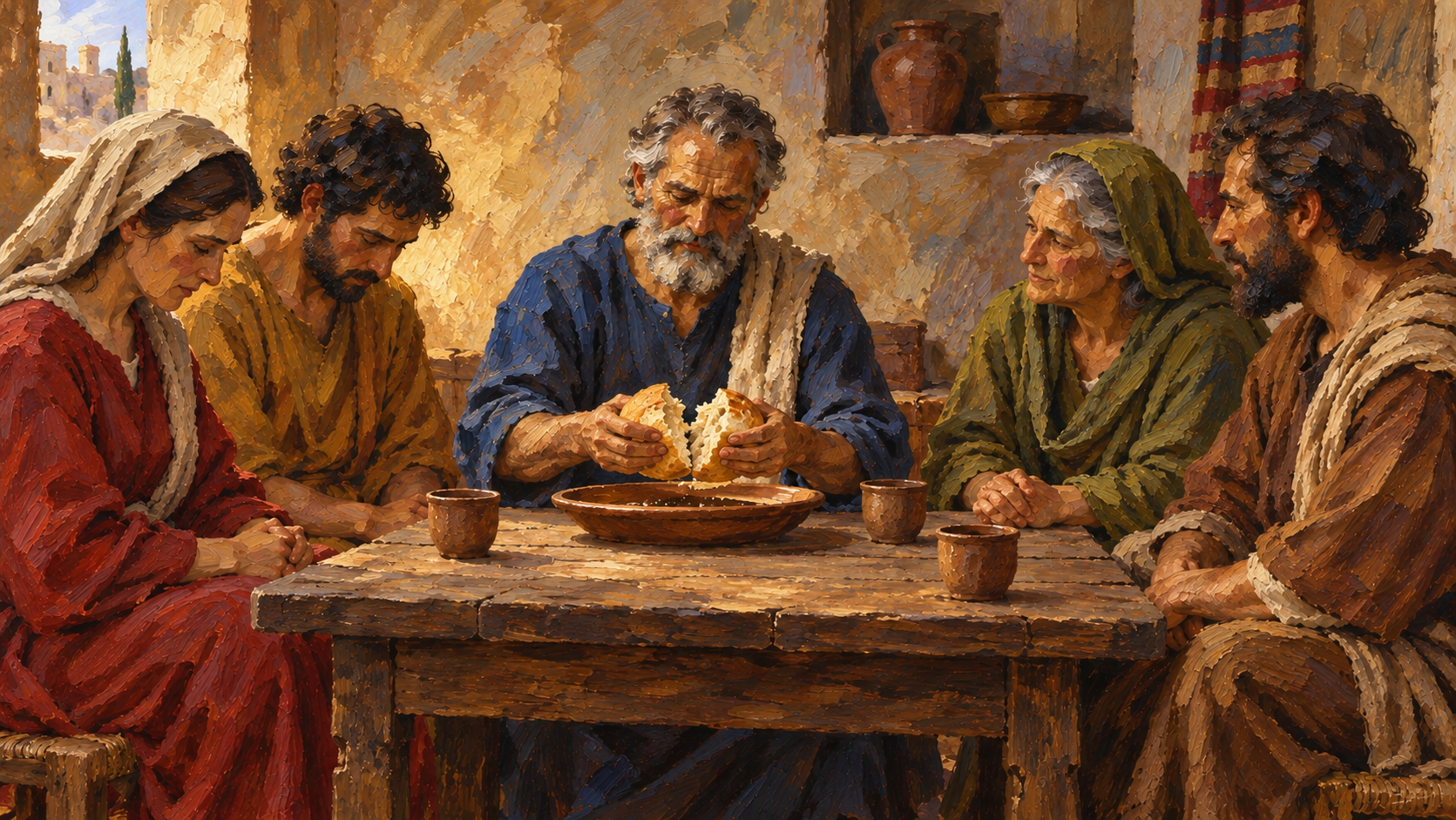
The word ecclesia is usually translated church, but what did the New Testament writers mean by it? Jesus promised to build a people who belong to Him and gather under His authority. I want to understand that promise from the passages themselves before bringing later church traditions into the discussion.
What Ecclesia Means in Scripture
The Greek noun is commonly transliterated ekklesia, while ecclesia reflects its Latinized spelling. In ordinary usage it means an assembly, a gathering, or a congregation.
The New Testament uses this word for Christ’s whole church as well as particular local churches. It can even refer to a civic assembly, so we need to look at the people and the context to understand which gathering is meant.
That makes English “church” a fitting translation in Christian passages, where the assembly is Christ’s gathered people. We also use church in ordinary conversation for the building where those people meet, but that is a different use of the word.
A familiar teaching derives ekklesia from words for “out of” and “call” and defines Christians as “the called-out ones.” I agree that believers are called by God. But we need to distinguish that true doctrine from what this particular noun means.
Think about how we use the word butterfly. Nobody would define the creature as flying butter. In much the same way, we cannot determine what an assembly means simply by adding together the oldest meanings of the word’s parts.
Understanding a biblical word helps us read Scripture honestly and accurately when we pay attention to the sentences in which the inspired authors use it. In Christian contexts, ekklesia identifies the assembly that belongs to Christ.
We can see why context is necessary in what happened at Ephesus. Paul’s preaching threatened the trade built around images of the goddess Artemis. Demetrius and other craftsmen stirred up the city, and a crowd rushed into the theater. Luke repeatedly uses ekklesia in his account of that gathering.
Some therefore cried one thing and some another, for the assembly was confused, and most of them did not know why they had come together.
Notice who is being called an ekklesia here. This crowd was opposing Paul’s ministry, so it certainly wasn’t a Christian church or a people called out of the world to Christ.
But if you have any other inquiry to make, it shall be determined in the lawful assembly.
And when he had said these things, he dismissed the assembly.
The city clerk finally quieted the crowd and directed legitimate complaints toward the courts or a lawful assembly before dismissing the gathering. Luke could use the same noun for that confused crowd and for an orderly civic assembly. It could also describe congregations of believers. The context tells us who has gathered and for what purpose; the word alone does not make a gathering a church.
Christ Builds and Heads His Church
When Jesus came into the region of Caesarea Philippi, He asked His disciples, saying, "Who do men say that I, the Son of Man, am?" So they said, "Some say John the Baptist, some Elijah, and others Jeremiah or one of the prophets." He said to them, "But who do you say that I am?"
Simon Peter answered and said, "You are the Christ, the Son of the living God." Jesus answered and said to him, "Blessed are you, Simon Bar-Jonah, for flesh and blood has not revealed this to you, but My Father who is in heaven.
And I also say to you that you are Peter, and on this rock I will build My church, and the gates of Hades shall not prevail against it."
Jesus spoke of the church as His own and promised to build it. That gives me confidence in its future because its Builder is Christ Himself. A human brand cannot provide that assurance. Neither political influence nor the survival of a particular institution can secure the church.
Christ builds His church through the gospel as the Holy Spirit brings sinners to new life. The apostles’ witness to Him forms its foundation, and He equips His people to serve. Their obedience is part of how His work continues.
Peter confessed that Jesus is the Christ, the Son of the living God. Jesus blessed him and gave him a real apostolic role. We shouldn’t diminish that role, but neither can we separate Peter from the revealed identity of Christ and then make him the church’s foundation.
Elsewhere Scripture describes Christ as the cornerstone, with the apostles and prophets forming the foundation in relation to Him. Peter himself directs believers to Christ as the living stone, which keeps our attention on the One his witness serves.
When I compare this passage with the rest of the New Testament, I do not find an inherited papal power to rule the whole church. Christ remains the Builder and Head, while the apostles’ witness to Him remains foundational.
Jesus went on to speak about the keys of the kingdom and binding and loosing. Peter received genuine apostolic responsibility, which we see when he opened gospel witness to Jews in Acts 2 and to Gentiles in Acts 10. But that responsibility did not make Peter the source of truth, nor did it give later bishops an automatic line of authority over the whole church. Apostolic authority serves the revelation of Christ, and Scripture preserves that authoritative witness for the church.
Hades is the realm of the dead, and its gates picture the power that holds the dead. Jesus promises that this power will never defeat the church He builds.
Jesus’ own bodily resurrection secures His promise. Believers may suffer persecution and even be killed, but death cannot hold Christ. It will not finally hold those who belong to Him either.
I wouldn’t use Jesus’ promise to assure any particular congregation that it can never come to an end. A denomination may disappear or a church building may close. Even a familiar ministry may cease, and a church that abandons the truth may lose its lampstand. Those losses do not overturn His promise that the whole church He is building will share in resurrection victory.
Therefore take heed to yourselves and to all the flock, among which the Holy Spirit has made you overseers, to shepherd the church of God which He purchased with His own blood. For I know this, that after my departure savage wolves will come in among you, not sparing the flock. Also from among yourselves men will rise up, speaking perverse things, to draw away the disciples after themselves. Therefore watch, and remember that for three years I did not cease to warn everyone night and day with tears.
Paul spoke these words at Miletus as he said farewell to the Ephesian elders, expecting not to see them again. He called those same men overseers and told them to shepherd the flock. We are seeing three descriptions of their work together: spiritually mature elders watch over the people through pastoral care.
When Paul says “church of God which He purchased with His own blood”, he connects God’s ownership of the church with the blood Christ shed. That supports the deity of Jesus, and it makes me think about how we measure the church’s value. Its budget and cultural reach cannot tell us what it cost Christ to purchase His people. Wicked men physically tortured Jesus and inflicted punishment on His innocent body until He died. He willingly bore that real punishment for our sins and shed His blood. He was then buried and rose bodily from the grave. The Father did not punish or curse His beloved Son. Nor did He abandon, strike, or bruise Jesus or pour wrath upon Him.
Christ died for the whole world, and the gospel invitation is genuinely open even though people may resist or reject Him. Everyone who repents and believes is born again. The Holy Spirit comes to dwell within that believer and seals him, making him eternally secure. This is how we become part of Christ’s purchased people. We are not a market or a volunteer club held together by shared preferences.
Paul’s warning requires leaders to watch their own lives as they faithfully feed the flock. Deceivers can rise within the church as well as enter it from outside. His tears and three years of warning help me understand the care this requires. Protecting doctrine is personal work done for the people, not an excuse to keep them under control through suspicion.
And He put all things under His feet, and gave Him to be head over all things to the church, which is His body, the fullness of Him who fills all in all.
No pastor or governing board can take Christ’s place, and neither can a denomination or civil ruler. Even the local congregation must submit to Him. Every decision and tradition stands beneath His written Word. I need to judge spiritual claims and ministry plans by what He has said, rather than make my choices first and ask Him to approve them afterward.
Whatever authority human leaders have comes from Christ and has limits. Healthy shepherds direct people to the Chief Shepherd and welcome accountability under His Word.
In 1 Corinthians 12, Paul addresses a gifted but divided local church. He reminds those believers that the Spirit placed them into one body, where each person remains an individual member.
A hand cannot flourish when it is detached from the body, and an eye has no reason to dismiss the hand. Paul’s illustration helps me see why the church needs both prominent members and those who serve quietly. Each is a living member of the same body and needs the others.
In 1 Corinthians 12, all believers were baptized by one Spirit into one body, whether Jews or Greeks, slaves or free. This belongs to God’s saving work and is distinct from water baptism. It does not describe a spiritual rank that unusually gifted Christians reach later. Everyone who is truly born again belongs to Christ’s body regardless of ethnicity or social standing. Someone whose service is rarely noticed is just as truly joined to Christ as someone whose work is widely seen.
God unites His people in Christ without giving everyone the same function or gift. The trouble begins when members turn those differences into a competition. Constantly comparing our service with someone else’s can lead us to despise what they do or envy the place God has given them.
We don’t have to organize every congregation in exactly the same way to have biblical unity, and we must never ignore error to maintain it. The church confesses one Lord and rests in one gospel. Its members share the same faith and hope because the same Spirit dwells within them. The apostles’ teaching defines and protects that unity.
The way I respond to another member’s suffering or honor shows whether I am living out what I believe about the body. We should care when someone suffers and rejoice without jealousy when someone is honored. That love makes our unity visible in the ordinary life of the church.
The Universal Church and Local Churches
Some passages speak of the church as Christ’s one body across places and generations. The term universal church summarizes that complete company; it is not the name of one worldwide denomination. Every person truly born again through faith in Christ belongs to it.
No denomination or human institution can claim that its membership perfectly matches the universal church. A congregation may include people who profess faith without truly believing. Meanwhile, genuine believers may be scattered by persecution or temporarily unable to gather.
When we call the universal church invisible, we don’t mean that its members are imaginary or that no one can know them. We mean that no human roster can perfectly identify every true believer throughout history and across the world. I cannot use that limitation to justify permanent isolation. The apostles expect believers who are able to gather to live as members of identifiable local assemblies.
Paul writes to the church of God at Corinth and to churches throughout regions. Acts describes elders being appointed in local congregations. Revelation addresses seven identifiable churches with distinct strengths and sins.
The New Testament’s instructions about teaching and accountable leadership concern people who know one another. So do its instructions about discipline and generous giving. We share communion with other believers, use our spiritual gifts to serve them, and receive their care in return. This helps me understand why belonging to the universal church should take practical form in a local congregation.
A local church is a recognized people living under Christ’s Word, not just a weekly audience. They gather to worship and learn, then serve alongside one another. Their shared life includes bearing burdens and correcting and forgiving each other.
Jewish and Gentile believers belong to one body in Christ, but that unity in salvation does not erase Israel’s identity or cancel God’s national promises. The church began with Jewish believers, and its salvation comes through Israel’s Messiah. Gentiles have been included by grace without receiving a transfer of identity that makes them the new ethnic Israel.
Romans 11 compares Gentile believers to wild branches grafted into a cultivated olive tree and warns them against boasting over the natural branches. Paul also anticipates God’s future work with Israel. We should receive Israel’s Scriptures with gratitude while allowing their future prophecies to speak about the nation, rather than interpreting Israel out of them.
I do not believe we honor God’s faithfulness to the church by weakening His plain promises to Israel. He is faithful to both, which is why replacement theology does not fit these passages.
We won’t find modern membership forms in the New Testament, but we do find congregations that knew who belonged to them. People were added to the church and could be counted. Shepherds knew whom they were caring for, and discipline concerned identifiable members. The churches also recognized particular widows and servants for specific responsibilities.
Membership does not save a person. It gives an orderly way to express commitment to a local body and makes clear where a believer receives pastoral care. Accountability and service then take place among people who have a known relationship. The same is true of giving and discipline; these belong within a church’s shared life rather than an undefined audience.
A church should receive people whose profession of faith is credible without using membership to control lawful choices. A Christian who leaves an abusive or false church has not abandoned Christ and should seek a faithful congregation.
The commitments of membership go both ways. Elders take responsibility to teach God’s Word and guard the flock, knowing people well enough to pray for them and give personal care. Members should pursue peace and receive that biblical care. They support the church’s work through honest participation and use their gifts to serve others. A congregation ought to explain these commitments before asking anyone to make them.
A name left on a church roll after years of unexplained absence can give a misleading impression of belonging. Attendance alone can also be mistaken for discipleship. Faithful membership involves patiently pursuing people who have wandered and keeping an honest account of who belongs. If someone transfers to another sound congregation, the former church should acknowledge that change clearly and lovingly.
The Life and Order of a Local Church
Then those who gladly received his word were baptized; and that day about three thousand souls were added to them. And they continued steadfastly in the apostles’ doctrine and fellowship, in the breaking of bread, and in prayers. Then fear came upon every soul, and many wonders and signs were done through the apostles.
Now all who believed were together, and had all things in common, and sold their possessions and goods, and divided them among all, as anyone had need. So continuing daily with one accord in the temple, and breaking bread from house to house, they ate their food with gladness and simplicity of heart,
praising God and having favor with all the people. And the Lord added to the church daily those who were being saved.
The events in Acts 2 took place at Pentecost, when Jews from many regions had come to Jerusalem. The Holy Spirit came upon the disciples, and Peter explained Jesus’ death and bodily resurrection from Scripture. His hearers asked what they should do, and about three thousand gladly received the word. They were baptized and added to a body that taught and worshiped together. Notice the order: membership did not create their faith. People who had been saved were added to the church.
We receive apostolic doctrine today through the inspired New Testament, which agrees with the whole Bible. That gives us the standard for evaluating personal experience and church tradition. A teaching’s popularity does not make it true, and anyone claiming a private revelation must also submit that claim to the written Word.
The Greek koinonia describes fellowship as sharing and participation. Believers share life in Christ, so their fellowship reaches beyond a conversation after the service.
That shared life becomes practical when we pray for one another and use what we have to meet each other’s needs. Opening a home or sharing a table gives us opportunities for fellowship in ordinary life. We use spiritual gifts to help carry someone’s burden, whether through encouragement or loving correction, and we labor together for the gospel. The generosity described in Acts was willing care for others, not forced communal ownership.
Warm relationships cannot take the place of apostolic doctrine, because true fellowship rests on the truth about Christ. But if our doctrine is right, it should also move us to care for people in tangible ways.
Acts describes believers eating in homes and continuing in the breaking of bread. We need to follow the context rather than assume that phrase always means exactly the same thing. Sometimes it refers to an ordinary meal and elsewhere to the Lord’s Supper. It can also describe a setting in which a fellowship meal and communion are closely connected.
Communion remembers Christ’s body and blood and proclaims His death until He comes. It never repeats His sacrifice or turns bread and cup into another offering.
Sharing a table gives hospitality a practical place in church life. Welcoming someone into our ordinary lives can help us notice needs that a large gathering might miss.
When the church prays together, it acknowledges its dependence on God. The early believers brought danger and important decisions before Him. They sought Him as missionaries were sent and kept praying through suffering. Repentance and thanksgiving both had a place in those prayers.
Singing belongs in worship, but I would miss much of what the church offers to God if I treated worship as only the music. We hear Scripture and respond in prayer. We give generously and observe the ordinances Christ commanded. Our whole lives should be offered to Him. A set of songs cannot express all that biblical worship involves.
Prayer in the gathered church should be understandable and orderly. A public performance or emotional pressure on the congregation is not evidence of the Spirit’s presence. We must be able to test spiritual claims by Scripture.
Water baptism follows personal faith and publicly identifies a believer with Christ. It pictures His death and burial as well as His resurrection. Baptism does not cause the new birth or complete the believer’s justification, his being declared righteous before God.
In communion, the gathered church remembers Christ and proclaims His body and blood. Each believer should examine himself as the congregation discerns the body. Neither the elements nor the observance can save anyone, and the church is never repeating Calvary.
Both ordinances keep our attention on the gospel instead of a dominant personality or the pursuit of entertainment. They call for conscious obedience to Christ, so inherited ritual must not take its place.
This is a faithful saying: If a man desires the position of a bishop, he desires a good work. A bishop then must be blameless, the husband of one wife, temperate, sober-minded, of good behavior, hospitable, able to teach;
not given to wine, not violent, not greedy for money, but gentle, not quarrelsome, not covetous; one who rules his own house well, having his children in submission with all reverence (for if a man does not know how to rule his own house, how will he take care of the church of God?);
not a novice, lest being puffed up with pride he fall into the same condemnation as the devil. Moreover he must have a good testimony among those who are outside, lest he fall into reproach and the snare of the devil.
The titles pastor, elder, and overseer describe different aspects of the same New Testament office. A pastor shepherds the flock, while the title elder emphasizes the spiritual maturity with which he leads. As an overseer, he gives the people watchful care. The repeated pattern in local churches favors several accountable elders serving together.
This office and the authoritative teaching leadership of the gathered church belong to biblically qualified men. That assignment does not make women less valuable in Christ. Women are indispensable as disciples and servants, and their gifts should be trained and honored.
Paul’s qualifications make me ask about a man’s character before his talent or charisma, because neither can make an unqualified man fit to lead. Education and wealth cannot compensate for a disordered life, and a claimed private calling cannot set Scripture aside. A shepherd must already be faithful in his own household. His gentle treatment of people should agree with sound doctrine and show spiritual maturity. His integrity should be recognizable even to those outside the church.
In 1 Timothy, deacons are distinguished from elders but are also required to have tested character. They carry practical responsibilities with integrity so that people receive needed help and the church maintains sound ministry priorities.
A deacon’s service involves people’s lives and needs, which is why practical work is spiritual work too. He may be trusted with money or help settle a practical conflict. Organizing meals and other help may bring him into contact with burdens people carry privately. We shouldn’t regard him as merely a maintenance volunteer or as an elder who doesn’t have to meet the qualifications.
Healthy leadership equips the whole body for meaningful service. It does not turn members into spectators or exhaust them merely to preserve an institution.
And He Himself gave some to be apostles, some prophets, some evangelists, and some pastors and teachers, for the equipping of the saints for the work of ministry, for the edifying of the body of Christ,
till we all come to the unity of the faith and of the knowledge of the Son of God, to a perfect man, to the measure of the stature of the fullness of Christ; that we should no longer be children, tossed to and fro and carried about with every wind of doctrine,
by the trickery of men, in the cunning craftiness of deceitful plotting, but, speaking the truth in love, may grow up in all things into Him who is the head–Christ– from whom the whole body, joined and knit together by what every joint supplies, according to the effective working by which every part does its share, causes growth of the body for the edifying of itself in love.
The purpose of leadership is to equip the saints for ministry, not to do everything while the congregation watches. Each member should grow in understanding the truth and learn to speak it in love. That growing discernment helps us become more useful to the people we serve.
I do not believe Scripture supports cessationism, the claim that certain spiritual gifts have ceased, or the disorder found in hyper-charismatic practice. The Holy Spirit still gives gifts to Christ’s people. But the New Testament apostles hold a foundational authority as eyewitnesses that no modern claimant can reproduce. A claimed gift does not give anyone the right to add revelation equal to Scripture. We must examine present claims by the written Word and the order it gives. A gift should honor Christ by strengthening other believers, not by drawing attention to the person claiming it.
"Moreover if your brother sins against you, go and tell him his fault between you and him alone. If he hears you, you have gained your brother. But if he will not hear, take with you one or two more, that ‘by the mouth of two or three witnesses every word may be established.’
And if he refuses to hear them, tell it to the church. But if he refuses even to hear the church, let him be to you like a heathen and a tax collector. "Assuredly, I say to you, whatever you bind on earth will be bound in heaven, and whatever you loose on earth will be loosed in heaven.
"Again I say to you that if two of you agree on earth concerning anything that they ask, it will be done for them by My Father in heaven. For where two or three are gathered together in My name, I am there in the midst of them."
Before giving these instructions in Matthew 18, Jesus warned against despising His little ones and described a shepherd seeking a wandering sheep. I want to keep that setting in mind when considering discipline. Truth protects vulnerable people, and correction should seek the sinner’s recovery rather than make life more comfortable for an institution.
Jesus instructs the believer to begin with a private conversation aimed at gaining his brother. If he refuses to listen, one or two others are brought in to establish the matter. They are there to help establish the facts and confirm his response, not simply to support one side. This calls for patience instead of a rush to expose someone publicly. Only persistent refusal brings the matter before the gathered church.
Discipline protects the body by making clear that persistent public rebellion contradicts a person’s profession of faith. That purpose must govern the process. It cannot become retaliation for embarrassing the church, a way to manage its reputation, or punishment for honest questions.
Jesus’ promise about two or three gathered in His name immediately concerns this accountable process within the church. I don’t think we can take it out of that setting to claim that any two Christians make a complete church. Nor does it mean Jesus is absent when a believer prays alone.
We should respond to repentance with forgiveness and appropriate restoration. Even when trust has been restored, however, returning someone to an office is not automatic.
Therefore, brethren, having boldness to enter the Holiest by the blood of Jesus, by a new and living way which He consecrated for us, through the veil, that is, His flesh, and having a High Priest over the house of God,
let us draw near with a true heart in full assurance of faith, having our hearts sprinkled from an evil conscience and our bodies washed with pure water. Let us hold fast the confession of our hope without wavering, for He who promised is faithful.
And let us consider one another in order to stir up love and good works, not forsaking the assembling of ourselves together, as is the manner of some, but exhorting one another, and so much the more as you see the Day approaching.
Paul wrote Hebrews to believers who were under pressure to draw back from their confession of Christ. I don’t want to reduce his command to assemble to an attendance requirement when these believers needed help to hold fast. Christ’s blood has opened the way to God, and He remains High Priest over God’s house. Believers gather to draw near and hold fast because the One who promised is faithful and the Day is approaching. As they pay attention to each other, their encouragement helps love become active and helps weary Christians keep going.
Pastoral care must take account of what prevents a person from gathering. Illness or disability may make attendance impossible, while caregiving can limit it for a season. Persecution may make a meeting dangerous, and travel or other temporary needs can also keep a believer away. Online teaching can help during those times. But it cannot permanently provide the embodied service and communion of a local church, or the full experience of its discipline and shared life.
A person wounded by a church may need time to heal in safety. We should care about that pain while helping the person move toward faithful fellowship. Neither dismissing the wound nor encouraging permanent isolation serves that goal.
The Church’s Witness and Mission
And Jesus came and spoke to them, saying, "All authority has been given to Me in heaven and on earth. Go therefore and make disciples of all the nations, baptizing them in the name of the Father and of the Son and of the Holy Spirit, teaching them to observe all things that I have commanded you; and lo, I am with you always, even to the end of the age." Amen.
Jesus grounds this command in His authority over all things and His continuing presence with His people. That is where I find the church’s confidence to go into the nations and make disciples. His followers are to baptize those who believe and teach them to obey Him. These are connected parts of making disciples, not isolated ministries with unrelated purposes.
We proclaim Christ’s death for the whole world and God’s genuine offer to every person. Conversion is never coerced; hearers can resist and reject the gospel.
Making disciples includes teaching believers to obey everything Christ commanded. We cannot count decisions and consider the Commission finished without helping believers grow and churches develop.
These things I write to you, though I hope to come to you shortly; but if I am delayed, I write so that you may know how you ought to conduct yourself in the house of God, which is the church of the living God, the pillar and ground of the truth.
The church supports and displays the truth entrusted to it. It neither manufactures that truth nor stands above Scripture. I take this as a solemn responsibility for every congregation: the way we conduct ourselves should agree with the gospel we confess.
We shouldn’t have to choose between holiness and love. Love that abandons holiness ends up protecting destructive sin, while holiness without love becomes hard and self-righteous. Christ calls us to tell the truth and still welcome the person who repents. When truth provides a sound foundation, generous mercy helps make reconciliation possible.
A building can give believers a useful place for ministry, just as a public platform or an organized program may serve a good purpose. But none of these is the church, and none can take the place of people formed by Christ’s Word and Spirit.
The church’s care should reach widows and orphans as well as the poor and those who grieve. Someone carrying a practical burden ought to find people willing to help. I must not use gospel proclamation as an excuse to overlook a neighbor’s suffering, even though mercy never replaces the message we proclaim. Christ’s compassion keeps our words and deeds together while preserving the purpose of each.
That same faithfulness requires accountability when leaders or institutions cause harm. Silencing wounded people to protect a ministry’s image contradicts the truth the church claims to uphold. Genuine repentance welcomes an impartial examination of what happened. The church must protect those who have been harmed. Such honesty honors Christ more than secrecy.
My Final Thoughts
Following ekklesia through these passages helps me understand why a building or a religious audience can never be the church. Christ purchased a people with His blood and placed them under His authority. His worldwide body is precious, and that gives weight to the ordinary local congregation where we share life under God’s Word. Christ alone is our Head, so every custom and every human personality must yield to what He has spoken.