
We can speak respectfully about Jesus as a prophet or teacher and still miss who He is. Calling Him a reformer or a moral example is also far short of what Scripture reveals about the eternal Son. He is the Word made flesh, the Creator who became our sinless Savior and shed His blood before rising from the dead. I want to understand why Acts 4:12 directs us to Him alone for salvation. Following that question through the Old and New Testaments should lead us to worship the Christ Scripture reveals, not simply win an argument.
The Only Saving Name and the Old Testament Promise
Acts 4 follows the healing of a man who had been lame from birth. Peter and John were brought before Jerusalem’s religious authorities, including members of the high priestly family, and asked by what power or name they had done this. Peter named Jesus Christ of Nazareth. He told the leaders that they had crucified Jesus and that God had raised Him from the dead, leaving no doubt about whom he meant.
Nor is there salvation in any other, for there is no other name under heaven given among men by which we must be saved.
Peter leaves no alternative Savior. The Greek word onoma means “name,” and understanding its use here helps us see that he wasn’t offering a magic sound or formula. A name in Scripture represents the person and his identity, and can also convey his authority and reputation. Peter was directing people to Jesus Himself as the One they had every reason to trust for salvation.
I cannot reconcile that claim with the idea that Jesus is only a messenger. A prophet can point us toward God, and an apostle can faithfully preach the gospel. An angel can deliver God’s message too, but none of them could become the only saving name under heaven. If Jesus were not God the Son in the flesh, Acts 4:12 would be directing the world to trust a creature. Instead, God mercifully provided His divine Son as the Savior of everyone who comes to Him.
The Old Testament already prepares us for a truly human Messiah descended from David who also bears divine titles. This promised King fulfills God’s promises that the LORD Himself would come to save His people. The deity of Jesus therefore did not begin as an invention after the apostles.
Isaiah speaks of a coming Child who will reign, and the names given to Him are too weighty for an ordinary king:
For unto us a Child is born, Unto us a Son is given; And the government will be upon His shoulder. And His name will be called Wonderful, Counselor, Mighty God, Everlasting Father, Prince of Peace.
Isaiah’s title “Mighty God” is more than praise for a capable king. Isaiah uses mighty divine language for the LORD Himself, so the Messiah’s identity involves God’s own presence and rule, not simply God’s help. We also need to understand “Everlasting Father” within Isaiah’s royal setting. It speaks of the Messiah’s eternal, fatherly care over His people without making the Son the same Person as the Father. Scripture consistently distinguishes them.
Psalm 45 gives another royal passage that reaches beyond any ordinary son of David:
Your throne, O God, is forever and ever; A scepter of righteousness is the scepter of Your kingdom.
Paul later applies these words directly to the Son in Hebrews. What helps me follow his reasoning is that the Psalm already addresses the promised King as God and gives Him an everlasting throne. Paul is bringing out the fullness of what the Spirit placed there, rather than imposing a meaning foreign to the passage.
Isaiah also speaks of God Himself coming to save:
Say to those who are fearful-hearted, “Be strong, do not fear! Behold, your God will come with vengeance, With the recompense of God; He will come and save you.”
The Gospels describe Jesus healing the sick and opening blind eyes against this background of God’s promised coming. His power to deliver people from demons and forgive sins belongs to the promised arrival of God’s kingdom. These are not the acts of an unrelated wonder-worker. In His Son, God has come near as the Savior Scripture promised.
The Eternal Word and Jesus’ Own Claims
John begins his Gospel before Jesus’ birth in Bethlehem, with the Word who already existed eternally. He tells us both that the Word is personally distinct from the Father and that He is fully God.
In the beginning was the Word, and the Word was with God, and the Word was God.
The Word being with God tells us He is personally distinct from the Father. John then says the Word was God, identifying Him as possessing the divine nature. I don’t see room here for a created helper or an exalted angel. Nor does John describe a lesser god. The Word already existed in the beginning.
And the Word became flesh and dwelt among us, and we beheld His glory, the glory as of the only begotten of the Father, full of grace and truth.
The Word did not begin to exist when He became flesh. The eternal Son took a real human nature while retaining the divine nature that was eternally His. That is what we mean by the incarnation: Jesus is fully God and fully man.
Both truths are necessary to the gospel. Without being truly God, Jesus could not perfectly reveal the Father or provide a sacrifice of infinite worth. Without being truly man, He could not stand in our place. John gives us reason to confess both because the Word who was God is the One who became flesh.
Some people claim Jesus never presented Himself as God. To evaluate that claim, we need to hear His words in their Old Testament setting and within Israel’s worship of the one God. His hearers understood the weight of His claims, and the Gospels do not support the idea that He never made them.
Jesus said to them, “Most assuredly, I say to you, before Abraham was, I AM.”
Jesus placed Himself before Abraham, but He said more than that He had lived earlier. His words ego eimi, “I AM,” echo divine self-identification in a way no ordinary man could claim. I also notice how the crowd responded: they took up stones. They understood that His claim would be blasphemy unless it was true.
In John 10, another claim Jesus made drew the same reaction:
I and My Father are one.
The Greek word hen means “one.” Its neuter form preserves the distinction of Persons, so Jesus was not saying He and the Father were the same Person. That rules out modalism, the idea that one Person appears in different roles as Father and Son. Yet we cannot reduce His claim to agreement in purpose either. His hearers accused Him of making Himself God, and He pointed them to His works and the Father’s witness rather than denying the divine claim.
The Jews answered Him, saying, “For a good work we do not stone You, but for blasphemy, and because You, being a Man, make Yourself God.”
Divine Honor and Works That Belong to God
Scripture reserves worship for God alone, which is why angels and faithful human servants refuse it. Jesus, however, received worship and was directly confessed as God. Thomas’s response to Him lets us see this plainly:
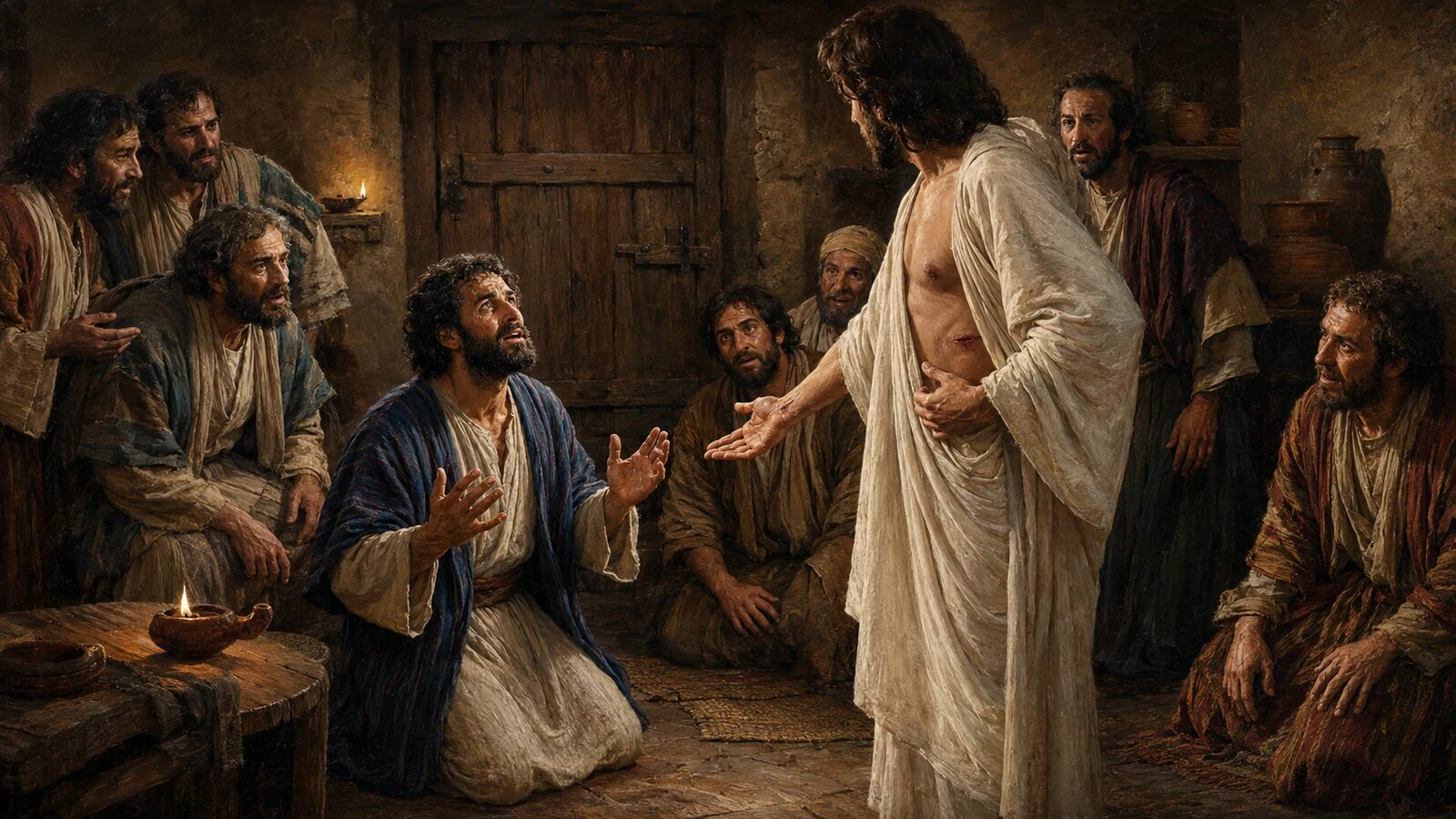
And Thomas answered and said to Him, “My Lord and my God!”
Jesus accepted Thomas’s confession without correcting him. That helps me understand the place of Thomas’s words in John’s Gospel. John goes on to explain that he wrote so readers would believe Jesus is the Christ and Son of God and receive life in His name. Thomas had responded rightly to the risen Christ, not gone too far in his praise.
In Hebrews, the Father addresses the Son with these words from Psalm 45:
But to the Son He says: “Your throne, O God, is forever and ever; A scepter of righteousness is the scepter of Your kingdom.”
Paul’s argument in Hebrews 1 places the Son above the angels without making Him simply the highest angel. They worship and serve God, while the Son reigns on an eternal throne and is directly addressed as God by the Father.
Jesus also says the Son must receive the same honor as the Father:
that all should honor the Son just as they honor the Father. He who does not honor the Son does not honor the Father who sent Him.
A prophet could not rightly demand the honor that belongs to God. Jesus teaches that refusing to honor Him dishonors the Father who sent Him. I cannot honor the Father by withholding worship from the Son, because the Father is glorified when we honor His Son as He truly is.
The New Testament also shows Jesus doing what belongs to God. He created all things and continues to sustain them, while His forgiveness of sins rests on His own authority. He gives life and will carry out final judgment. These works reveal who He is; they are not simply tasks God delegated to a holy creature.
For by Him all things were created that are in heaven and that are on earth, visible and invisible… All things were created through Him and for Him. And He is before all things, and in Him all things consist.
If Christ made every created thing, He cannot be one of the things He made. He existed before them all and continues to hold them together. Calling Him merely a moral teacher leaves us with no explanation for His creation and sustaining of the universe.
In Mark 2, the question about Jesus’ identity arose over His forgiveness of sins. The scribes correctly understood that only God could forgive sins, and Jesus healed the paralytic to give visible proof of an authority they could not see.
“But that you may know that the Son of Man has power on earth to forgive sins” — He said to the paralytic,
Jesus claimed authority on earth to forgive sins, and the healing confirmed it. He was doing more than announcing that God forgave somewhere else. In John 5, He also claimed the right to give life according to His own will, and the Father has committed all judgment to Him. He exercises these divine rights in perfect unity with the Father.
The names Jesus bears fit both His actions and the worship He receives. Someone could live close to God without doing what only God can do or receiving the honor that belongs to Him. Jesus does both, so His identity goes far beyond that of a godly man.
True Humanity and the Passages Used as Objections
We also need to give full attention to Jesus’ humanity, which the same Scriptures affirm. He was conceived by the Holy Spirit and born of the virgin Mary. He grew and experienced hunger, and He needed sleep. He wept and prayed, then suffered in a real human body as His blood was shed until He died. He later rose bodily from the grave. None of this cancels His deity; in the incarnation He is both fully God and fully human.
Hebrews speaks of Jesus’ prayers in the days of His flesh:
who, in the days of His flesh, when He had offered up prayers and supplications, with vehement cries and tears to Him who was able to save Him from death, and was heard because of His godly fear,
When I read about Jesus praying, I see the eternal Son living the human life He truly took upon Himself. He was not acting a part, but obeying the Father perfectly as a real man. His prayer does not mean He ceased to be God or that He is the Father. He is the Son incarnate, personally speaking to the Father.
The church must hold to both natures, because a Jesus who only appeared human could not die for us as man, and a Jesus who was only man could not save the world. Scripture presents one Person who is fully God and fully man, the God-man.
Passages raised as objections to Christ’s deity need the same attention to context. In John 14:28, Jesus said His Father was greater than He was. He was preparing the disciples for His departure and return to the Father. He was speaking as the incarnate Son about His humbled mission, not describing an inferior divine nature. I need to read that statement alongside John’s declaration that the Word was God. Jesus also claims the divine “I AM,” and Thomas later addresses Him as God. With the Son receiving the same honor as the Father, John gives us no reason to make his statements contradict one another.
His prayers likewise express the perfect dependence and obedience of the Son who truly became man. The Son spoke to the Father because He is personally distinct from Him. That relationship agrees with the Trinity and with real incarnation, rather than denying that Jesus is God.
Colossians 1:15 is another passage that must be read in context:
He is the image of the invisible God, the firstborn over all creation.
Here, firstborn describes the Son’s supreme rank and inheritance, not the beginning of His existence as a creature. The next verse gives me the reason to read it that way: Christ made every created thing, and all creation exists for Him. Paul exalts Him over creation as its Creator rather than placing Him among the things He made.
John 1 and Colossians 1 both place Jesus before creation and identify Him as the One through whom all things were made. That excludes the idea of a created Son. Scripture does call Him a Prophet, but we cannot stop there when it also reveals Him as the Lord and God who created everything and the Savior who will judge the world.
The Son is God, but He is not the Father. We see their personal distinction in His prayers to the Father and in the Father’s sending Him. We also cannot remove His real body and blood from the gospel, or deny His actual death and bodily resurrection, without presenting a different Christ.
The Cross Requires This Christ
The cross brings us back to why Jesus’ identity is essential to salvation. Scripture says redemption was secured through His blood. The One who died was the eternal Son who willingly took human flesh, not merely a man overtaken by tragedy. Fully God and fully man, He was born of a virgin and lived a completely sinless life.
in whom we have redemption through His blood, the forgiveness of sins.
Redemption means captives are set free because a price has been paid, and Scripture identifies that price as Christ’s blood. A vague religious influence could not replace what happened in His body. Wicked men physically tortured Jesus and inflicted the punishment that killed Him. He willingly bore that real punishment for our sins in His innocent body, shedding His blood and dying for us. After His burial, He rose bodily. The Father did not punish or curse Jesus, nor did He abandon Him. He did not strike or bruise His Son or pour wrath on Him. His deity did not make the suffering unreal, and His humanity did not make Him sinful. The One who died was the sinless God-man.
For He made Him who knew no sin to be sin for us, that we might become the righteousness of God in Him.
Jesus bore our sins in His body as an innocent substitute without ever becoming sinful in His nature. His saving work has the worth Scripture gives it because He is truly God, and His complete humanity enables Him to stand in our place. His bodily resurrection vindicates that finished work, giving living hope to everyone who trusts Him.
Now we can see why Acts 4:12 directs us to no other saving name. There is no other Savior like Jesus. He died for the whole world, and God’s offer is genuine even though people can resist and reject it. Everyone who repents and believes in Him is forgiven and justified, meaning declared righteous before God. That person is born again and made new, with the Holy Spirit indwelling and sealing the believer in Christ. The believer is eternally secure, but that security does not excuse lawlessness. A superficial profession is no proof that someone has truly been born again.
I cannot respond to Christ’s deity by offering Him only the respect I would give a good teacher. Thomas rightly called Him “My Lord and my God,” and my worship needs to reflect that same recognition. Honoring the Son as He truly is also honors the Father.
Knowing who saves us gives us reason for confidence. The eternal Son who took flesh and finished redemption is neither weak nor temporary. His shed blood is sufficient, and He rose bodily and now lives to intercede. We trust a Savior whose authority to save is complete.
This also helps me evaluate teaching about Jesus. Biblical words alone do not make a teaching faithful if it lowers Him to a creature or angel, or treats Him as only a prophet or moral example. It gives us a different Christ. At the same time, His coming should humble us. Neither wisdom nor religion could bring us up to God, and greater effort or better conduct could not save us. The Son came down to us and took flesh, then bore sin’s punishment and rose again.
Each of us needs to respond to the Jesus Scripture reveals. If He is who these passages say He is, remaining neutral is not wise, and admiration alone is not enough. We are called to believe and worship Him, obeying Him and trusting Him as our only Savior.
For related teaching, see A Complete Bible Study on the Trinity, A Complete Bible Study on The Virgin Birth, and Soteriology: The Study of Salvation.
My Final Thoughts
The Old Testament prepares us for a divine King, and the New Testament reveals Him as the eternal Word who became flesh. Jesus Christ is truly God and truly man. He creates and sustains all things, yet He took a complete human nature so He could shed His blood and die in our place before rising bodily. He forgives sins by His own authority and will judge the world, and He receives the divine honor that belongs to Him. That is why I cannot separate the promise of salvation in Acts 4:12 from who Jesus is. He alone is the Savior Scripture presents, and we can come to Him in repentance and faith, worship Him as Lord and God, and rest in the salvation He secured.