
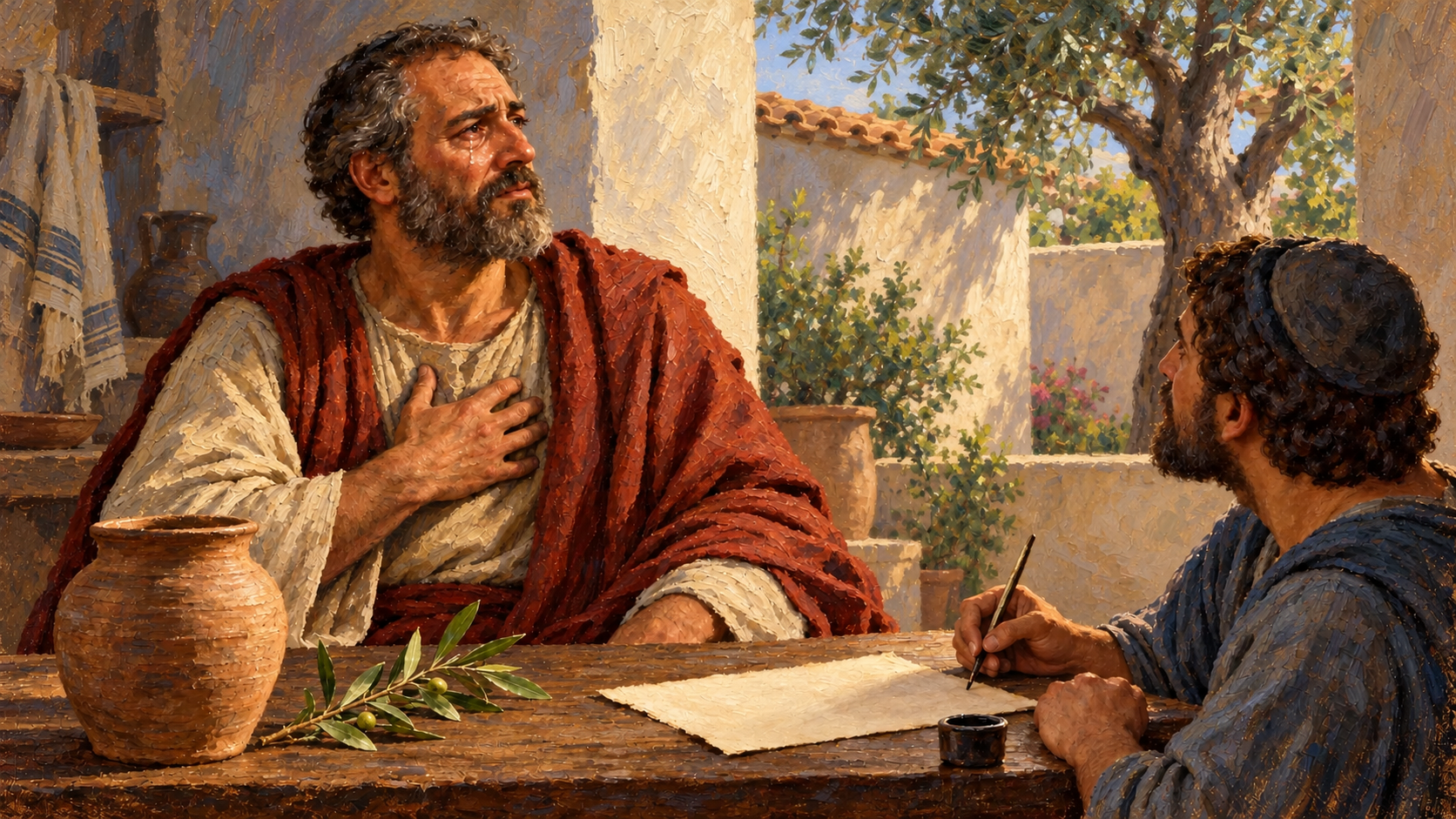
If God keeps His promises, why were so many Israelites rejecting their own Messiah while Gentiles were coming to faith? Paul addresses that painful question in Romans 9–11. I disagree with the Calvinistic interpretation of this passage, but answering it requires more than collecting verses that sound favorable to my position. We need to follow Paul’s explanation, including the Old Testament passages he quotes, and hear what he says about faith and unbelief before reaching a conclusion.
Paul’s Grief Frames the Question
Romans 8 ends with the assurance that nothing can separate those in Christ from God’s love. His saving purpose will bring them to glory. Yet Israel had received extraordinary promises, and many of Paul’s countrymen were refusing the Savior those promises concerned. Had God failed to do what He said? Paul begins his answer by telling us how deeply he grieves for them.
I tell the truth in Christ, I am not lying, my conscience also bearing me witness in the Holy Spirit, that I have great sorrow and continual grief in my heart. For I could wish that I myself were accursed from Christ for my brethren, my countrymen according to the flesh, who are Israelites, to whom pertain the adoption, the glory, the covenants, the giving of the law, the service of God, and the promises; of whom are the fathers and from whom, according to the flesh, Christ came, who is over all, the eternally blessed God. Amen.
Israel’s privileges were real. God had called the nation His son, shown His glory among its people, given them the law and covenants, and established the temple service. The patriarchs belonged to this people, and the Messiah Himself came through their ancestry. Paul identifies Jesus as the One over all, the eternally blessed God. Jesus shares their human ancestry, and He is also fully divine.
National adoption, however, did not mean that every Israelite had personally been born again. People could belong to the nation God brought out of Egypt and still refuse Him. Their heritage made that refusal especially tragic, because they were turning away from the Messiah God had promised them.
Paul says he could wish himself accursed for his brethren. Moses had expressed similar anguish when he pleaded for Israel after the golden calf. Neither man could actually become the sacrifice that would save his people; only the sinless Son could give Himself for the world’s sins. Paul is expressing the depth of his sorrow, not offering another means of atonement.
I don’t see any smug satisfaction in that opening. Paul knew these people were in grave danger, and he wanted them saved. If our explanation of election leaves us indifferent toward someone refusing Christ, we have lost the concern with which Paul began.
In verse 6, Paul rejects the suggestion that Israel’s unbelief has made God’s word ineffective.
But it is not that the word of God has taken no effect. For they are not all Israel who are of Israel,
Physical descent had never guaranteed that a person shared Abraham’s faith. Paul had already explained that outward circumcision alone did not make someone faithful to God, and that Abraham was counted righteous before he was circumcised. An Israelite’s ancestry was a genuine privilege, but it could not provide righteousness while he rejected the God who gave it.
I do not understand “they are not all Israel who are of Israel” to mean the church has replaced ethnic Israel. Paul still calls his countrymen Israelites, and in chapter 11 he will explicitly deny that God has cast away His people. He distinguishes belonging to the physical nation from receiving saving mercy. We should neither promise salvation on the basis of ancestry nor dismiss the covenants God entrusted to Israel.
God’s word has not failed simply because some descendants refuse Christ. He never promised to save every physical descendant through bloodline alone. Paul now looks back at how God carried His promise forward through Abraham’s family.
The Promise Runs Through Isaac and Jacob
Ishmael really was Abraham’s son, but natural descent did not give him Isaac’s place in the covenant promise. God had said Sarah herself would bear the promised son, through whom that line would continue.
nor are they all children because they are the seed of Abraham; but, “In Isaac your seed shall be called.” That is, those who are the children of the flesh, these are not the children of God; but the children of the promise are counted as the seed.
Abraham and Sarah had tried to obtain an heir through Hagar, but their arrangement could not determine the fulfillment of God’s promise. That did not make Ishmael worthless or put him beyond God’s care. Genesis records the Lord attending to Hagar’s distress, hearing Ishmael, preserving his life, and promising to make a nation from him. Choosing Isaac as the covenant heir does not tell us that Ishmael was personally condemned for eternity.
God repeatedly overturned expectations based on birth order. Abel was accepted although Cain was older, Ephraim received the greater blessing over Manasseh, and David was chosen despite having older brothers. These were different kinds of favor and calling, so I would not make them interchangeable examples of individual salvation. They do show that being eldest did not entitle someone to the place God gave another. The study on the younger receiving the inheritance follows that pattern more fully.
Paul next considers Rebekah’s twins. In this case the sons had the same father and mother, and God announced His choice before either child had done anything good or evil.
(for the children not yet being born, nor having done any good or evil, that the purpose of God according to election might stand, not of works but of Him who calls), it was said to her, “The older shall serve the younger.”
Neither brother earned that choice. To understand what was being chosen, though, we need the statement God gave Rebekah.
And the LORD said to her: “Two nations are in your womb, Two peoples shall be separated from your body; One people shall be stronger than the other, And the older shall serve the younger.”
God spoke about two nations descending from the two children. The Greek word ekloge, translated election, means choice; the word itself does not tell us what someone is chosen for. Here I understand Paul to be discussing God’s appointment of the covenant line and the historical place of the peoples descending from these brothers. He has not quoted a declaration that one infant would be saved and the other eternally condemned.
Jacob did not deserve that place because he was a better man. Genesis exposes his deception, just as it condemns Esau’s contempt for his birthright. God’s announcement preceded their conduct, so the promise depended on His call rather than Jacob establishing his own worthiness.
The national history also explains the older serving the younger. Genesis does not describe Esau becoming Jacob’s lifelong servant; when the brothers met again, Jacob bowed before Esau. Centuries later, Edom came under Israel’s rule during David’s reign and eventually revolted against Judah. The descendants of the older brother had served the descendants of the younger.
Paul then adds a quotation that often becomes the center of the dispute.
As it is written, “Jacob I have loved, but Esau I have hated.”
Those words come from Malachi, centuries after the brothers lived. The prophet addressed Israel and contrasted God’s dealings with Jacob’s people and Esau’s people, Edom.
“Was not Esau Jacob’s brother?” Says the LORD. “Yet Jacob I have loved; But Esau I have hated, And laid waste his mountains and his heritage For the jackals of the wilderness.”
Malachi describes Edom’s desolation and its defiant determination to rebuild under judgment. He calls its territory “the land of wickedness.” Obadiah supplies further details: Edom had acted violently against Jacob, gloated over his calamity, and cooperated with those attacking him. God was judging actual wickedness.
The Greek verbs egapesa and emisesa mean “I loved” and “I hated.” We should not drain the second word of its force, but neither should we ignore whom Malachi was addressing. Scripture can use love and hate in a contrast of loyalties or favor, as when Jesus demands loyalty above family in Luke 14:26, or Genesis describes Leah as hated or unloved in comparison with Rachel. Malachi also includes real judgment on Edom; this is more than a mild preference between two brothers.
God’s choice of Jacob’s line preceded the brothers’ conduct, while Malachi describes His later judgment upon Edom’s rebellion. I do not believe Paul’s use of that history turns the later national judgment into an unconditional sentence of personal damnation pronounced over Esau before birth. His examples explain how God has preserved His covenant purpose without making ancestry or inherited rank a claim against Him.
Mercy and Hardening Do Not Erase Responsibility
If God chooses how His promise proceeds, is He treating people unjustly? Paul rejects that accusation. God never acts contrary to His righteous character, and His words to Moses explain why Israel could make no claim against Him.
What shall we say then? Is there unrighteousness with God? Certainly not! For He says to Moses, “I will have mercy on whomever I will have mercy, and I will have compassion on whomever I will have compassion.” So then it is not of him who wills, nor of him who runs, but of God who shows mercy.
God said this after Israel worshiped the golden calf. They had violated His covenant while Moses was on the mountain, and Moses pleaded for His presence to remain with them and asked to see His glory. God continued His covenant purpose through mercy toward people who deserved judgment. He did not owe them another opportunity simply because they were Israelites.
Neither wanting mercy nor working strenuously can make God our debtor. Once He had appointed Isaac, Abraham could not substitute another heir by determination or ingenuity. After the golden calf, Israel could not demand His continued presence as a payment for good conduct. The promise and the compassion began with God.
That does not make faith a rival to mercy. Believing God’s promise offers Him no payment; it receives what He freely gives. Abraham believed, and Moses interceded. Paul has already explained righteousness by faith, and he will call Israel to believe in chapter 10. I understand his denial of human entitlement here in keeping with those appeals, rather than as a denial that a person can respond to grace.
Paul then turns to Pharaoh, who had oppressed Israel and rejected the Lord’s command to release them. When Moses first delivered that command, the king required the people to gather their own straw without reducing their quota of bricks. That was Pharaoh’s answer to the Lord: harsher slavery for the people he had been told to release.
For the Scripture says to the Pharaoh, “For this very purpose I have raised you up, that I may show My power in you, and that My name may be declared in all the earth.” Therefore He has mercy on whom He wills, and whom He wills He hardens.
Exodus says both that Pharaoh hardened his heart and that the Lord hardened it. God announced His intention beforehand, so He was not improvising because the king surprised Him. Nevertheless, the account repeatedly holds Pharaoh responsible. He resisted the signs, bargained when the plagues hurt him, and withdrew his concessions when relief came.
But when Pharaoh saw that there was relief, he hardened his heart and did not heed them, as the LORD had said.
I understand God’s hardening as judicial, meaning an act of judgment upon rebellion. He confirmed Pharaoh in the defiance the king had already chosen. God did not make an innocent man wicked and then blame him for it. Nor did Pharaoh’s guilt disappear when the Lord used that defiance to accomplish the Exodus.
In Exodus 9, God says He could have cut Pharaoh off, but instead had allowed him to remain so His power and name would be proclaimed. Pharaoh occupied a position in history through which God would display His power, even though the king intended to obstruct Him. The Lord could judge and overrule that opposition without becoming its moral author. Pharaoh was accountable, and his stubbornness could not thwart Israel’s deliverance.
The Potter Leads to Gentiles, the Remnant, and Christ
Paul anticipates another protest: “Why does He still find fault?” If no one can defeat God’s purpose, the objector asks, how can God blame anyone? Calvinists see particular force in that objection. They argue that Paul is describing unconditional election of individuals to salvation, not merely historical assignments, and that the protest naturally follows a decision no human choice can alter.
That interpretation draws together the choice of Jacob before birth, God’s freedom to show mercy, Pharaoh’s hardening, and the Potter’s authority. It recognizes that no sinner can demand salvation, and that Paul’s reply is a rebuke. I agree that the Creator owes us no mercy. I disagree that these examples establish an eternal decree withholding every genuine opportunity to respond from particular people.
But indeed, O man, who are you to reply against God? Will the thing formed say to him who formed it, “Why have you made me like this?” Does not the potter have power over the clay, from the same lump to make one vessel for honor and another for dishonor?
The creature has no right to put the Creator on trial. Paul is confronting someone who treats God’s use of His own creation as an injustice against him. His response is severe, and we should not soften it into a polite suggestion that God might know better.
But the Potter’s authority does not make repentance meaningless. In Jeremiah 18, a vessel is marred in the potter’s hand, and he remakes it as he sees fit. God explains the image through His dealings with nations: He may announce disaster, yet relent when a nation turns from evil. He may announce blessing, yet withhold it when the people disobey. The Potter Himself calls Judah to repent.
I therefore do not think Paul’s objector has to be protesting an unconditional decree about individual salvation. Someone relying on covenant membership could also resent God’s judgment of Israel and His welcome of Gentiles. Paul had already confronted attempts to excuse human sin because God remained faithful despite it. A rebel cannot argue that God has lost the right to judge him simply because the rebellion did not derail God’s purpose.
Paul continues the image by describing God’s patience toward vessels of wrath and His preparation of vessels of mercy.
What if God, wanting to show His wrath and to make His power known, endured with much longsuffering the vessels of wrath prepared for destruction, and that He might make known the riches of His glory on the vessels of mercy, which He had prepared beforehand for glory,
The wording is not identical on the two sides. Paul explicitly says God prepared the vessels of mercy beforehand for glory; he does not name the agent in the phrase “prepared for destruction.” That difference does not settle the entire dispute by itself. We still have to account for the people God has patiently endured and the unbelief Paul will identify at the end of the chapter.
God has the authority to judge these rebellious people, yet Paul emphasizes how patiently He has endured them. Those who receive mercy have no grounds to boast either, because the glory before them is something He has prepared, not something they have earned.
Verse 24 then identifies the called as people from the Gentiles as well as the Jews. Paul turns to Hosea and Isaiah to explain why neither Gentile inclusion nor an Israelite remnant means God’s word has failed.
Hosea originally addressed the unfaithful northern kingdom. The names Lo-Ruhamah and Lo-Ammi announced judgment, followed by a promise of restoration. Under apostolic inspiration, Paul applies that pattern to God’s call reaching the nations too. Those once described as “not My people” could be called His people through mercy. We do not need to pretend Hosea originally spoke only about Gentiles to understand Paul’s use of the passage. God could restore those under covenant judgment, and He was free to welcome believing Gentiles without giving them Jewish ancestry first.
Isaiah, writing amid the Assyrian threat, warned that only a remnant of Israel would return.
Isaiah also cries out concerning Israel: “Though the number of the children of Israel be as the sand of the sea, The remnant will be saved.
The nation could be as numerous as the sand and still come under judgment. Paul follows this with Isaiah’s comparison to Sodom and Gomorrah: without the remnant God preserved, Israel would have shared their devastation. The remnant’s survival was mercy, and its small number fulfilled a warning God had already given.
Gentiles did not enter God’s purpose as second-rate guests or through an oversight. Neither could Israelites demand righteousness by pointing to their nation’s privileges. Paul brings the discussion to its conclusion by explaining what happened when both encountered the gospel.
What shall we say then? That Gentiles, who did not pursue righteousness, have attained to righteousness, even the righteousness of faith; but Israel, pursuing the law of righteousness, has not attained to the law of righteousness. Why? Because they did not seek it by faith, but as it were, by the works of the law. For they stumbled at that stumbling stone.
Paul asks why Israel failed and gives an answer: they did not seek righteousness by faith. Gentiles who had not pursued it received it through faith, while many Israelites relied on works and stumbled over their Messiah. I cannot make that explanation secondary to a hidden decree that made faith impossible for them. Paul is holding them responsible for refusing Christ.
He joins Isaiah 8’s warning about the Lord as a stumbling stone with Isaiah 28’s promise of a secure cornerstone for the one who trusts. Applying those passages to Jesus identifies Him with the Lord. The same Messiah is rejected by some and trusted by others; the difference does not lie in whether His righteousness is sufficient. No Gentile believer has reason to be arrogant toward Israel, since he also received righteousness he could not earn.
Romans 10 Keeps the Gospel Offer Real
Paul carries that concern directly into chapter 10, praying for Israel’s salvation. He says Christ is the end of the law for righteousness to everyone who believes, then explains the response to the gospel.
that if you confess with your mouth the Lord Jesus and believe in your heart that God has raised Him from the dead, you will be saved.
The promise is addressed to the hearer, who is called to believe in the risen Christ and confess Him as Lord. Paul goes on to say there is no distinction between Jew and Greek in the Lord’s generosity to those who call on Him.
For “whoever calls on the name of the LORD shall be saved.”
I take that invitation as genuinely open to everyone, with the promise of salvation for whoever calls upon the Lord. Paul explains why the gospel must be preached: people need to hear of Christ in order to believe in Him and call upon Him. Faith comes through hearing His word, so we are sent to bring that word to them.
Israel’s unbelief could not be blamed on God keeping silent. Paul says the message had gone out, and he closes the chapter with God holding out His hands all day to a disobedient and contrary people. I cannot reconcile that appeal with irresistible grace. He truly calls them, and they truly resist. Faith does not originate an offer God was unwilling to make; it receives the mercy He has already brought near.
We should be clear about the Savior being offered. Jesus is the eternal Son, fully God, who became fully man without ceasing to be God and lived without sin. Wicked men tortured Him and put Him to death, but He willingly bore the punishment for our sins in His innocent body and shed His blood to redeem us. He completed that saving work through His death, was buried, and then rose bodily. The Father did not punish, curse, abandon, strike, bruise, or pour wrath on Jesus.
Christ gave Himself for the whole world’s sins. No hearer needs to establish his own righteousness or discover a secret election before coming to Him. We receive salvation by grace through repentance and faith, without earning a wage from God. I reject limited atonement, irresistible grace, and the claim that someone must already have been regenerated, or born again, before he can believe. The biblical examination of Calvinism considers those teachings across the wider Scriptures.
Romans 11 Preserves Israel’s Future
If many Israelites have refused the gospel, does that mean God has abandoned the nation? Paul answers the question explicitly.
I say then, has God cast away His people? Certainly not! For I also am an Israelite, of the seed of Abraham, of the tribe of Benjamin.
Paul himself is evidence that Israelites still receive salvation. He describes a remnant according to the election of grace, and says Israel’s stumbling has brought salvation to Gentiles in a way intended to provoke Israel to jealousy. The Gentiles’ welcome does not cancel God’s concern for the people from whom Paul came.
His olive-tree illustration also leaves no room for Gentile superiority. Some natural branches were broken off because of unbelief, and Gentile branches were grafted in. The root supports them; they do not support it. They stand by faith, and Paul warns them against repeating Israel’s unbelief. He also says God can graft natural branches in again if they do not continue in unbelief.
I read the breaking and grafting of these branches as Jewish and Gentile participation in the covenant olive tree, with a warning to Gentiles as a people. Paul is not describing a genuinely born-again person becoming unborn or losing the Holy Spirit’s seal. Everyone who has genuinely received that new life is eternally secure in Christ. Participation in a people’s historical place of witness is not identical to an individual’s regeneration.
That does not make the warning disposable. Gentiles have no more right than Israelites to substitute religious standing for faith. A Christian label alone does not prove someone has been born again, and God’s mercy gives us no permission to become complacent or boastful. The study on Ephesians 1:4 examines election in Christ further.
Paul also sets a limit to Israel’s present hardening.
For I do not desire, brethren, that you should be ignorant of this mystery, lest you should be wise in your own opinion, that blindness in part has happened to Israel until the fullness of the Gentiles has come in.
The blindness is partial, and Paul says it lasts until the fullness of the Gentiles comes in. He then speaks of all Israel being saved, with the Deliverer turning ungodliness away from Jacob. I understand this as Israel’s future national turning to Messiah after the present hardening. God’s gifts and calling remain irrevocable; He has not discarded His promises to this people.
I do not take that promise to mean every Jewish person is saved regardless of faith. The promised Deliverer turns them from ungodliness, so Israel’s future salvation still comes through Christ. Nor does the welcome of Gentiles permit us to take Israel’s identity and declare its future finished. Paul preserves a believing remnant now and a promised national future, while making righteousness dependent on faith in the same Christ.
By the end of Romans 11, Paul has answered the question with which he began. Israel’s unbelief has not defeated God’s word, and His mercy toward Gentiles has not canceled His promises to Israel. I find that sustained explanation more persuasive than reading chapter 9 as an unconditional decree of individual salvation and damnation.
My Final Thoughts
Romans 9 gives me no reason to question God’s faithfulness or feel superior to someone who has not believed. We cannot demand mercy through ancestry or earn it through effort, and we ought to take His judgment of persistent rebellion seriously. Yet Paul continues to plead for Israel’s salvation and proclaim a Savior whom every hearer may receive. I want to teach with that same concern, speaking honestly about sin and God’s right to judge while urging people to receive the mercy He offers in Christ.