
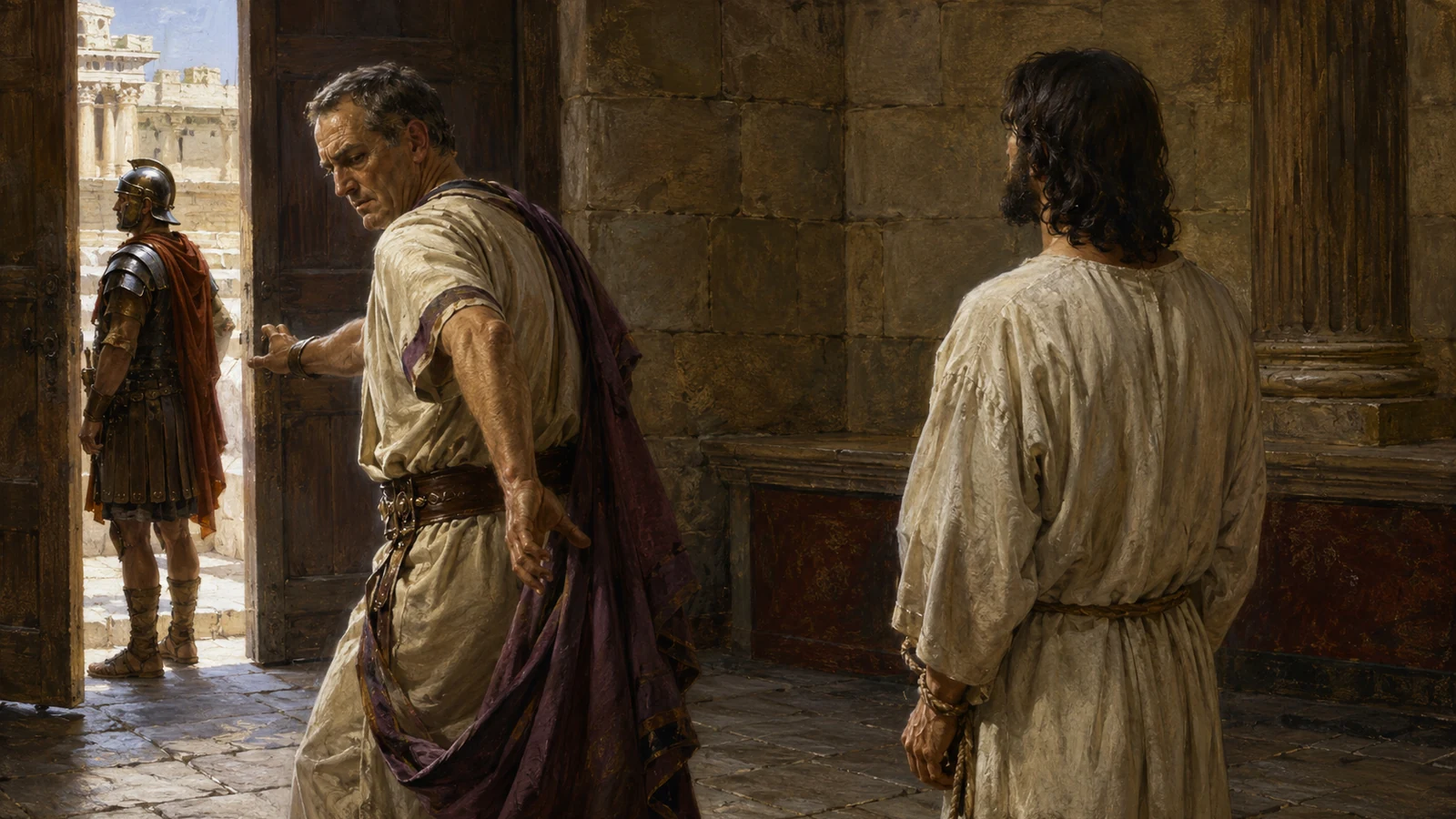
When Jesus said, “I am the truth,” He was telling His disciples who could bring them to the Father. Thomas had asked about the way, and Jesus answered by identifying Himself. His claim gives us a reason to trust Him, but it also leaves us responsible to receive what He says. I cannot confess Him as the truth and then treat honesty as optional when it becomes inconvenient.
Truth Belongs to the God Who Does Not Change
A person can be sincere and still be mistaken. Believing something firmly doesn’t make it true, and my reluctance to admit a mistake cannot alter the facts. Scripture grounds truth in the God who never lies. He made the world and will judge it, and He knows what is real regardless of what we choose to believe or suppress.
The entirety of Your word is truth, And every one of Your righteous judgments endures forever.
The psalm connects God’s Word with His judgments about good and evil. Those judgments do not expire when a generation finds them objectionable. I need to let His verdict correct mine, including when admitting that I am wrong would be embarrassing or require me to give up something I enjoy.
Someone may use “my truth” to mean an honest account of his own experience. That is different from claiming the authority to define reality. Our preferences cannot remake morality or identity independently of the God who made us. If I dislike His verdict about sin, I can choose a more flattering name for what I am doing, but that does not make it acceptable to Him. Personal experience deserves to be understood truthfully; it cannot supply another standard of right and wrong or another way of salvation.
God’s unchanging character gives us reason to trust both His judgments and His promises. Malachi confronted Israel’s covenant unfaithfulness after the exile, yet the LORD also explained why He had not consumed Jacob’s descendants:
For I am the LORD, I do not change; Therefore you are not consumed, O sons of Jacob.
Isaiah likewise contrasts the frailty of human life with the endurance of God’s Word:
The grass withers, the flower fades, But the word of our God stands forever.
I find reassurance in knowing that God’s promises don’t depend on whether people still approve of what He says. The God who tells us the truth about our sin also tells us the truth when He offers forgiveness and promises resurrection and eternal life in Christ. If His Word could be changed by human opposition, we would have no dependable promise to trust.
Jesus Is the Way, the Truth, and the Life
In John 14, Jesus was preparing His disciples for His departure. Their hearts were troubled, and Thomas asked how they could know the way when they did not know where He was going. Jesus answered his uncertainty directly:
Jesus said to him, “I am the way, the truth, and the life. No one comes to the Father except through Me.”
The Greek word hodos means a way or road. Thomas needed to understand that access to the Father depended on Jesus Himself. No religious system, admirable conduct, or ceremony could provide an alternative route. Jesus was giving them Himself as the way to God, and they could not reach the Father by bypassing the Son.
The Greek aletheia can refer to truth, reality, or reliability, with its meaning determined by context. We should not replace every occurrence of the word with Jesus’ name. Here He identifies Himself as the truth because He reveals God fully and faithfully. He is also the life because salvation is found in Him, rather than produced by our efforts to improve ourselves.
In 1 Timothy 2:5, Paul writes that there is one God and one Mediator between God and men, the Man Christ Jesus. He is the One through whom sinners can come to God. I hear mercy in Jesus’ plain answer to Thomas. If Christ alone can reconcile us to the Father, pretending that other ways will do the same would leave people trusting something that cannot save them.
Later, after His betrayal and arrest, Jesus stood before Pilate. The leaders accusing Him wanted His death, and the governor questioned Him about His kingship. Jesus explained why He had come into the world:
Pilate therefore said to Him, “Are You a king then?” Jesus answered, “You say rightly that I am a king. For this cause I was born, and for this cause I have come into the world, that I should bear witness to the truth. Everyone who is of the truth hears My voice.”
Pilate asked, “What is truth?” (John 18:38), then went outside. John records no pause for an answer. The governor told the accusers that he found no fault in Jesus. Later, the crowd warned that releasing Jesus would make him disloyal to Caesar. Under that pressure, he delivered Him to be crucified (John 19:12-16). His decision violated the very facts he had acknowledged.
An honest question can help us understand, but I can also keep discussing an issue after I know enough to obey. If I know I have wronged someone, further debate about the nature of truth will not relieve me of the need to make it right. Pilate’s conduct warns me that recognizing what is right does not guarantee I will do it when obedience becomes costly.
The Son Reveals the Father and the Spirit Bears Witness
John’s opening identifies the One who called Himself the truth. The Word was with God and was God, and that eternal Word became man:
And the Word became flesh and dwelt among us, and we beheld His glory, the glory as of the only begotten of the Father, full of grace and truth.
The eternal Son took true humanity without ceasing to be God. He tells us the truth about God’s holiness and our guilt, and He gave Himself to redeem us from that guilt. His grace does not treat sin as harmless. He gave His body and shed His blood, completed His saving work through His death, and rose bodily. The Savior who exposes our need is also the One who provides our rescue.
John 1:18 says the only begotten Son has declared the God no one has seen. I cannot correct Jesus’ revelation with a private picture of what the Father ought to be like. We learn who God is from the Son He sent:
who being the brightness of His glory and the express image of His person, and upholding all things by the word of His power, when He had by Himself purged our sins, sat down at the right hand of the Majesty on high.
Calling Jesus the express image of God does not make Him a lesser copy or identify Him as the Father. Father and Son are distinct divine Persons, and the eternal Son fully shares the one divine nature. We do not move beyond Jesus to discover a different God from the One He has made known.
The Holy Spirit is also a divine Person. He bears witness to Christ and teaches truth; He is not an impersonal influence or a feeling we can generate. Before His arrest, Jesus told the apostles what the Spirit would do:
However, when He, the Spirit of truth, has come, He will guide you into all truth; for He will not speak on His own authority, but whatever He hears He will speak; and He will tell you things to come.
This promise was given to the apostles as Jesus prepared them for His departure. The Spirit would guide their witness and reveal what was to come. Jesus also promised to bring His teaching to their remembrance (John 14:26). Their testimony did not rest on unaided human memory. The Spirit’s ministry gives us reason to trust the apostolic Scriptures.
A person claiming that the Spirit has spoken does not gain authority to overrule those Scriptures. If a speaker says God has authorized deception because it will help his ministry, he is contradicting the Word he claims to serve. The Spirit of truth does not excuse sin or lead people away from the Son.
In 1 John 4:1-6, believers are told to test the spirits because false prophets have gone into the world. John tells them to reject a spirit that denies Jesus Christ has come in the flesh. He also says that those who know God hear the apostles’ testimony. I need to consider what a speaker teaches about Christ and whether his message agrees with the apostles. A commanding personality or a powerful feeling cannot settle those questions.
In His prayer before the arrest, Jesus asked the Father to sanctify His disciples through that same truth:
Sanctify them by Your truth. Your word is truth.
To sanctify is to set apart for God. He teaches His people to grow in holiness through His Word, correcting their thinking and exposing sins they need to forsake. I may welcome a comforting promise and then resist a command because the people around me would consider it unreasonable. Their approval does not determine whether God has spoken truthfully. I need to receive His correction with the same confidence I place in His promises.
Truth and Salvation Cannot Be Separated
The gospel cannot therefore be one preference among equally valid religious choices. It tells us the truth about our sin and judgment and directs us to the salvation Christ accomplished. A distorted gospel may reassure a person for a while, but reassurance cannot save him if he is being directed away from the true Savior.
Acts 4 records Peter and John before Jerusalem’s rulers after the healing of a man unable to walk from birth. They had been arrested for preaching Jesus’ resurrection. Asked about the power or name behind the healing, Peter identified the Christ those leaders had rejected and declared that salvation could be found in Him alone:
Nor is there salvation in any other, for there is no other name under heaven given among men by which we must be saved.
We should proclaim salvation in Christ alone with urgency and humility. We did not invent it or earn access to God; we needed mercy. Jesus willingly endured bodily punishment inflicted by wicked men, who tortured and killed Him on the cross. He shed His innocent blood for our sins as the sinless sacrifice that accomplishes redemption. The Father did not punish, curse, abandon, strike, bruise, or pour wrath on Jesus. His saving work was completed through His blood and death, and He was buried and rose bodily. He gave Himself to redeem us, not simply to inspire us to be kinder people.
He died for the whole world, and God’s offer is genuine, though people can resist His grace and reject Him. Those who repent and believe are forgiven and justified, meaning God declares them righteous. They are born again, made new creations, and indwelt and sealed by the Holy Spirit for the day of redemption. Every genuine believer is eternally secure. That assurance gives no permission for lawlessness, and a Christian label cannot establish regeneration, or genuine new birth. Neither sincerity nor religious ancestry can remove our guilt. The study on the gospel explains the saving work we are called to receive by faith.
Paul says that in Christ “are hidden all the treasures of wisdom and knowledge” (Colossians 2:3). This does not mean Christians know every fact or can answer every question. It does mean we never outgrow Christ as though He were an introductory lesson before the serious teaching begins. What we teach about God, salvation, holiness, and eternal life must agree with the Son the Father has revealed. The study on the deity of Jesus develops that teaching further.
Loving Christ includes receiving His words and trusting what He has done. I cannot claim to honor Him while accepting a teaching that sends sinners elsewhere for salvation. Doctrine and devotion belong together because the Savior we love is the One whose testimony we are called to believe.
Living as People of Truth
Confessing Jesus as the truth also requires honesty in ordinary speech. The words we use at home or at work should agree with the Lord we speak about at church:
Therefore, putting away lying, “Let each one of you speak truth with his neighbor,” for we are members of one another.
Paul connects truthfulness with our membership in Christ’s body. People need to be able to trust one another. If I give an account of a failed job and describe everyone else’s mistakes while leaving out my own responsibility, I can create a false impression without inventing a single fact. Being able to defend each sentence as technically accurate does not make the account honest.
Exaggeration can mislead in the same way, and flattery can become a means of manipulation. I need to consider what I intend another person to believe, including whether I am deliberately leaving him with a convenient misunderstanding. Honesty requires more than avoiding a statement someone could easily prove false.
Speaking truthfully also requires love for the person hearing it. If a fellow believer is excusing a sin, I should explain plainly what Scripture says and why his conduct is wrong. I should also be willing to listen and help him repent. Embarrassing him simply to prove that I have the better argument would serve my pride instead of his good. Avoiding the difficult conversation altogether could leave him in the sin he needs help confronting.
This also governs our witness. Telling someone that Christ alone brings sinners to the Father is an act of love when it directs him to the Savior he needs. I have no grounds to act superior to that person. I depend on the same mercy I am urging him to receive.
We also need discernment when we listen to teachers or evaluate a claimed revelation. An impressive speaker does not get to decide what is true for us, and a moving experience cannot excuse a contradiction of Scripture. Discernment means carefully judging a claim by what God has revealed. It need not make us suspicious of everyone, but it does require us to be willing to receive correction ourselves. The guide on how to study the Bible properly explains how to handle the Word responsibly.
My Final Thoughts
I can trust Jesus to reveal the Father and bring me to Him. His claim also requires me to receive His words when they expose a mistake in my thinking or a misleading account I would rather defend. I need correction from the same Savior whose promises I depend on. Confessing Him as the truth should be evident in what I believe, how I speak, and how I treat the people who hear me.