
I’ve met kind and sincere Latter-day Saints, and I take no pleasure in telling anyone that the faith they trust is wrong. Joseph Smith did claim to speak for God, though, and that claim has to be examined. I believe the loving way to do that is to be honest and let Scripture give the final answer.
Testing Joseph Smith’s Claim by Scripture
But the prophet who presumes to speak a word in My name, which I have not commanded him to speak, or who speaks in the name of other gods, that prophet shall die.
The Church of Jesus Christ of Latter-day Saints is often shortened to LDS, and its members have historically been called Mormons. When speaking about people, I will usually use the church’s current name or call them Latter-day Saints. Here, Mormonism is simply a familiar name for the religious system that grew from Joseph Smith’s claims.
A supernatural account or a large following cannot establish that someone speaks for God. A false word spoken in His name is a serious offense, so God gives us ways to test the claim. Deuteronomy 18 asks whether a prophet’s prediction comes true. Deuteronomy 13 goes further: even a real sign cannot justify teaching that leads people away from the true God.
Those tests help me identify what I need to examine in Joseph Smith’s message. What does he teach about God and Jesus? What authority does he give Scripture, and what gospel does he preach? Historical evidence can reveal problems with his claims to translate and prophesy, but Scripture must give the final answer.
Testing that doctrine does not tell us everything about the person who believes it. Every Latter-day Saint is made in God’s image, and some are people we already know and love. One may have spent years studying difficult questions about LDS history and doctrine. Another may know only what a family member or congregation has emphasized. I need to listen before assuming I know what someone believes.
Respecting someone does not require me to pretend that incompatible teachings mean the same thing. The LDS Church speaks often of God and Jesus, and it uses words such as grace and salvation. Its official definitions can differ sharply from biblical Christianity, though. We need to understand what those words mean in its teaching and examine the sources behind them. I will use current official LDS sources wherever possible so the institution can state its own case and rumor does not control the discussion. My conclusion is critical of Joseph Smith’s authority, but I want that criticism to help people turn to the eternal Son and His saving gospel.
Joseph Smith organized the movement that became the LDS Church in the United States during the early nineteenth century. He taught that Christ’s church had broadly fallen away after the apostles, losing essential truth and authority. He claimed heavenly messengers restored what had been lost through him. That restoration included additional scripture and what LDS teaching calls priesthood authority: delegated religious authority to act in God’s name. It also established required ordinances, including baptism and temple sealing.
The movement kept using the Bible but added the Book of Mormon as another standard work. It also received Doctrine and Covenants, a collection of revelations and instructions tied to Smith and later LDS leaders. The Pearl of Great Price contains the Book of Abraham and other writings. Continuing prophetic leaders interpret these books and may add further teaching alongside them.
I cannot treat the restoration claim as merely adding a devotional book. It says the church Christ built lost essential truth and authority, along with saving ordinances, until the nineteenth century. If Smith was right, Christians must submit to that restored authority. If he was wrong, later voices have been placed above the faith the apostles delivered. A sincere family culture cannot decide which is true. We may admire moral discipline and missionary effort without accepting them as proof that the message came from God. Even a heartfelt testimony has to be tested against the message itself.
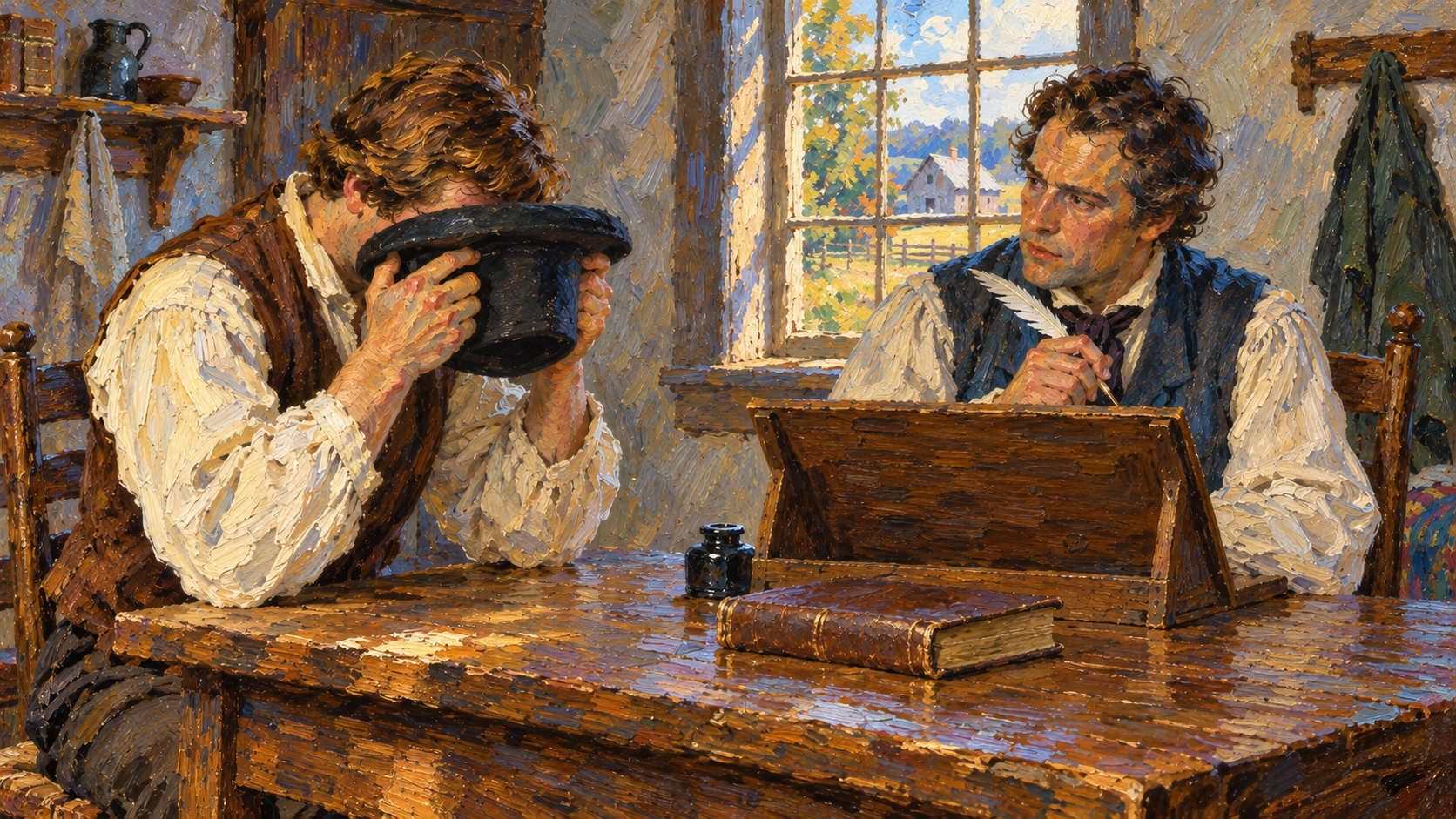
Joseph said an angel directed him to buried plates containing a record of ancient peoples in the Americas. The Book of Mormon appeared in 1830 as his English translation of that record. The official LDS history of the translation says he used interpreters as well as a small seer stone. Historical accounts describe him putting the instrument in a hat to block outside light, looking into the hat, and dictating English words. The same official history acknowledges that he had used a seer stone earlier while searching for lost objects and buried treasure.
The LDS claim is revelation through an instrument, rather than ordinary translation using the grammar and vocabulary of a known language. That is why the central question for me is not whether Smith had formal language training. I need to ask whether God gave him the authority he claimed.
An earlier version of this page wrongly said nobody else claimed to see the plates, and that needed to be corrected. The LDS witness history distinguishes two groups. Three Witnesses described an angel showing them the plates and said they heard a divine voice. Eight Witnesses said Joseph showed them the object and allowed them to handle or examine it.
I need to account for those witnesses honestly even though I reject Smith’s authority. Several later separated from him, but their continued affirmations deserve mention, and leaving him did not erase their testimony. We also have to distinguish what they testified to from what that testimony can establish. Handling an object does not identify its language or age, and it does not verify its alleged contents. Above all, an artifact cannot prove that the theology attached to it came from God. Someone may sincerely describe what he handled while misunderstanding the religious claim built upon it. Neither the object nor a remarkable experience can outrank the gospel the apostles had already preached.
Historical Claims and Prophetic Credibility
The Book of Abraham gives us a more direct way to test Smith’s claimed gift of translation. In 1835 he acquired Egyptian papyri, ancient writing material made in sheets or rolls, and declared that one roll contained writings of Abraham. Parts of the resulting Book of Abraham appeared in 1842 along with printed Egyptian images and Smith’s explanations. These reproduced images are the facsimiles discussed today. The claim can be examined because surviving fragments became available to the LDS Church again in 1967.
The official LDS account acknowledges an important point on which Egyptologists inside and outside the church agree. The characters on the surviving fragments do not match the English Book of Abraham. Rather than an account written by Abraham, the fragments contain ordinary Egyptian funerary material.
LDS explanations generally take one of two paths. Some say most of the relevant scroll was lost. Others say the papyri served as a catalyst that prompted a separate revelation instead of being the direct source of the English words. We should state both explanations accurately before evaluating them.
The missing-scroll view cannot be dismissed merely because the surviving fragments are incomplete. Its claim is that the source text was on a portion that no longer exists. The catalyst view makes a different argument: the papyri prompted revelation even though the English words were not encoded in the Egyptian writing. That explanation changes the ordinary meaning of translation and moves away from the public claim that an ancient record had been rendered into English.
Neither explanation resolves the disagreement between Smith’s surviving comments about the facsimiles and the readings supplied by Egyptologists. I don’t need to accuse every participant of dishonesty to recognize how serious that is for his claimed gift. Identifying Egyptian funerary material as Abraham’s record is a claim that can be tested. Changing the category after that test does not restore his prophetic authority.
His predictions also have to be read according to their actual words. Doctrine and Covenants 84:4-5 says that a New Jerusalem and temple would be built at the chosen Missouri site “in this generation.” The current official text still contains those words. That temple was not built in Joseph Smith’s generation.
Some defenses give generation an indefinite meaning. Others place the fulfillment in a future return to Missouri or argue that disobedience delayed the promise. I need to know whether those conditions came from the prediction itself. If they were added only after its ordinary time statement failed, they cannot save the prophecy. Deuteronomy does not make an exception for a prophet who later becomes influential. A prediction that names an outcome and sets a time boundary must be judged by those words.
Plural marriage must be described with the same care. Joseph Smith introduced it privately before the practice became public. In LDS language, a sealing is a religious covenant meant to bind people eternally through priesthood authority. The official LDS essay acknowledges that Smith entered multiple sealings and kept the practice confidential. It describes Emma Smith’s opposition. Some women sealed to Joseph were already married to other men, and Helen Mar Kimball was sealed to him several months before her fifteenth birthday.
The historical record does not tell us the nature of every sealing. Some women spoke of marriages for time and eternity, while others described eternity-only bonds. Claims about sexual relations should follow the evidence for each relationship instead of assuming that one answer fits them all.
Those qualifications do not remove the moral and prophetic problems. The claimed revelation put severe pressure on Emma and allowed an exception when the first wife refused consent. Smith used secret religious authority to establish marriages outside his public monogamous covenant with her. I cannot justify that by pointing to polygamy in the Bible. Scripture records plural marriages and the sorrow surrounding them, but it never makes plural marriage the church’s restored path to exaltation. Jesus also appealed to the creation pattern in Genesis 2:24, where one man and one woman are joined in covenant.
The events in Nauvoo raise a related question about power. By 1844 Smith was not only the church’s founding prophet. He was also mayor of Nauvoo, Illinois, and held considerable civic and militia authority. That June, dissenters published the first issue of the Nauvoo Expositor. The paper criticized plural marriage, Smith’s newer teaching about God, and his use of religious and civic power. The city council declared it a public nuisance. Acting as mayor, Smith ordered the marshal to destroy the press and the printed copies.
The LDS history of the Expositor presents the council’s legal reasoning and acknowledges that scholars conclude the city may have exceeded its authority by destroying the press itself. The action deepened the conflict and led to riot charges. A mob later stormed Carthage Jail and murdered Joseph and Hyrum Smith. Their murder was wicked. Being murdered does not prove that a man was God’s prophet, and resisting an attacker does not disprove his religious claim. We should never build the case by sneering at Smith’s death.
Condemning Smith’s murder does not prevent us from asking how he used his claimed prophetic authority. His position as mayor and his control of the militia gave him considerable power when public criticism appeared. We need to include his order to destroy the press in an honest account of his leadership, while holding the mob fully responsible for the murders at Carthage.
Archaeology and genetics also require careful limits. Archaeologists have not established the peoples or civilizations described in the Book of Mormon through broadly accepted material evidence. Proposed locations for Zarahemla and other cities remain disputed, and no known script has verified the record. This differs from the Bible’s identifiable geography, where inscriptions and excavated cities often connect the text with known places and rulers.
Still, critics should not claim that archaeology has proved no small migration ever happened. Material evidence is incomplete, and such a sweeping statement goes beyond what has been excavated. The sound conclusion is narrower: archaeology has not established the Book of Mormon’s civilizations as history.
The same restraint applies to DNA. The official LDS DNA essay acknowledges that most Native American ancestry identified so far is largely Asian. It responds that genetic drift might have hidden the ancestry of Book of Mormon migrants and also points to population loss and intermarriage. If the original group was very small, it argues, a West Asian genetic contribution could be hard to find.
DNA cannot settle the question of an unidentified small founding group when there are no known reference samples. It does correct the older sweeping claim that all Native Americans can simply be called descendants of Book of Mormon migrants. We should state the evidence precisely rather than forcing one scientific argument to carry the whole biblical conclusion.
The One Eternal God and His Eternal Son
“You are My witnesses,” says the LORD, “And My servant whom I have chosen, That you may know and believe Me, And understand that I am He. Before Me there was no God formed, Nor shall there be after Me. I, even I, am the LORD, And besides Me there is no savior. I have declared and saved, I have proclaimed, And there was no foreign god among you; Therefore you are My witnesses,” Says the LORD, “that I am God. Indeed before the day was, I am He; And there is no one who can deliver out of My hand; I work, and who will reverse it?”
The LORD says no God was formed before Him and none will be formed after Him. He is not describing Himself as the God assigned to this world among other gods. Isaiah 44:8 also says He knows no other Rock. Monotheism means that only one God exists. Choosing to worship one member of a larger divine order makes a different claim.
The official LDS Godhead overview describes the Father, Son, and Holy Ghost as three separate beings united in purpose. It teaches that the Father and Son have tangible bodies while the Holy Ghost is a spirit personage. Its essay on becoming like God says humans may progress to godliness and receive God’s fulness. LDS teaching commonly calls the highest form of this progress exaltation. The historic LDS idea that God once was as man is, and man may become as God is, gives us a chain of exalted beings rather than the one uncreated God.
Christians do believe redeemed people will be glorified. God adopts us as His children and makes us like Christ in holiness. He also promises to raise us with incorruptible bodies. Those promises do not allow me to erase the distinction between Creator and creature. However glorious our future, we remain His creatures and worshipers forever. We never become another God of the same order.
The Bible reveals one God who eternally exists as three coequal and coeternal Persons. The Father is God, the Son is God, and the Holy Spirit is God. They are personally distinct, so the Father is not the Son and the Son is not the Spirit. Yet they are not three gods, because the divine being is one. This is what Christians mean by the Trinity. A teaching about three separate gods who cooperate toward one purpose is a different doctrine.
In the beginning was the Word, and the Word was with God, and the Word was God. He was in the beginning with God. All things were made through Him, and without Him nothing was made that was made.
John places the Word before everything that was made. He already existed in the beginning, personally with God and fully God Himself. Since everything that came into existence was made through Him, I cannot place Jesus among created spirits. He is the One who made them.
LDS teaching speaks of premortal spirit children and gives Jesus firstborn status in that family, while Lucifer is another spirit child who rebelled. That framework changes the absolute line John draws between the Creator and everything made. Jesus is the eternal Son. He is fully God and fully man; He did not advance into deity. He took human flesh through the virgin birth and lived without sin. He received worship before His bodily death, and He rose bodily from the grave.
When Colossians 1 calls Jesus the “firstborn,” it is speaking of His supremacy and inheritance. We can understand that meaning from the passage itself, which says every created thing was made through Him and for Him. I have to consider that identity when a religious system speaks about Jesus. Using His name often does not establish that it confesses the eternal Word John reveals.
Scripture, Grace, and the Apostolic Gospel
But you must continue in the things which you have learned and been assured of, knowing from whom you have learned them, and that from childhood you have known the Holy Scriptures, which are able to make you wise for salvation through faith which is in Christ Jesus.
All Scripture is given by inspiration of God, and is profitable for doctrine, for reproof, for correction, for instruction in righteousness,
Paul says the sacred writings make a person wise for salvation through faith in Christ. Because they are inspired, they teach sound doctrine and correct error while training God’s people to live righteously. Verse 17 completes that explanation: Scripture equips the man of God for every good work.
The church receives and teaches God’s Word; it does not confer authority on it. Differences introduced during copying do not show that the gospel went missing. We cannot recover a hidden priesthood or a premortal family of gods from those variations, nor do they reveal temple endowment or eternal sealing. The biblical text remains open to examination through its abundant manuscript history.
Jude calls believers to contend for the faith once for all delivered to the saints. Although the New Testament warns of apostasy, it never says Christ’s gospel and authority will vanish from the earth until Joseph Smith restores them. That leaves a practical question I need to ask: if later LDS scripture or a living prophet contradicts the Bible in context, which is allowed to correct the other? Biblical Christianity receives inspired Scripture as the final authority. Smith’s system instead lets the restoration claim govern the text whenever they disagree.
For by grace you have been saved through faith, and that not of yourselves; it is the gift of God, not of works, lest anyone should boast.
Official LDS material uses salvation in several ways. Sometimes it means the universal resurrection made possible through Christ. Elsewhere it refers to conditional salvation from sin or exaltation in the highest celestial glory. The current General Handbook identifies several ordinances as necessary for salvation and exaltation. These include baptism and confirmation. It also includes priesthood ordination for men, while temple endowment and sealing are required for exaltation.
I would misrepresent Latter-day Saints if I said they taught salvation without Christ. Their official teaching repeatedly speaks of His grace and atonement. The disagreement concerns the place LDS teaching gives restored priesthood ordinances and covenant performance in salvation. Biblical justification means God declares a believer righteous in Christ. We receive that standing by faith, not by completing ordinances that only a restored institution can provide.
Paul places good works after salvation in verse 10. Believers are God’s workmanship, newly created in Christ to live the life He prepared for them. That order helps me understand how obedience belongs in a life saved by grace. Salvation is God’s gift received through faith, and our works can never be its ground. Grace produces the obedience that cannot purchase justification.
For I delivered to you first of all that which I also received: that Christ died for our sins according to the Scriptures, and that He was buried, and that He rose again the third day according to the Scriptures,
The apostolic gospel centers on the real Jesus and what He accomplished in history. Wicked men physically tortured and punished Him before killing Him, and He willingly bore that suffering for our sins in His innocent body. His blood was truly shed, He was buried, and He rose bodily before appearing to witnesses. The Father did not punish or curse His Son. He did not abandon Jesus, strike or bruise Him, or pour wrath on Him.
Salvation is in Christ’s blood. Gethsemane was a place of real anguish and submission before His arrest, but the apostles place the shedding of His saving blood in the bodily torture and death that followed. Christ died for the whole world, so God’s offer is genuine even though people may resist and reject it.
Everyone who repents and believes in Jesus is forgiven and declared righteous before God. The believer is born again, and the Holy Spirit comes to dwell within and seal that new life. Because salvation rests in God’s work, the person who has truly been born again is eternally secure in Christ. That security never gives permission for lawlessness, and a shallow profession does not prove that a new birth has taken place. No temple ceremony or later priesthood can complete what the crucified and risen Christ accomplished.
But even if we, or an angel from heaven, preach any other gospel to you than what we have preached to you, let him be accursed. As we have said before, so now I say again, if anyone preaches any other gospel to you than what you have received, let him be accursed.
Paul includes even an angel from heaven among the messengers whose gospel must be tested. I cannot accept a message merely because the appearance is supernatural or glorious, or because those who hear it feel deep spiritual certainty. If it changes the apostolic gospel, it remains condemned.
Moroni’s reported appearance makes that warning directly relevant to Smith’s restoration claim. We don’t have to assume every reported experience was invented before testing its message against what Paul and the other apostles had preached. Smith’s system changes the identity of God by placing Jesus within a premortal family of spirits. Its new scriptures and continuing prophets can also take authority over the Bible. By declaring biblical priesthood lost, it makes room for restored ordinances to become necessary for salvation and exaltation. Those changes go to the substance of the apostolic gospel; they are not harmless additions.
In Galatians 1:6, Paul uses heteron euangelion, Greek words for a different gospel. His next explanation makes clear that he is not presenting another valid gospel of the same kind. It distorts the gospel rather than offering a second way of salvation.
Beloved, do not believe every spirit, but test the spirits, whether they are of God; because many false prophets have gone out into the world.
Latter-day Saint missionaries often invite people to read the Book of Mormon and pray for spiritual confirmation that it is true. I would not mock that prayer or dismiss a sincere experience. But John commands us to test spiritual claims because we can misunderstand where an impression comes from and what it means.
The Holy Spirit does not contradict the Word He inspired. Someone may sincerely feel peace, yet that feeling cannot redefine the one true God or change His gospel. A vivid dream or an unusual coincidence still has to be understood, and a reported vision needs to be tested. I have to submit an experience to divine revelation rather than use the experience to decide what revelation is allowed to say.
John gives us specific things to examine. In verses 2-3, he tests what a spirit confesses about Jesus Christ coming in the flesh. Verse 6 asks whether people receive the apostolic witness. Sincerity calls for compassion, but a contradiction does not become true because someone sincerely believes it.
Speaking the Truth With Care
When a Latter-day Saint says the Bible was corrupted and needed restoration, we can begin with what Scripture says about itself. Textual variants are differences among handwritten copies, and we can examine them. They neither contain nor erase the distinctive LDS system. More importantly, 2 Timothy says Scripture equips God’s people. If an answered prayer is offered as final proof of Smith and the Book of Mormon, I would read 1 John 4 with the person. It shows us that the Spirit of truth agrees with the inspired Word about God, Christ, and the gospel.
When someone says Christians also become like God, we need to explain what glorification means. Redeemed people become like Christ in holiness and receive immortal bodies, but they remain His creatures. They do not become another god, and Isaiah says no God was formed before or after the LORD. A strong family or a life of service may deserve commendation, but neither proves that a church is true. Sacrifice and church growth cannot reverse false doctrine, and moral earnestness cannot authorize a different God or gospel.
I would begin a conversation by asking what the person actually believes, then open Scripture together. Reading an entire passage gives us room to define disputed words and listen carefully to the answer. That patience is part of loving the person, and it usually serves the conversation better than rapid-fire traps. A thoughtful discussion of Isaiah 43 or John 1 can accomplish far more than a pile of sensational accusations.
Leaving the LDS Church may strain a marriage or cost someone the trust of family members. Friendships can disappear, and losing a familiar religious community may unsettle the person’s whole sense of identity. I don’t want to treat someone facing those losses as a victory in a religious argument. Patient friendship can help him keep moving toward Christ. Leaving a false authority is not yet the same as trusting the true Savior.
If you are preparing for such a conversation, the related studies How to Witness to a Mormon, False Teachers, and The Trinity develop these biblical issues further.
My Final Thoughts
I cannot receive Joseph Smith as a prophet of God after examining his history and his message against Scripture. His translation claims and the unfulfilled Missouri temple prediction give serious reasons to doubt his credibility, while his secret plural marriages and use of concentrated authority deepen those concerns. What finally decides the question for me is the theology. The restoration changes the identity of the one eternal God and places the Creator Son within a premortal spirit family. It also gives new scriptures and prophets authority above the apostolic faith. We must still handle the historical evidence honestly, including what the witnesses actually said. Christianity does not need a false accusation to defend the truth. My hope is that every Latter-day Saint will turn to the Jesus revealed in Scripture, the eternal Word who is fully God and fully man. He was crucified in His innocent body and buried before rising bodily from the dead. Through faith in Him we receive salvation as God’s gift, and the good works that follow cannot purchase the eternal life He gives.